Breads · Tuscany
Schiacciata all’Uva Recipe (Tuscan Grape Bread)
This Tuscan grape bread layers juicy grapes, olive oil, and a tender rustic crumb; a simple yeast dough makes its seasonal sweet-savory balance easy at home.
By Lucia Moretti (pen name) · · Editorial policy
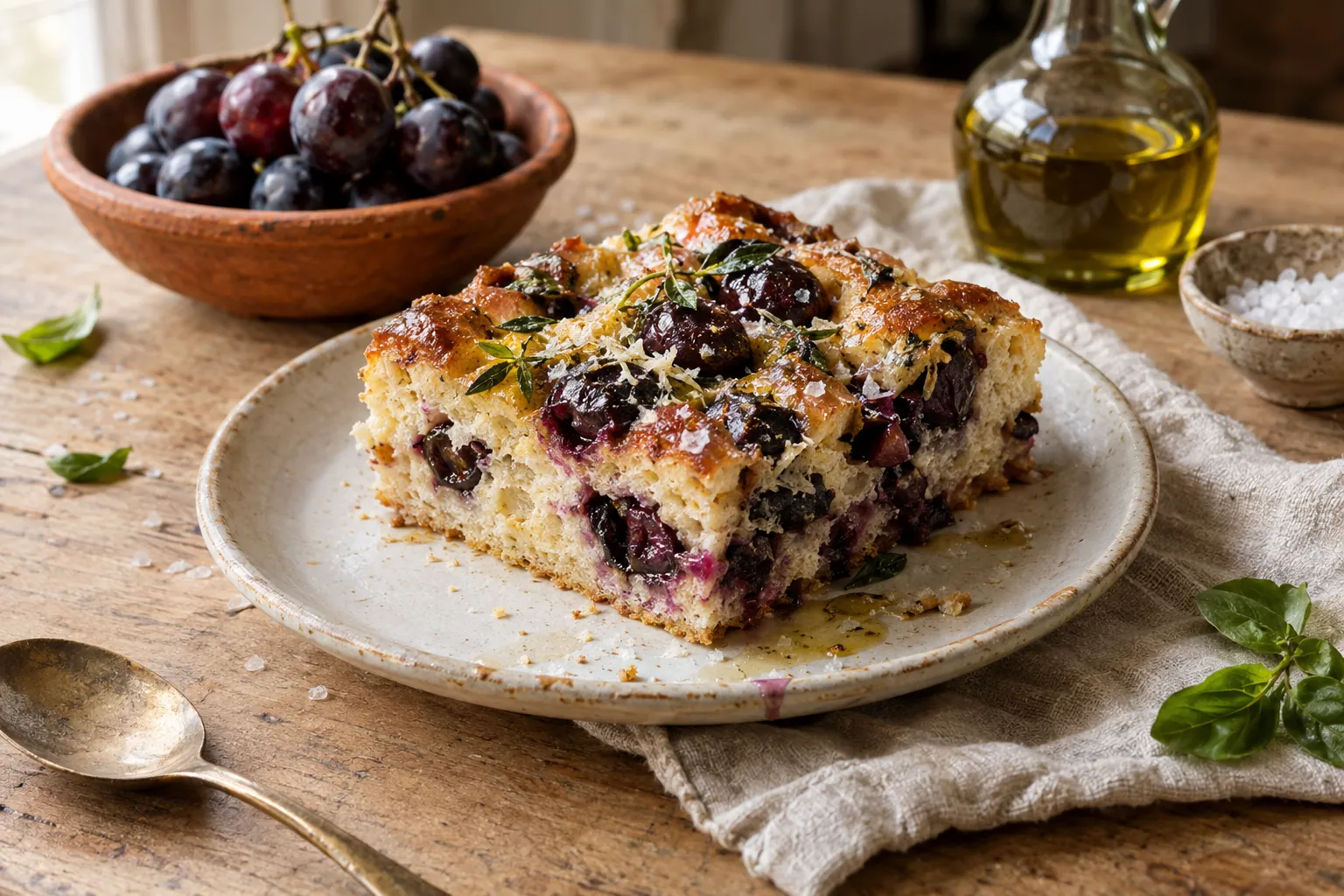
Schiacciata all’uva is a Tuscan flatbread baked with grapes, olive oil, and sugar until its top is glossy and its crumb stays tender. It is especially associated with the vendemmia (grape harvest) in September and October, when grapes are plentiful around Florence and the Chianti countryside. Traditional versions often use small wine grapes, seeds and all. Here, I use firm dark seedless grapes, which are easier to find and eat; halving larger ones helps them sit neatly in the dough.
The key is to keep the dough soft and give it time to rise before layering it with fruit. A generous but measured drizzle of olive oil keeps the bread supple, while sugar brings out the grapes’ juices without turning the whole pan into dessert. I press some grapes between two layers of dough, then tuck the rest into the top so each slice has fruit throughout. It makes a good afternoon snack or a simple finish after a Tuscan meal like pappa al pomodoro or ribollita. This version works because the soft dough, juicy grapes, and olive oil stay in balance rather than competing for attention.
Recipes stay free thanks to ads. Advertising disclosure
The recipe
Schiacciata all’Uva
Ingredients
for 10 servingsEquipment
- large mixing bowl
- measuring cups and spoons or kitchen scale
- 9-by-13-inch baking pan
- instant-read thermometer
- clean kitchen towel or plastic wrap
Method
Stir the warm water, yeast, and 1 teaspoon of the dough sugar together in a large bowl. Leave for 5 minutes, until the surface looks foamy. If it does not foam, the yeast may be inactive; start again with fresh yeast.
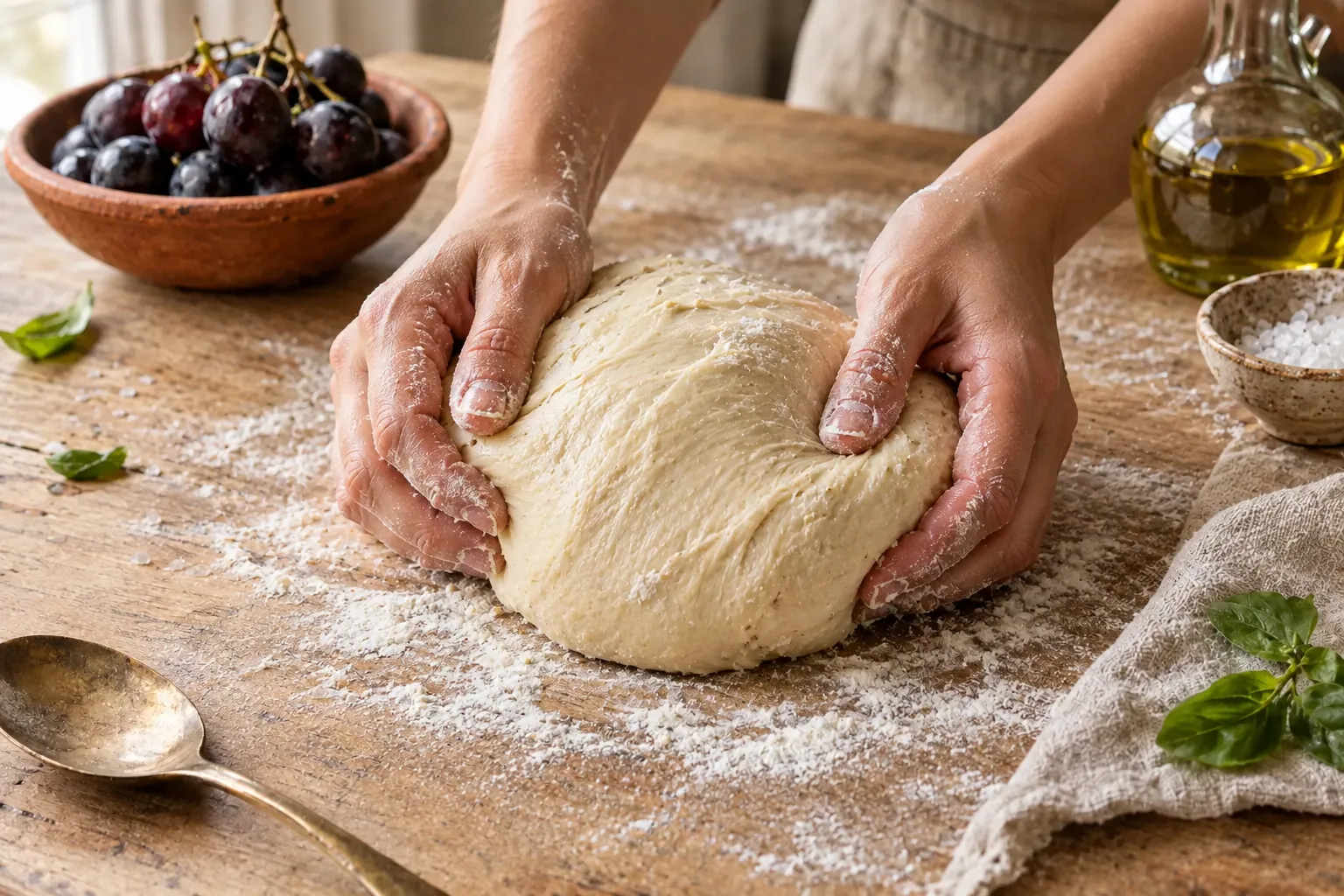
Add the flour, remaining dough sugar, olive oil, and salt. Mix until a shaggy dough forms, then knead on a lightly floured counter for about 12 minutes, until smooth and elastic. It should feel soft and slightly tacky, not wet.
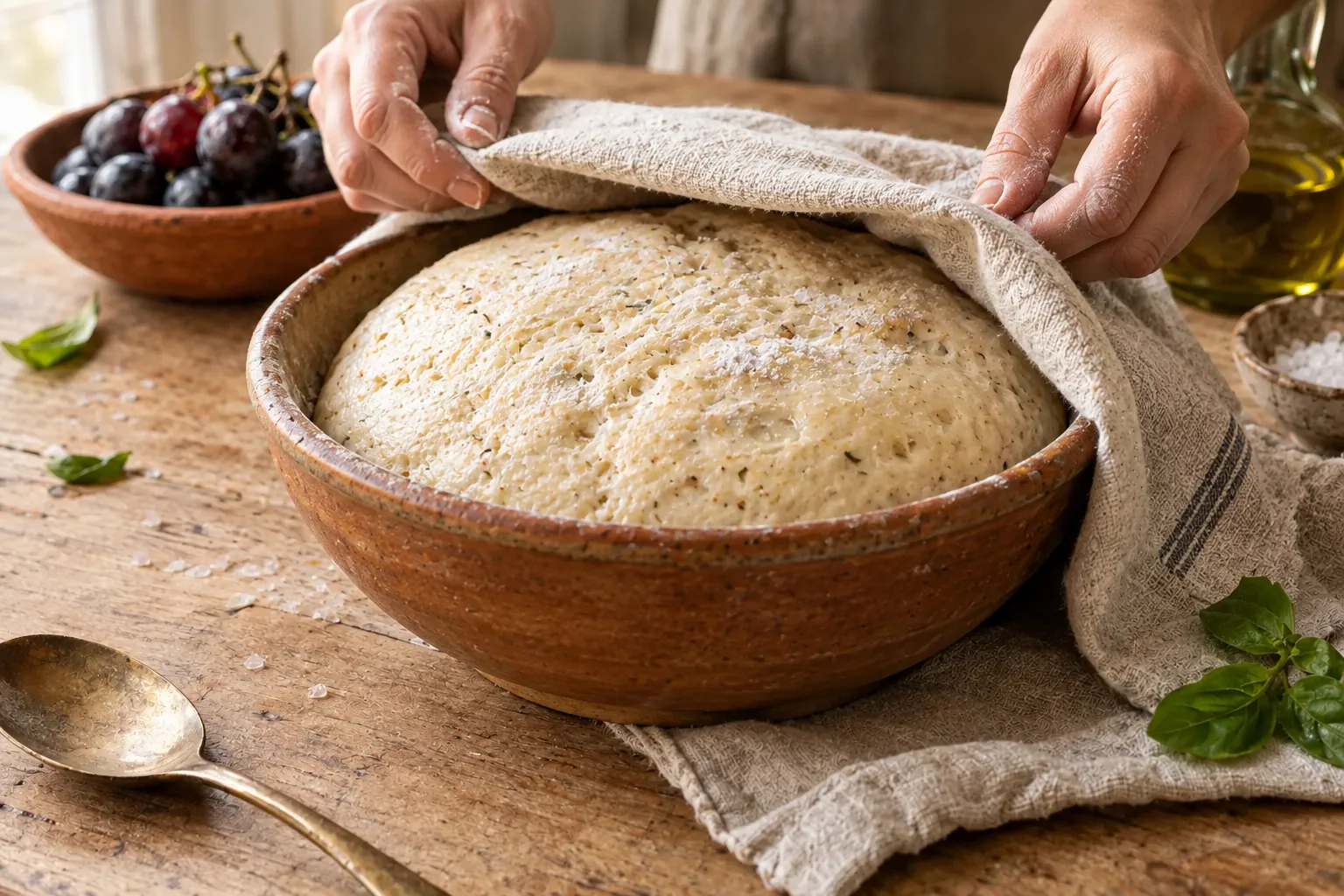
Put the dough in a lightly oiled bowl, cover, and let it rise for about 75 minutes, until roughly doubled. A cool kitchen may need a little longer; go by the dough, not just the clock.
While the dough rises, wash and dry the grapes thoroughly. Halve any especially large grapes. Patting them dry helps keep excess moisture from making the crumb gummy.
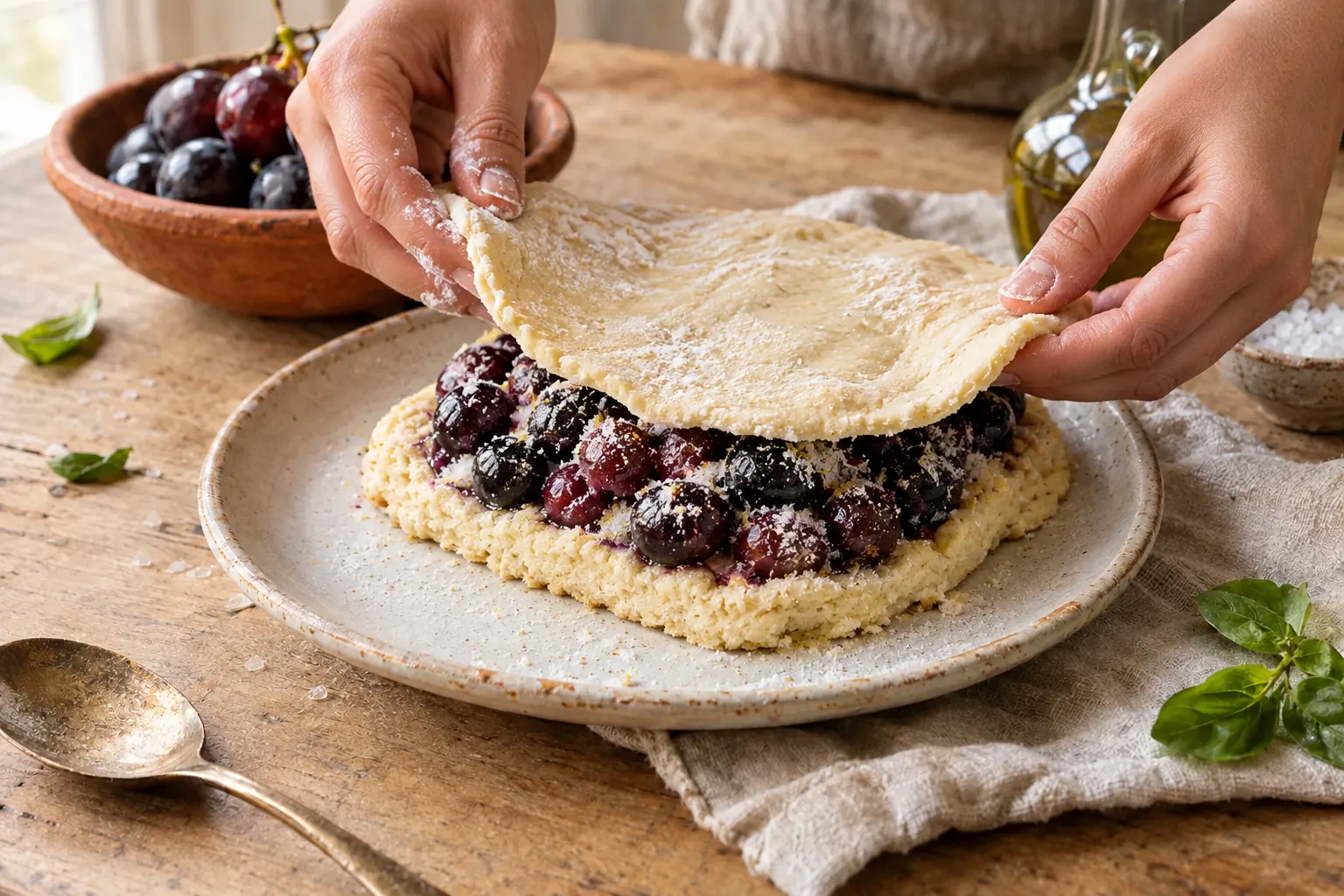
Oil a 9-by-13-inch baking pan with the extra teaspoon of oil. Set aside about one-third of the dough for the top layer. Press the larger piece evenly into the pan. Scatter 450 g of grapes over it, sprinkle with 45 g sugar, and drizzle with 20 ml oil. Roll or stretch the reserved dough into a thin layer and lay it over the fruit, pinching the edges closed.
Cover the pan and let the assembled bread rise for 30 minutes. During the last 20 minutes, heat the oven to 375°F (190°C). The dough should look slightly puffed, though the top layer will not fully cover the filling if it is thin.
Scatter the remaining grapes over the top and press them gently into the dough. Sprinkle with the remaining sugar and drizzle with the remaining oil. Bake for about 30 minutes, until the bread is deep golden at the edges and the center registers about 190°F (88°C) on an instant-read thermometer.
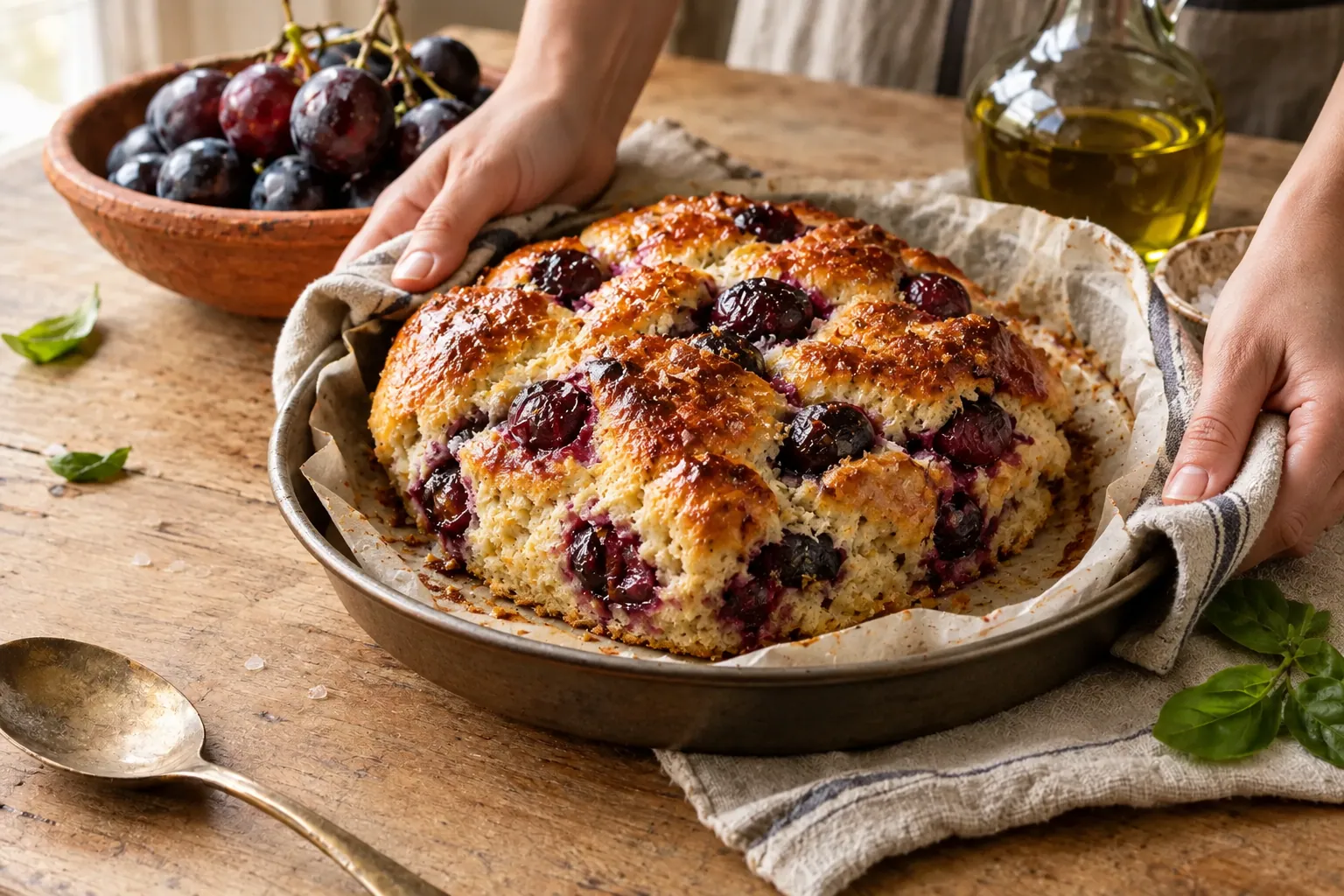
Let the schiacciata cool in the pan for 15 minutes before cutting. The grape juices are very hot straight from the oven, and the crumb will set as it rests.
Where it goes wrong
| If you see | It’s because | Do this |
|---|---|---|
| The dough barely rises. | Why The water was too hot, the yeast was inactive, or the room is cool. | Fix Use water around 105–110°F (40–43°C), check that the yeast foams before mixing, and give the dough more time in a comfortably warm spot. |
| The crumb is gummy around the grapes. | Why The grapes were wet or especially juicy, or the bread was cut before it rested. | Fix Dry the grapes well, use firm fruit, bake until the center reaches about 190°F (88°C), and rest the bread for 15 minutes before slicing. |
| The top layer tears while stretching. | Why The dough is resisting because it has not had time to relax. | Fix Cover it and let it rest for 5 minutes, then stretch it gently in stages over the filling. |
| The bottom is pale and soft. | Why The pan was not well oiled or the bread came out before the center was baked. | Fix Oil the pan evenly and check the center temperature; if the top browns too quickly, tent it loosely with foil while the bottom finishes. |
| The bread tastes overly sweet. | Why Very sweet grapes were paired with extra sugar. | Fix Measure the sugar as written and choose firm, tart-leaning grapes rather than adding more sugar by eye. |
Questions
What grapes should I use for schiacciata all’uva?
Use firm dark seedless grapes for an easy-to-eat home version. Small Tuscan wine grapes are traditional, but seedless table grapes bake well; halve larger ones.
Can I make schiacciata all’uva ahead?
Yes, bake it a day ahead and store it covered at room temperature. Let it cool completely before wrapping so trapped steam does not soften the crust.
How should I store leftover schiacciata all’uva?
Keep leftovers covered at room temperature for up to 2 days. Warm individual pieces briefly in a low oven if you want to soften the crumb.
Can I use all-purpose flour for schiacciata all’uva?
Yes, all-purpose flour works well. It gives the bread a tender, rustic crumb without requiring specialty flour.
Cooked this?
Sign in to rate it or say how it turned out.