Breads · Sardinia
Pane Carasau Recipe (Sardinian Flatbread)
This pane carasau recipe makes Sardinia’s crisp, paper-thin flatbread at home, with a hot oven, clear rolling cues, and a reliable batch-baking method.
By Lucia Moretti (pen name) · · Editorial policy
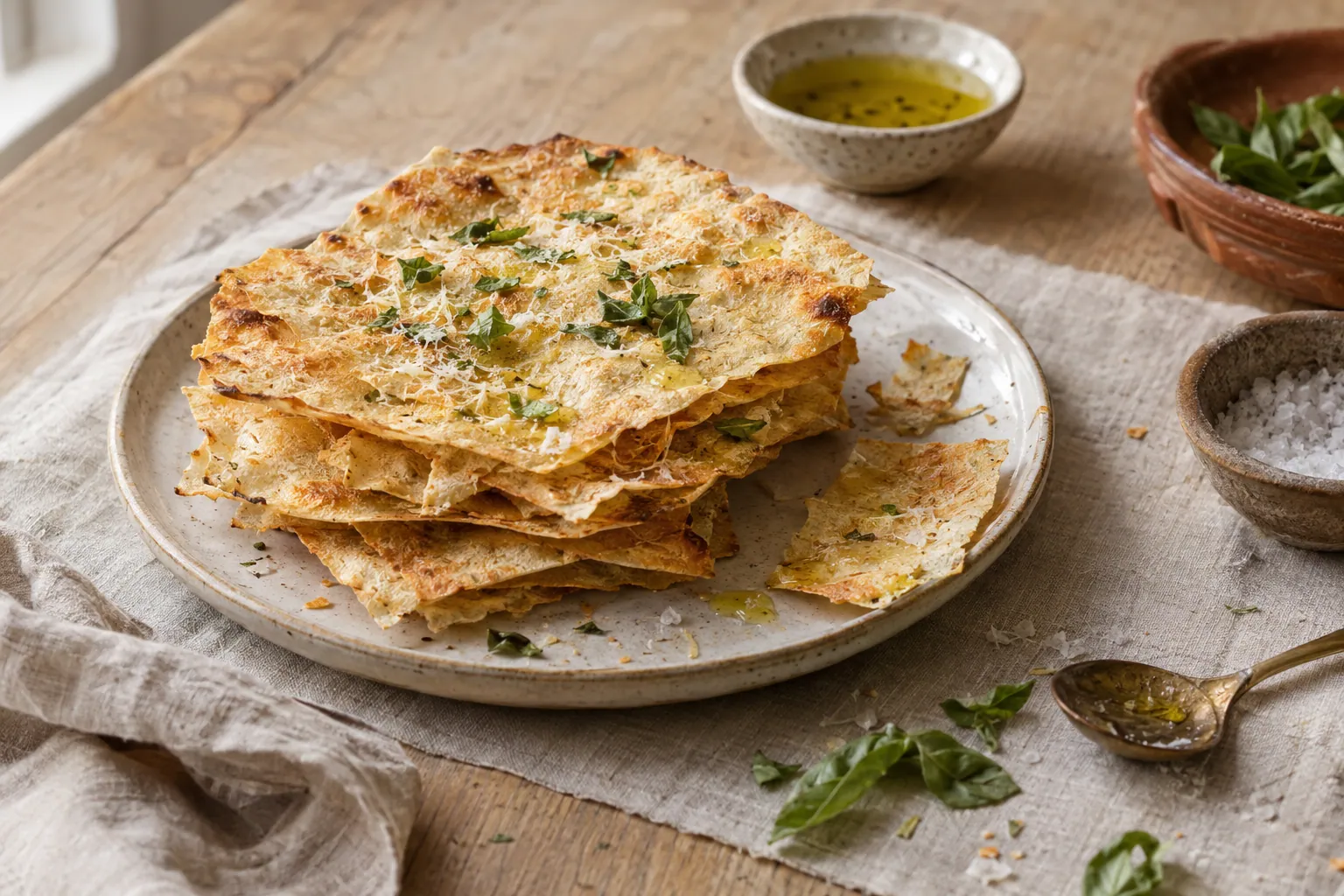
In Sardinia’s inland Barbagia, pane carasau was baked, split, then returned to the oven so shepherds could keep the bread for longer. This home-oven adaptation uses a preheated baking steel or inverted baking sheet instead of a wood-fired oven; the rounds bake one at a time. For another crisp Italian snack, see the Puglian Taralli Recipe: Boiled Before Baking, or serve shards with Bagna Cauda Recipe.
Recipes stay free thanks to ads. Advertising disclosure
The recipe
Pane Carasau
Ingredients
for 8 servingsEquipment
- large mixing bowl
- kitchen scale
- bench scraper
- rolling pin
- baking steel, stone, or heavy baking sheet
- rimless baking sheet or peel
- two baking sheets
- thin knife
- oven mitts
- wire rack
Method
Combine the water and yeast in a large bowl. Add the semolina flour and salt, then mix for about 1 minute until a rough dough forms. Knead on a lightly dusted surface for 10 minutes, until smooth and firm. The dough should feel sturdy, not sticky.
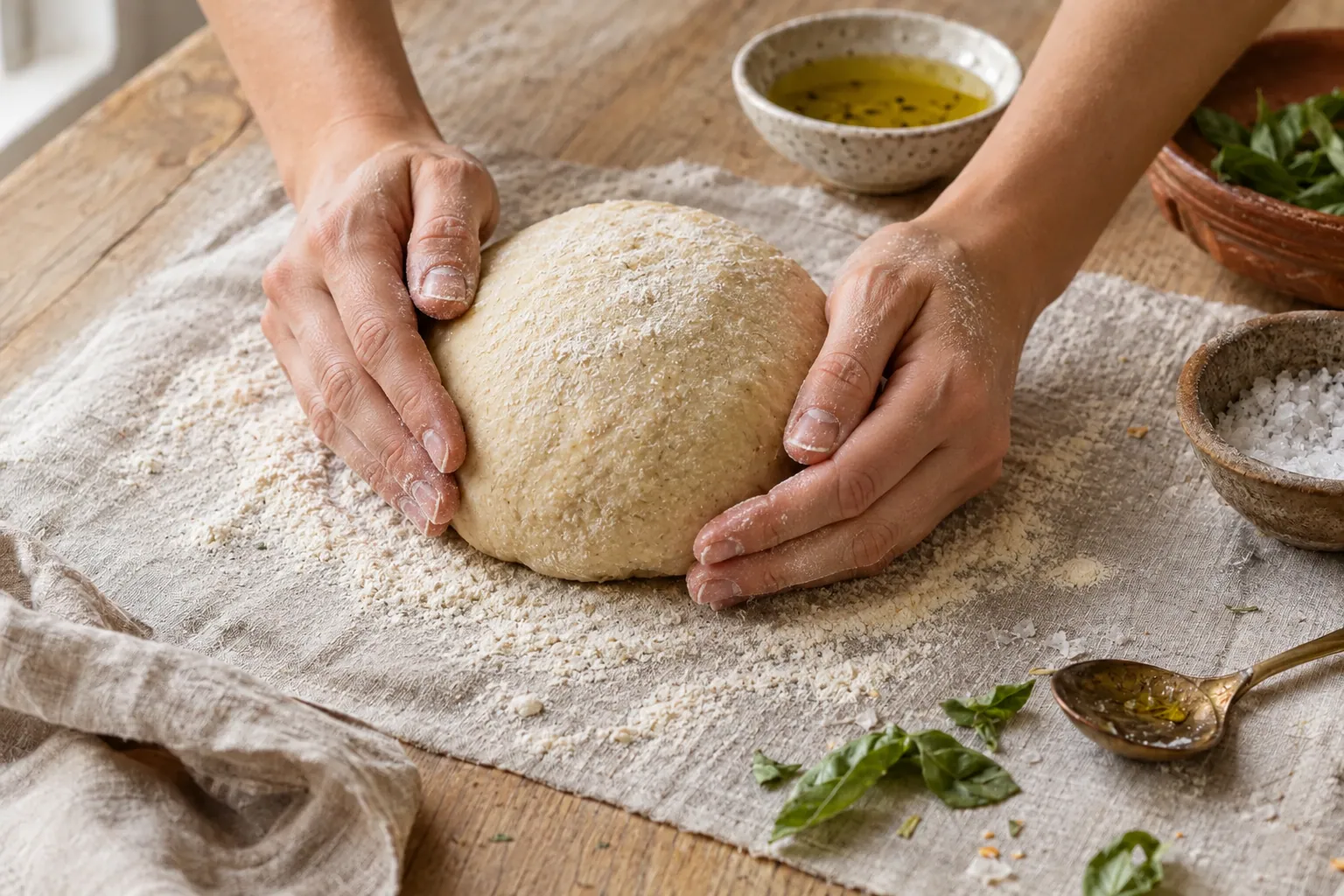
Cover the dough and let it rise for 60 minutes at room temperature, until puffy and roughly doubled. During the final 45 minutes, heat the oven to its highest setting, ideally 500°F (260°C), with a baking steel or an inverted heavy baking sheet on the upper-middle rack.
Divide the dough into 8 equal pieces, about 100 g each, and shape each into a ball. This should take about 5 minutes. Cover the balls and let them rest for 15 minutes so the gluten relaxes and the rounds roll more easily.
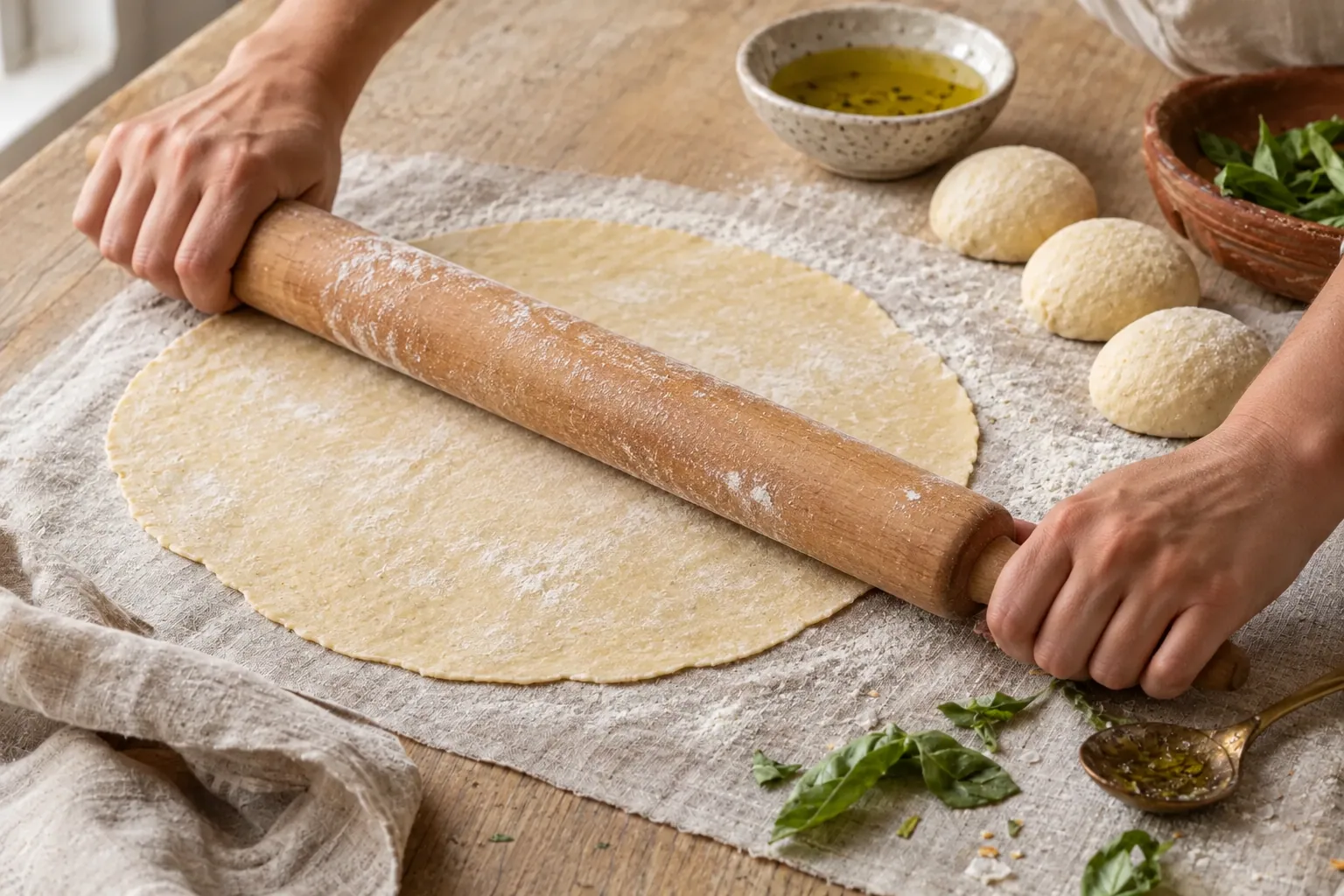
Roll each ball on the lightly dusted surface into a very thin round about 10 inches (25 cm) across and roughly 1/16 inch (1.5 mm) thick. Allow about 3 minutes per round. Keep the rounds covered as you work so their edges do not dry out. If one shrinks back, give it a few minutes to rest, then roll again.
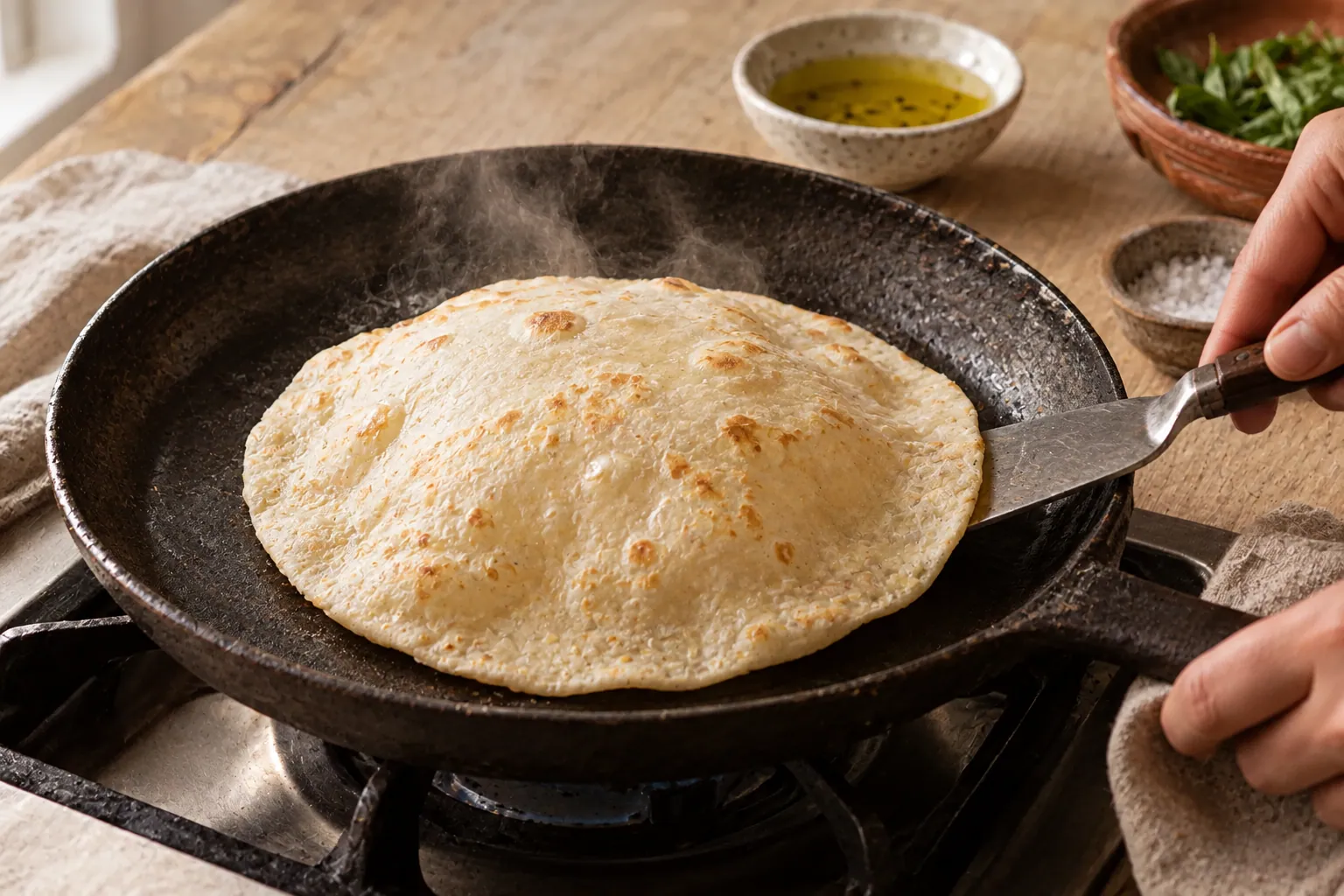
Bake the rounds one at a time directly on the hot steel or baking sheet, about 2 minutes per round. Watch for the dough to balloon and develop a few pale tan spots. Use a peel or rimless tray to remove each round, and work carefully around the hot oven.
Split each round into two thin layers as soon as it is cool enough to handle, allowing about 1 minute per round. Use a thin knife to open the edge where the layers have separated, then peel them apart gently. If a round has not puffed evenly, separate the parts that have formed pockets and leave any thicker section intact.
Reduce the oven to 325°F (165°C). Arrange the separated layers in a single layer on two baking sheets and toast them in four batches, about 5 minutes per batch, turning once. Remove each batch when the layers are dry, crisp, and barely golden. Keep an eye on them near the end, since thin pieces can scorch quickly.
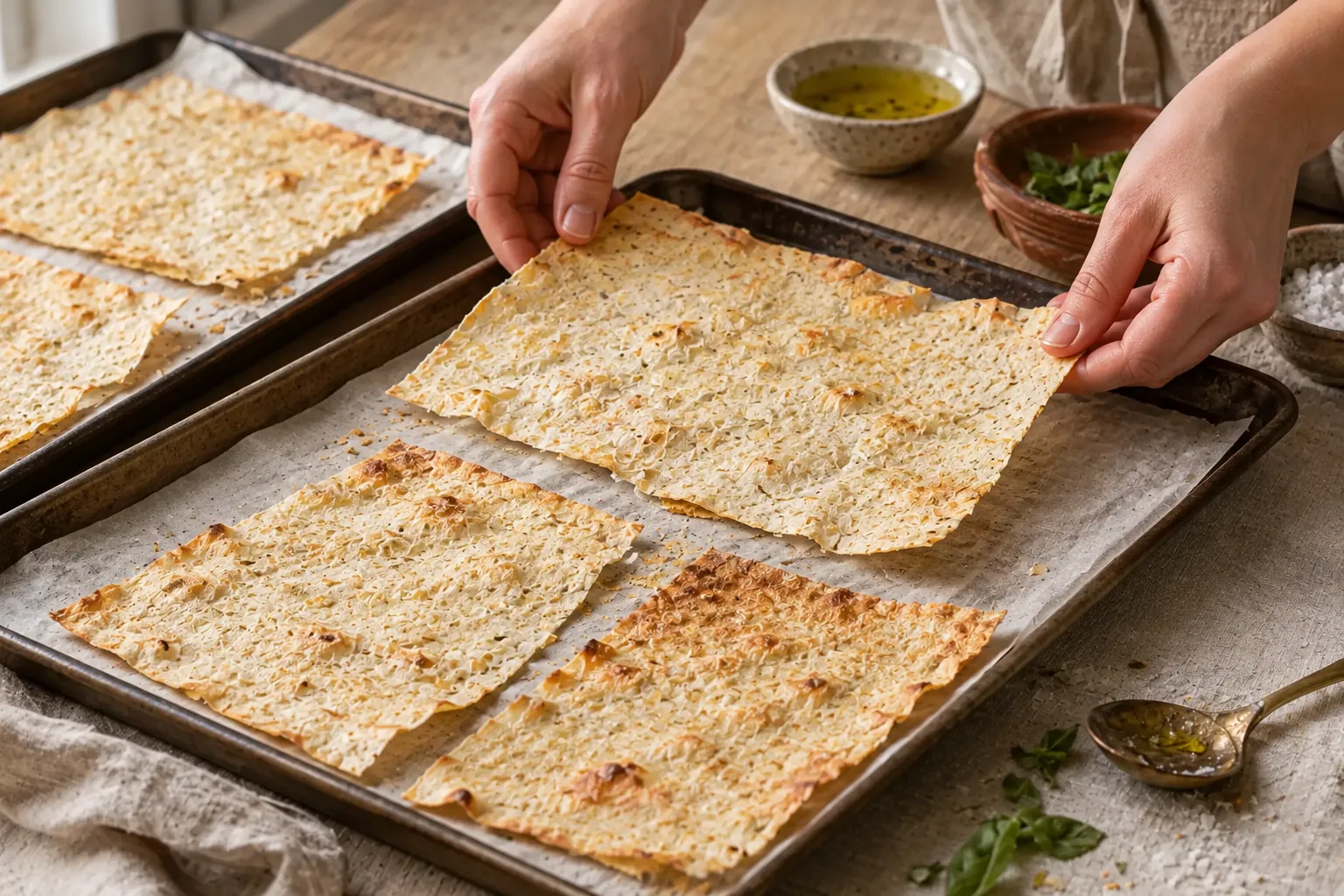
Cool the bread on a wire rack for 10 minutes before serving or storing. It will become crisper as it cools.
Make ahead and storage
Cool the bread completely, then store it in an airtight container at room temperature for up to 1 week. If it softens, crisp it in a 300°F (150°C) oven for 3 to 5 minutes and cool it again before serving.
Where it goes wrong
| If you see | It’s because | Do this |
|---|---|---|
| The round stays flat or puffs only in small patches. | Why The oven surface was not fully heated, or the dough was rolled too thick. | Fix Preheat the steel or inverted baking sheet for the full 45 minutes and roll the next round thinner. |
| The bread bends instead of snapping once cool. | Why The separated layers still hold moisture. | Fix Return them to the oven for another minute or two, then cool completely on a rack. |
Questions
Can you make pane carasau without a baking stone?
Yes. Use a heavy baking sheet turned upside down and preheat it thoroughly. A baking steel or stone also works.
Cooked this?
Sign in to rate it or say how it turned out.