Breads · Marche
Crescia Sfogliata Recipe from Urbino
This crescia sfogliata recipe makes Urbino’s crisp, flaky griddle bread with a lard-layered dough that rolls easily and cooks in a heavy skillet at home.
By Lucia Moretti (pen name) · · Editorial policy
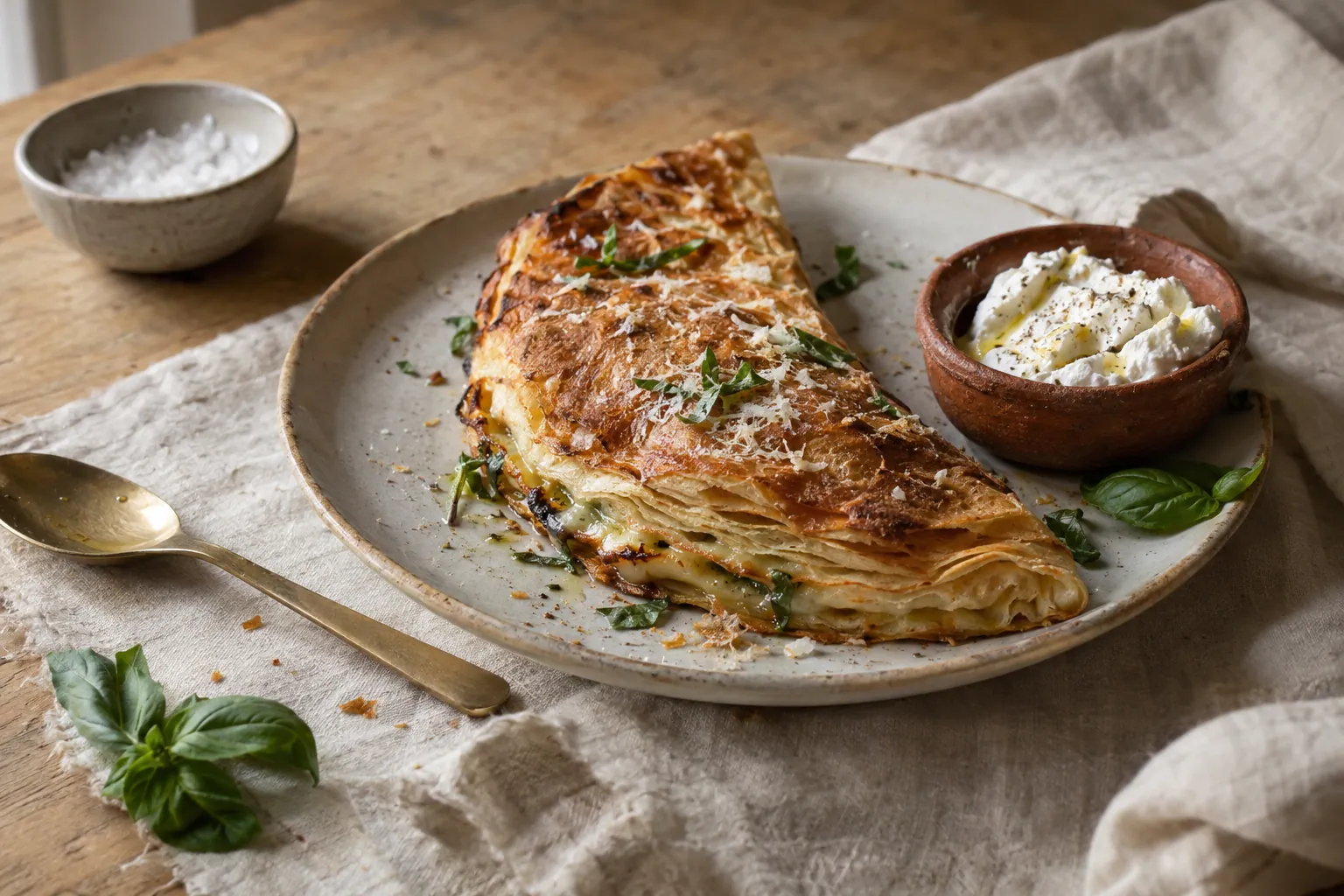
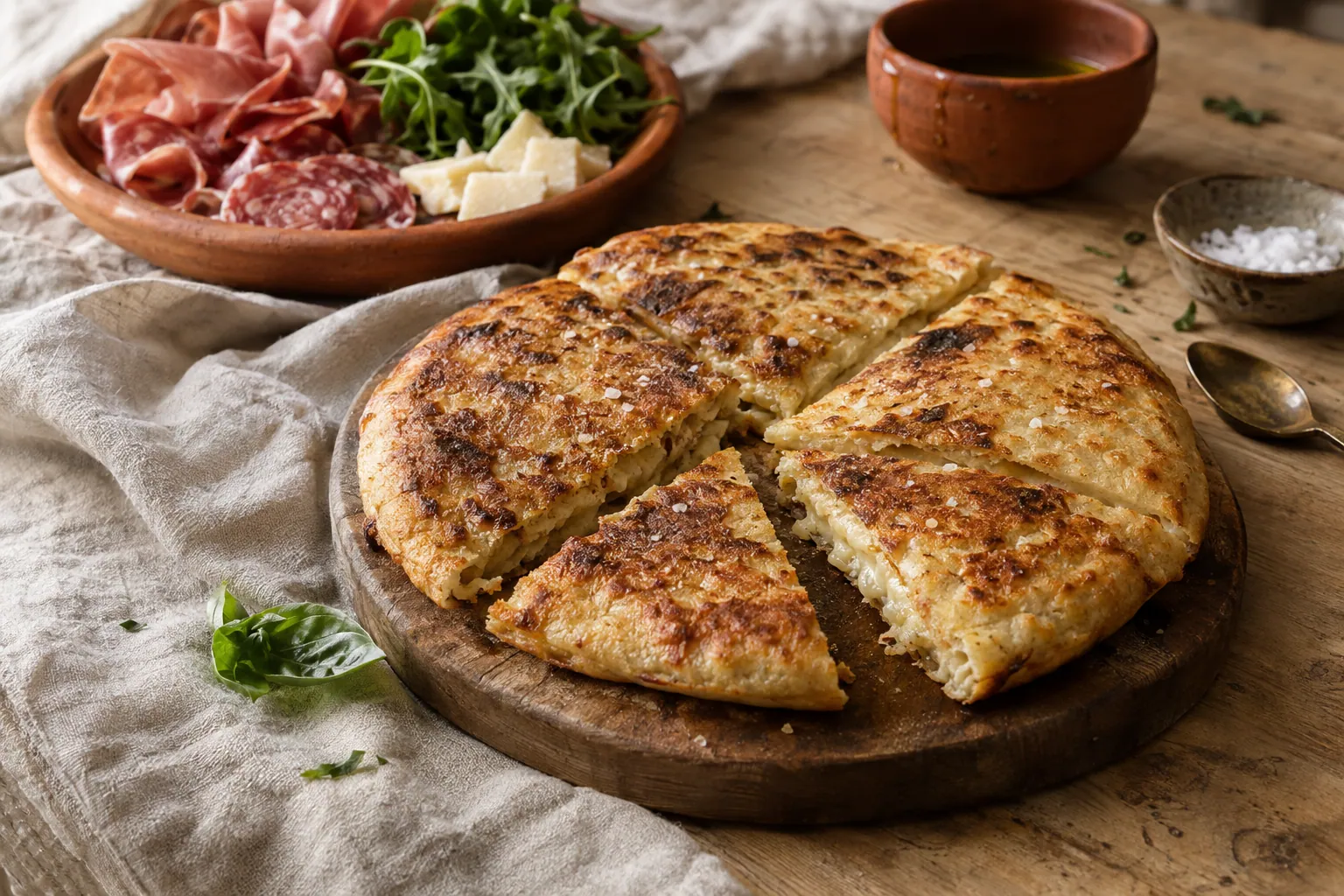
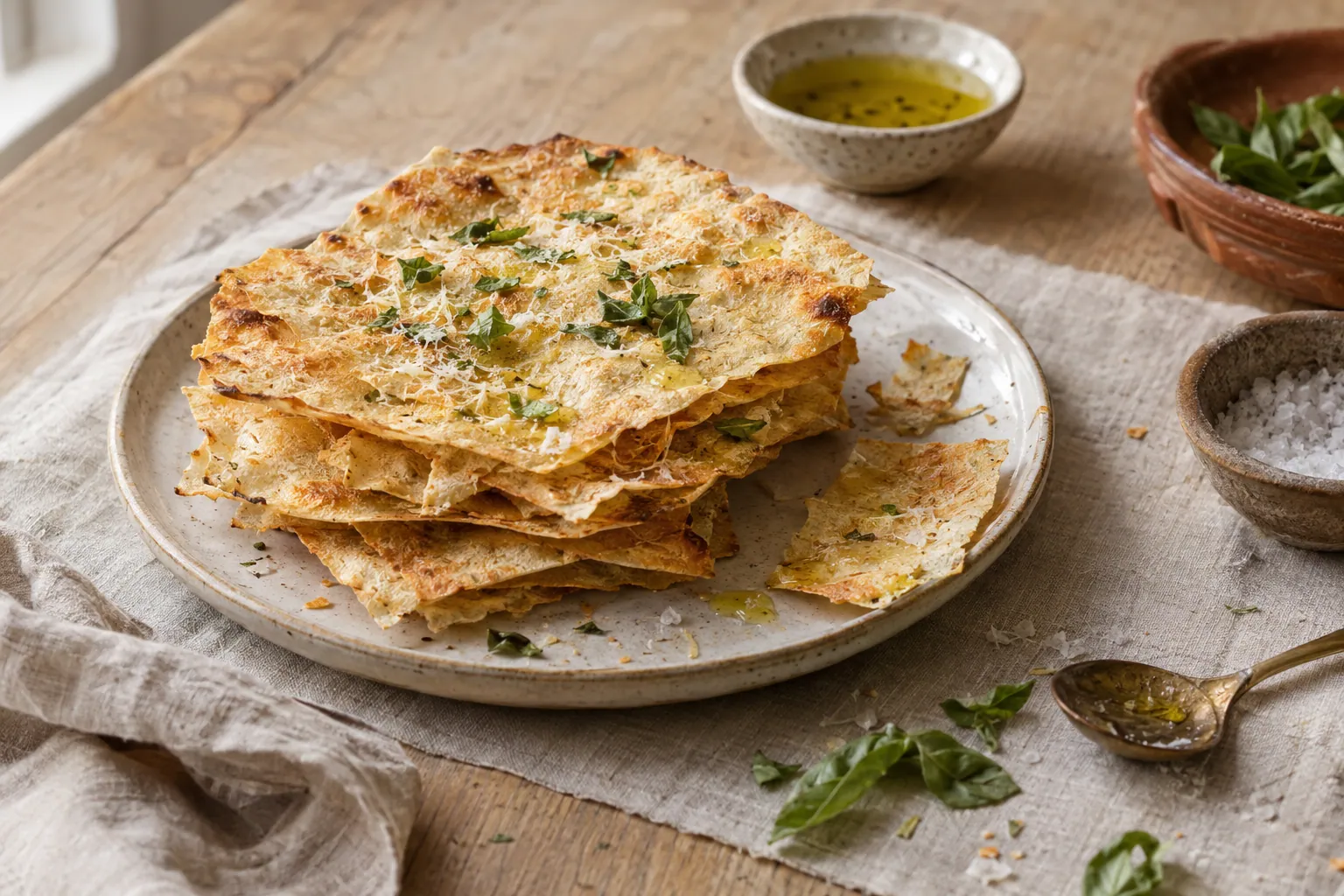
In Urbino, in northern Marche, crescia sfogliata gets its flaky layers from dough spread with lard, coiled, rested, and rolled flat again. This home method uses a heavy skillet instead of the traditional testo, a broad cooking surface, and the repeated rolling builds the sfoglia (layers) without special equipment. Serve it with Vincisgrassi Recipe from Marche, or compare it with the griddle-cooked Torta al Testo Recipe (Umbrian Flatbread).
Recipes stay free thanks to ads. Advertising disclosure
The recipe
Crescia Sfogliata
Ingredients
for 4 servingsEquipment
- large mixing bowl
- measuring cups and spoons
- rolling pin
- heavy skillet or griddle
- instant-read thermometer
Method
Combine the flour, salt, and black pepper in a large bowl, reserving 1 tablespoon of the flour for rolling. Beat the eggs with the water, pour them into the bowl, and mix until a shaggy dough forms, about 5 minutes.
Knead the dough on a clean counter for about 8 minutes, working in the 3 tablespoons of softened lard a little at a time. The dough should become smooth and supple, not sticky.
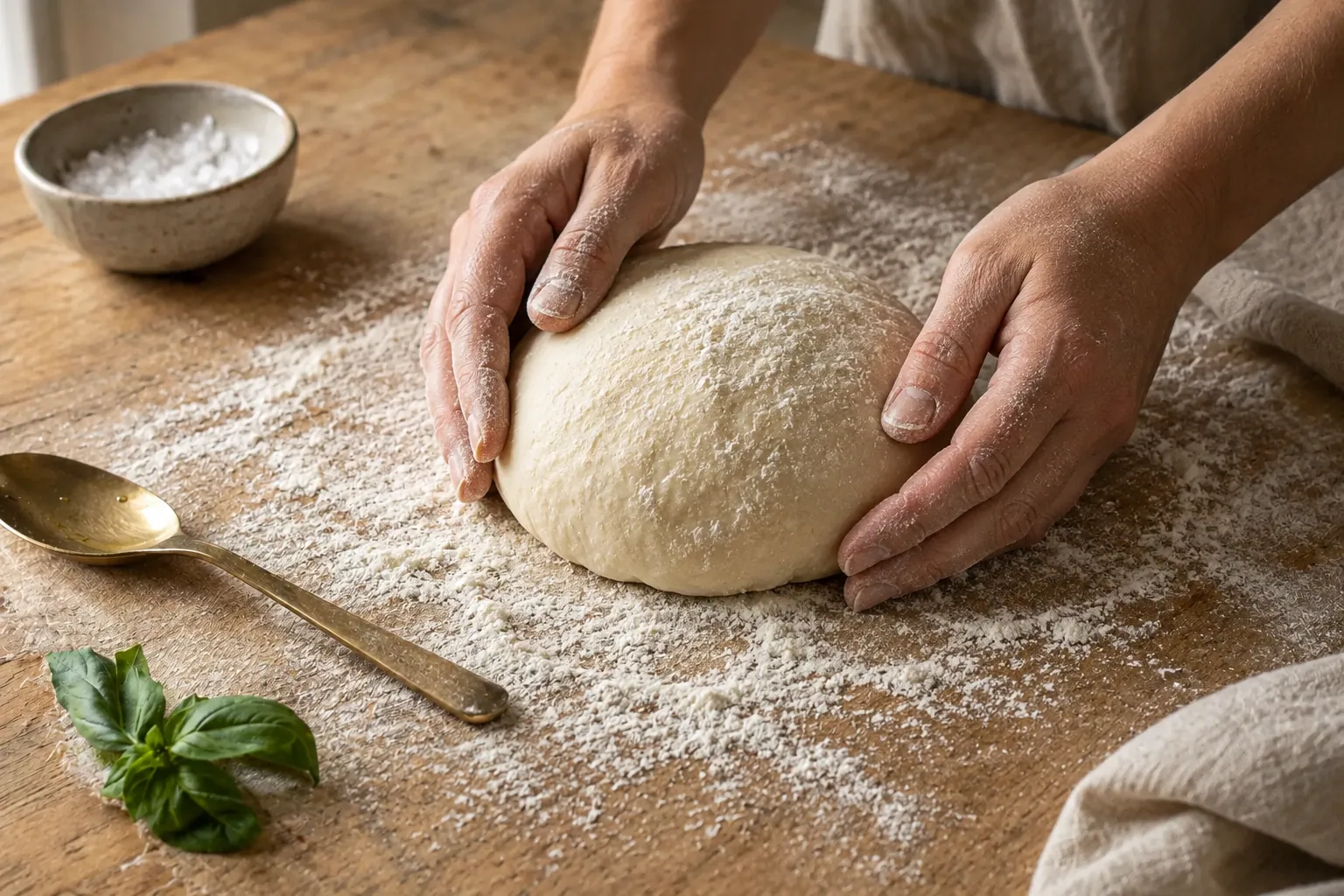
Cover the dough and let it rest at room temperature for 30 minutes so it relaxes and rolls without springing back.
Divide the dough into 4 equal pieces. Roll each piece into a thin rectangle, spread it with some of the remaining softened lard, then roll it up tightly and coil it into a small spiral. Use the reserved flour to keep the counter from sticking. Allow about 12 minutes for all four coils.
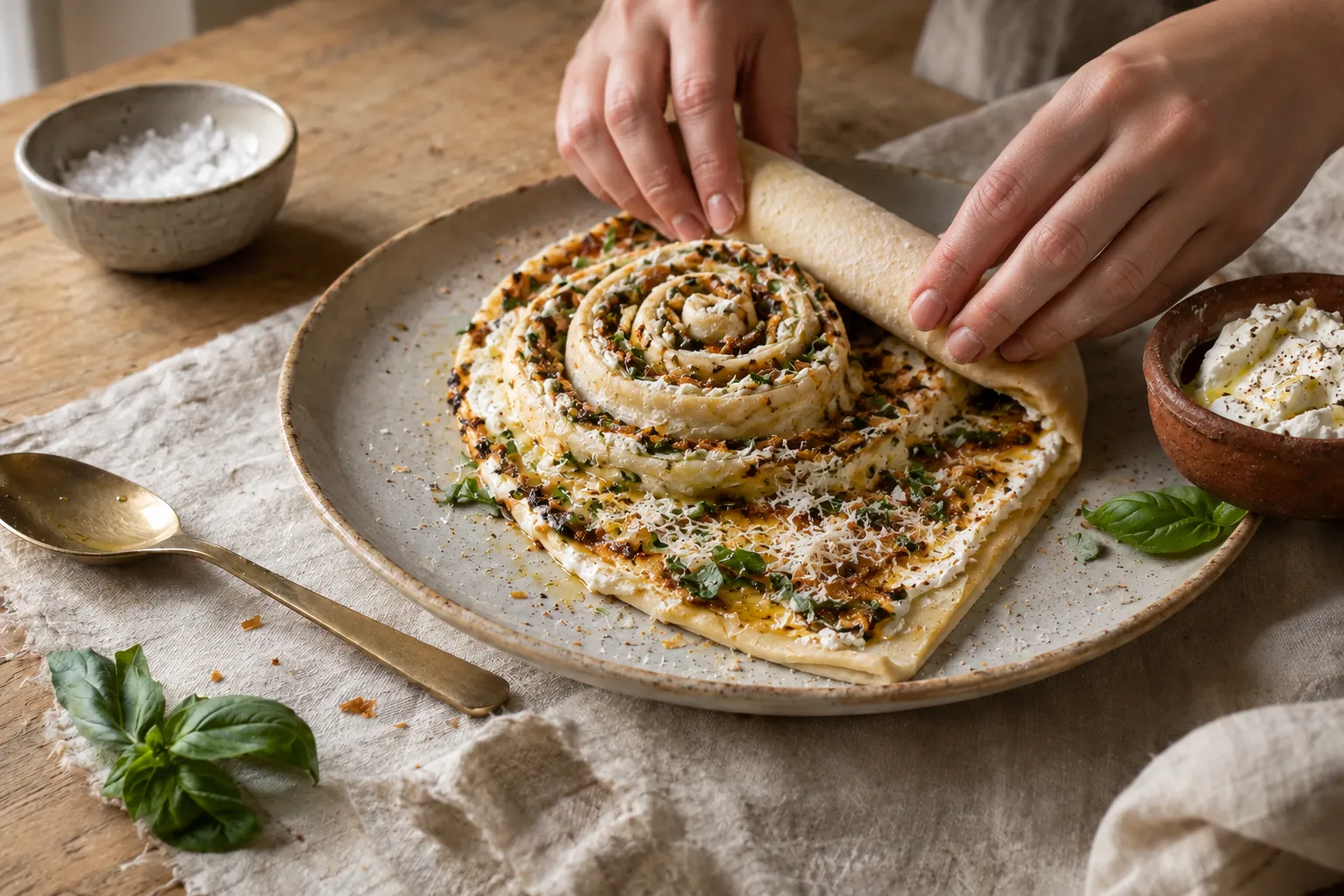
Cover the coils and rest them for 15 minutes. This pause makes the dough easier to roll into flatbreads.
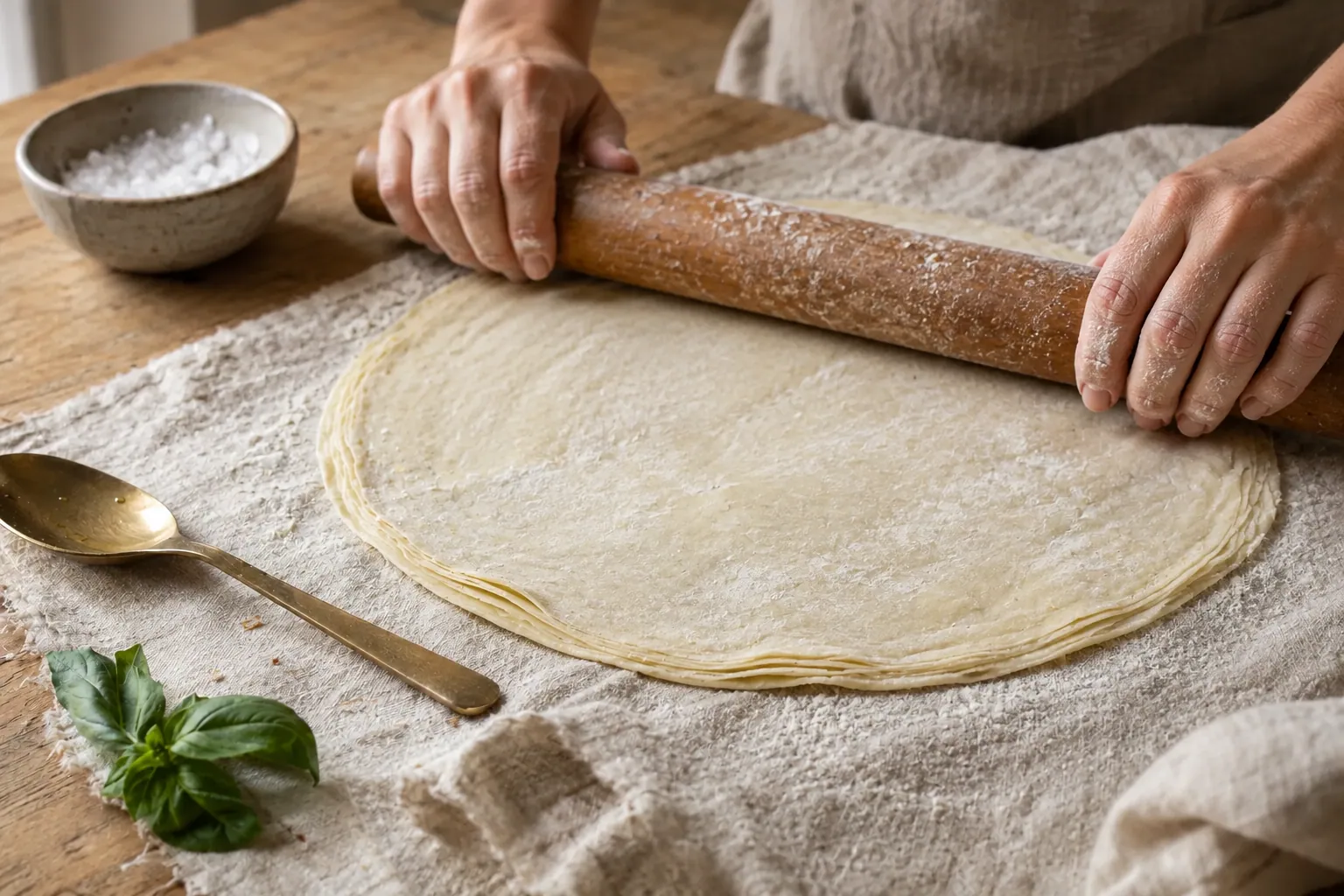
Roll each coil into an 8-inch round, about ⅛ inch thick, using the reserved flour sparingly if needed. Keep the other coils covered while you work. Allow about 8 minutes for all four.
Heat a heavy skillet or griddle over medium heat for 5 minutes. Keep it dry; the lard in the dough is enough to prevent sticking.
Cook the rounds one at a time for about 3 minutes per side, turning when brown spots appear and the surface looks set. Cook each until the center reaches 160°F (71°C) for egg safety; lower the heat if the outside browns before the center is done. The four rounds take about 24 minutes altogether.
Food safety
The dough contains raw egg. Do not taste it uncooked; cook each flatbread until its center reaches 160°F (71°C).
What to serve with it
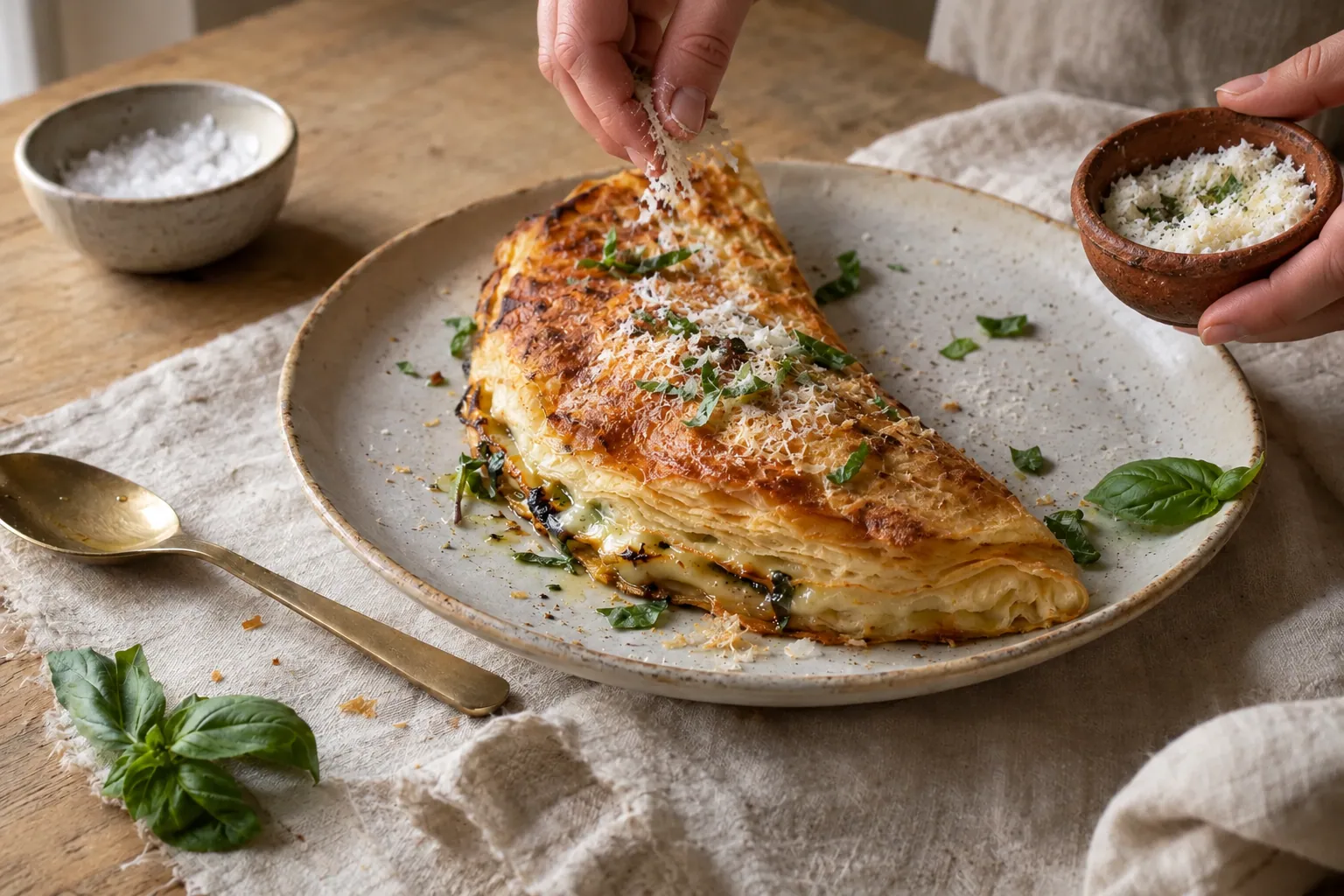
For a local touch, fill the warm bread with Casciotta d'Urbino, a soft cheese from the area, and cooked greens. Soft ricotta or another mild, spreadable cheese also works; roasted peppers or zucchini add a little sweetness without hiding the peppery, lard-rich layers.
Make ahead and storage
Cooked crescia contains egg, so refrigerate leftovers within 2 hours and use them within 3 to 4 days. Reheat in a dry skillet until the center reaches 165°F (74°C). You can also freeze the cooled flatbreads, separated with parchment, and reheat them from thawed in a skillet.
Where it goes wrong
| If you see | It’s because | Do this |
|---|---|---|
| The dough keeps shrinking as you roll it. | Why It has not rested long enough, so the gluten is still tight. | Fix Cover the dough and give it the full 30-minute rest before shaping, then rest the coils for 15 minutes before the final roll. |
| The flatbread browns but has little visible layering. | Why The lard was spread unevenly, or the final round was rolled so thin that the layers pressed together. | Fix Spread the lard in a thin, even coat before coiling, and stop rolling when the round is about ⅛ inch thick. |
Questions
Can you cook crescia sfogliata in a regular skillet?
Yes, a heavy skillet or griddle works well. Heat it over medium and cook the rounds in a dry pan, turning when brown spots appear.
What can you put inside crescia sfogliata?
Soft cheese, cooked greens, or roasted vegetables make simple fillings. Add them after cooking, then fold the warm flatbread around them.
Cooked this?
Sign in to rate it or say how it turned out.