Breads · Puglia
Focaccia Barese Recipe with Tomatoes
This Puglian focaccia has a tender potato-enriched crumb, juicy ripe tomatoes, and a crisp olive-oil bottom; a patient rise keeps it light and flavorful.
By Lucia Moretti (pen name) · · Editorial policy
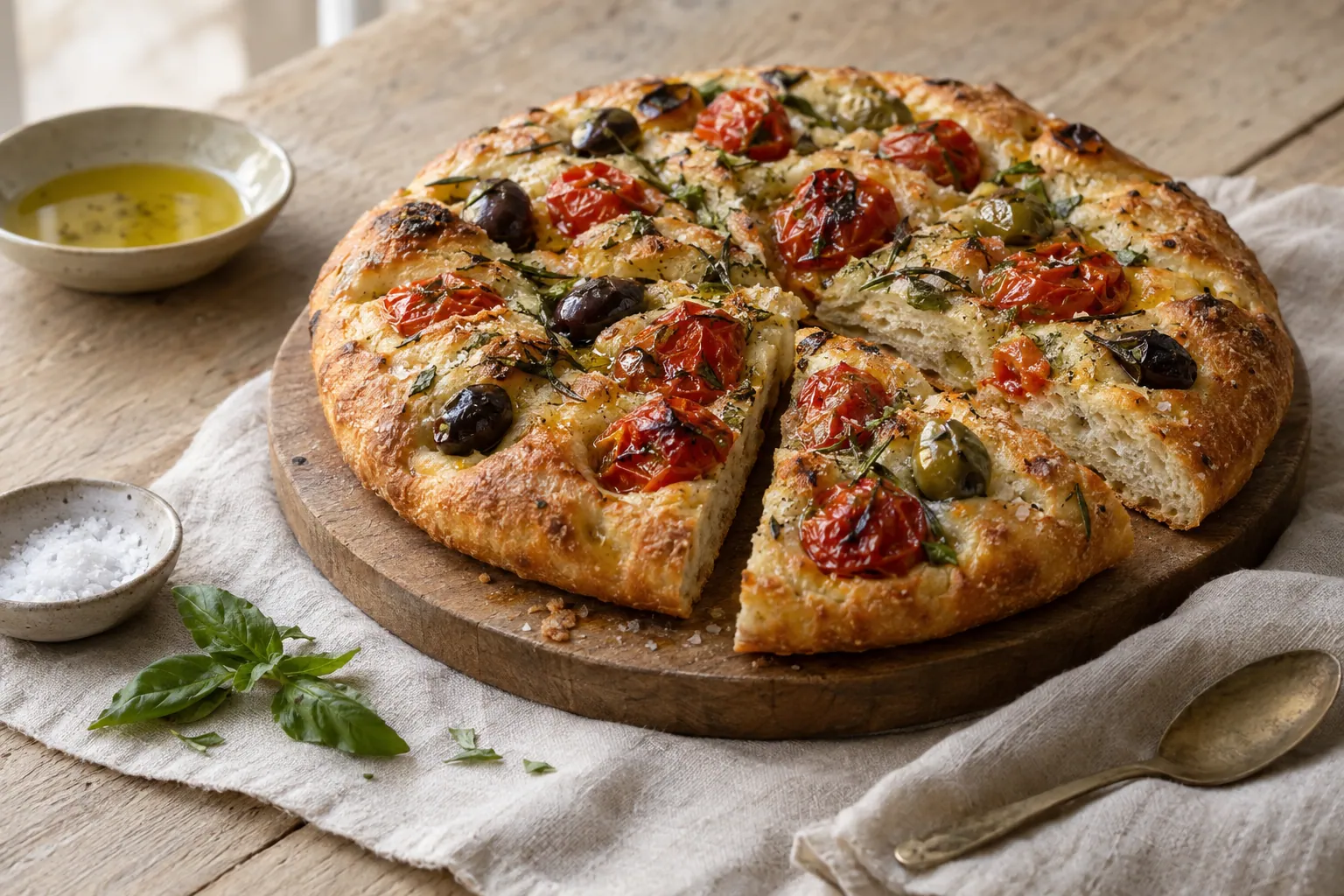
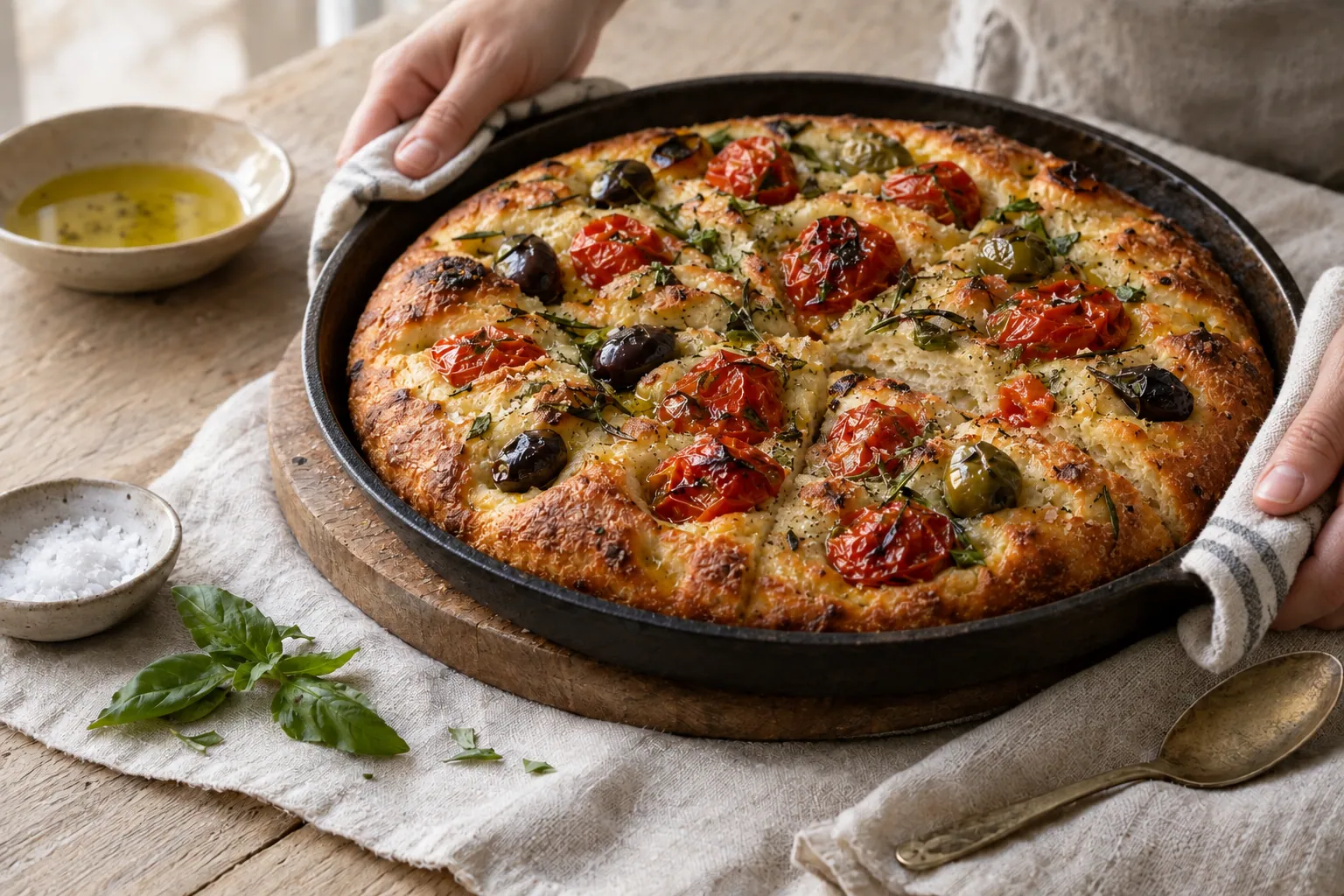
Focaccia Barese is a soft, olive-oil-rich Puglian bread topped with ripe tomatoes and baked until its bottom turns crisp. In Bari, it is often made in a round pan, with potato worked into the dough for a tender, moist crumb that stays soft after baking. The potato also makes the dough feel a little sticky, which is exactly what we want; resist the urge to bury it in extra flour.
I use bread flour with a little fine semolina for a gently chewy bite. Semola rimacinata (twice-milled durum wheat semolina) is common in Puglia, but fine semolina works well here too. Let the dough rise until visibly puffy, then press it into a generous slick of olive oil. That oil helps the base brown while the tomatoes roast on top. I like small ripe tomatoes, cut side up, so their juices flavor the bread without soaking it.
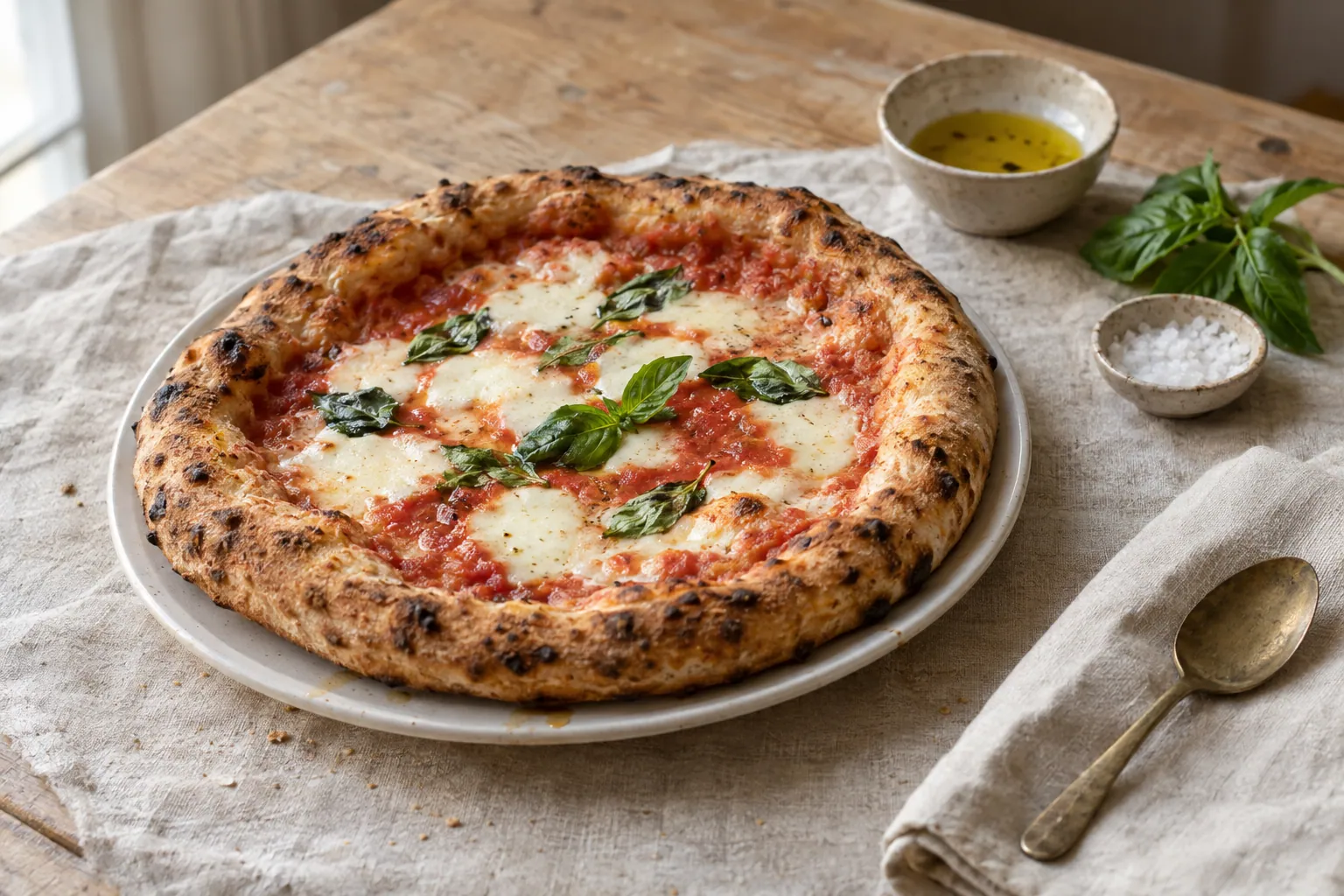
For what to cook next, try Homemade Pesto Genovese Recipe or Neapolitan Pizza Margherita Recipe. This version works because the potato keeps the crumb plush while a hot, well-oiled pan crisps the base.
Recipes stay free thanks to ads. Advertising disclosure
The recipe
Focaccia Barese with Tomatoes
Ingredients
for 6 servingsEquipment
- Large pot
- Potato masher or fork
- Large mixing bowl
- Stand mixer with dough hook (optional)
- 12-inch (30 cm) round metal pan
- Oven
Method
Boil the potato in salted water until a knife slides through easily, about 15–20 minutes. Drain, peel while warm, and mash until smooth. Let it cool until just warm before adding it to the dough.
Stir the warm water, yeast, and sugar together in a large bowl. Add the bread flour, semolina, mashed potato, salt, and 2 tablespoons (30 ml) olive oil. Mix until no dry flour remains; the dough will be soft and sticky.
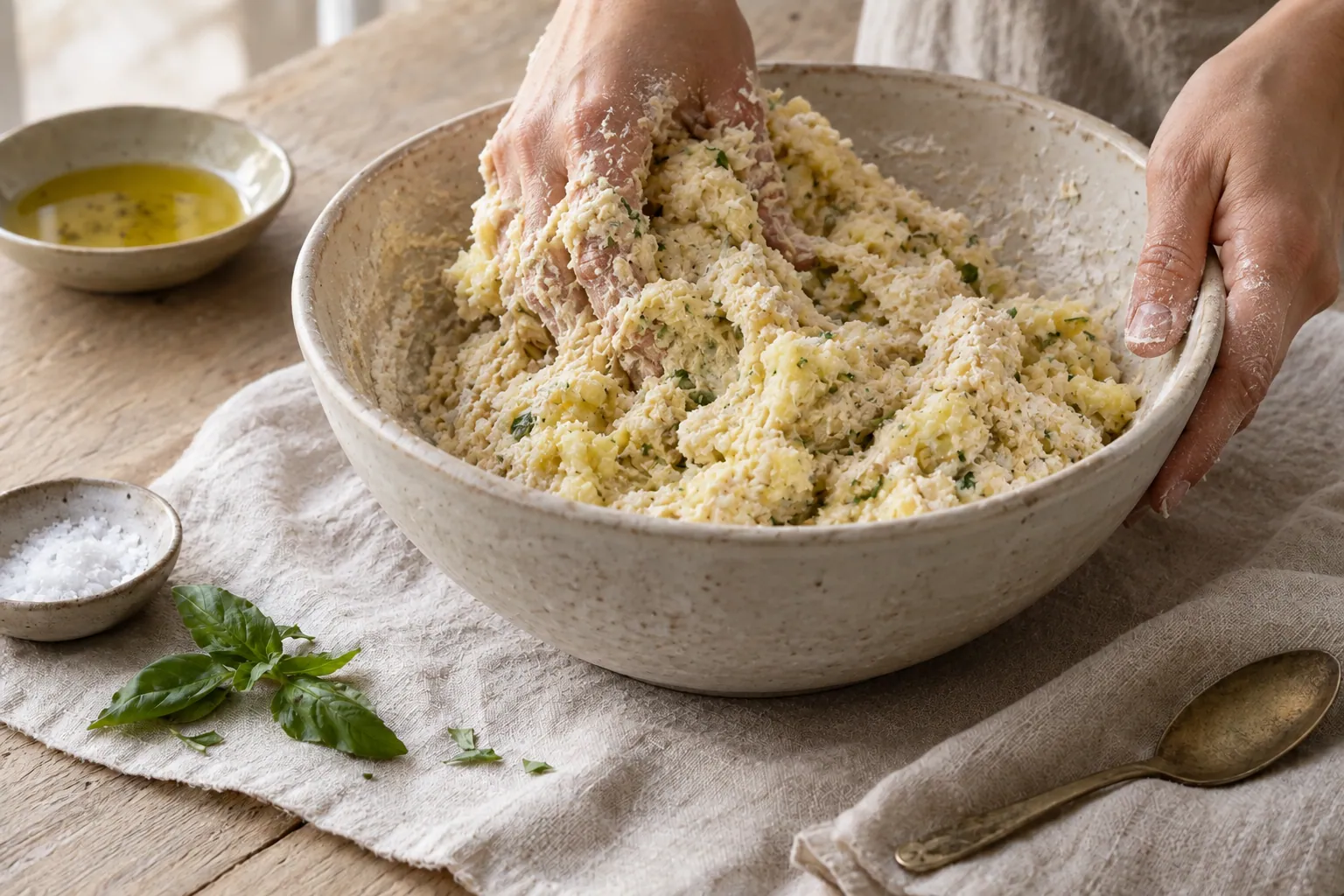
Knead by hand for 8–10 minutes, or in a stand mixer with a dough hook for 6–8 minutes on low, until the dough looks smoother and stretches without tearing right away. It will remain tacky, so oil your hands rather than adding much more flour.
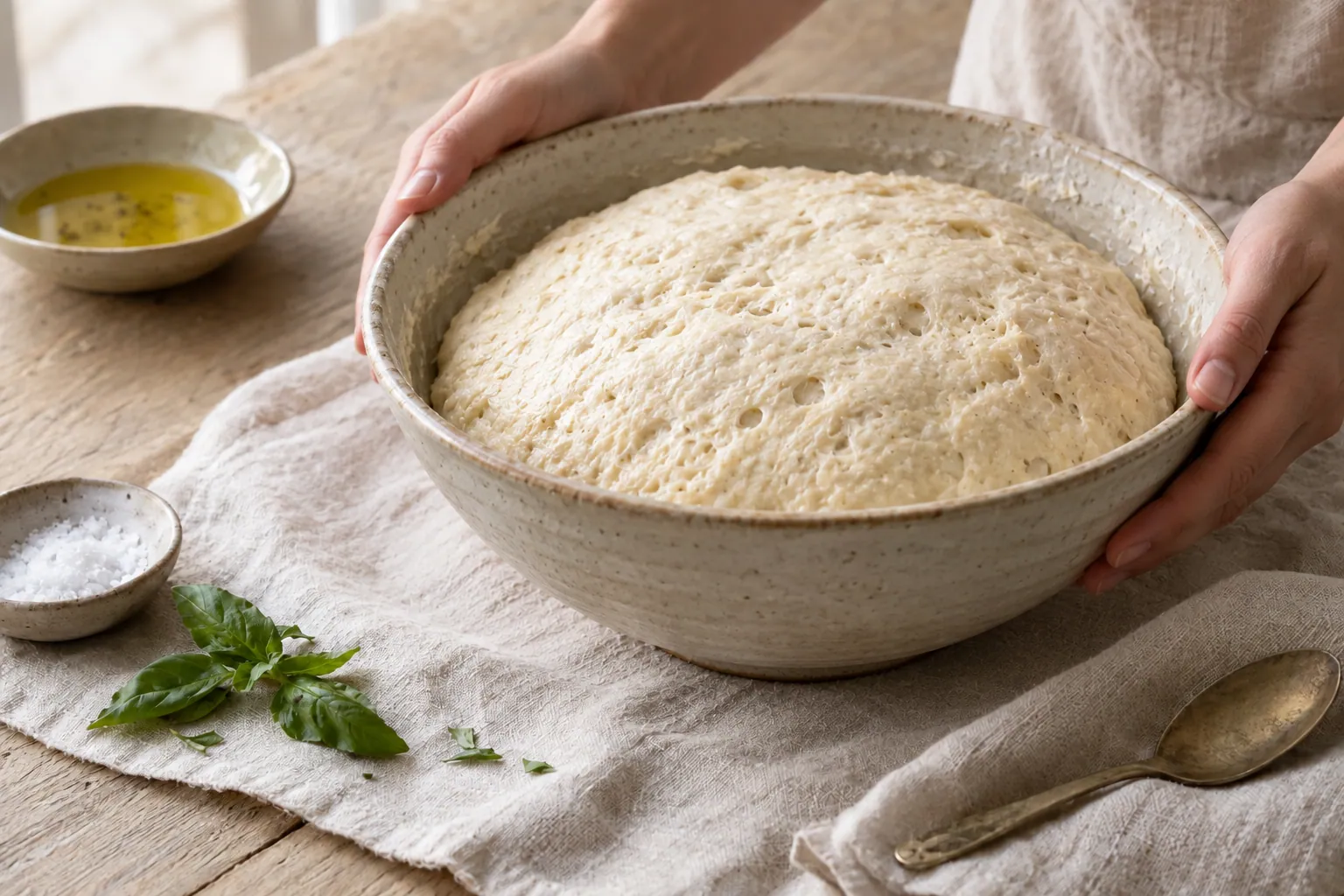
Transfer the dough to a lightly oiled bowl, cover, and let it rise in a warm spot until doubled and puffy, about 60–90 minutes. The exact time depends on your kitchen; look for the dough to expand substantially, not for the clock to perform miracles.
Pour 2 tablespoons (30 ml) olive oil into a 12-inch (30 cm) round metal pan and coat the bottom. Ease the dough into the pan, turn it once to coat, then press it outward with oiled fingertips. If it springs back, leave it for 10 minutes and press again.
Cover the pan and let the dough rise for 35–50 minutes, until puffy and relaxed. Heat the oven to 425°F (220°C) during the final 20 minutes of the rise.
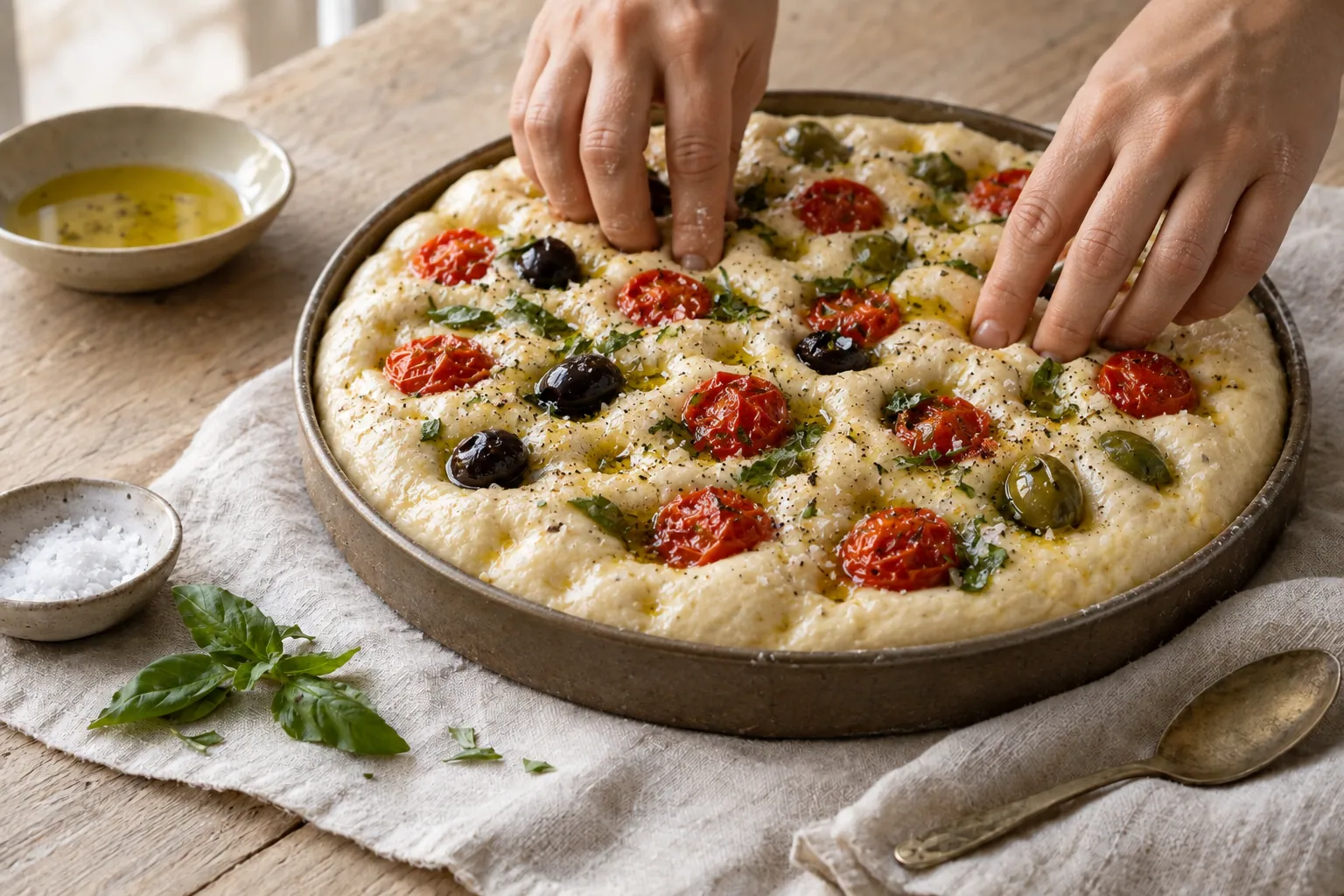
Press the tomato halves cut side up into the dough, spacing them evenly. Add the olives if using, sprinkle with oregano and coarse salt, then drizzle the remaining 2 tablespoons (30 ml) olive oil over the top.
Bake on the center rack for 25–30 minutes, until the tomatoes are blistered and the top is golden. Lift an edge carefully with a spatula: the bottom should be deep golden and crisp. Cool in the pan for 10 minutes, then slice and serve warm or at room temperature.
Where it goes wrong
| If you see | It’s because | Do this |
|---|---|---|
| The dough feels stiff or tears while kneading. | Why Too much flour was added, or the potato was unusually dry. | Fix Keep the dough tacky and oil your hands. If it is genuinely dry and crumbly, work in water 1 teaspoon (5 ml) at a time. |
| The dough has barely risen after an hour. | Why The room or water was too cool, or the yeast is old. | Fix Move the covered bowl to a comfortably warm spot and give it more time. The dough should look doubled and puffy before shaping. |
| The dough keeps shrinking back in the pan. | Why The gluten is tense from being pressed too quickly. | Fix Cover it and wait 10 minutes, then ease it toward the edges again with oiled fingers. |
| The focaccia is pale underneath. | Why The pan was not well oiled, or the bread baked too high in the oven. | Fix Use a metal pan, coat its base generously with oil, and bake on the center rack. Check the bottom before taking it out. |
| The top is wet around the tomatoes. | Why The tomatoes were very watery or packed too closely together. | Fix Use ripe but firm small tomatoes, cut them in half, and leave gaps between them so steam can escape. |
Questions
What makes focaccia barese different?
Focaccia Barese is usually made with potato in the dough and topped with tomatoes. The potato gives the crumb a soft, moist texture, while olive oil helps the bottom bake crisp.
Can I make focaccia barese without semolina?
Yes, replace the semolina with the same weight of bread flour. The focaccia will be a little less chewy, but the potato dough will still bake up soft.
Can I make the dough ahead?
Yes, cover the dough and refrigerate it after kneading for up to 24 hours. Let it sit at room temperature until puffy before pressing it into the oiled pan.
How should I store leftover focaccia barese?
Store cooled focaccia in an airtight container at room temperature for up to 2 days. Reheat slices in a 350°F (175°C) oven until warm and the base crisps again.
Cooked this?
Sign in to rate it or say how it turned out.