Pasta · Marche
Vincisgrassi Recipe from Marche
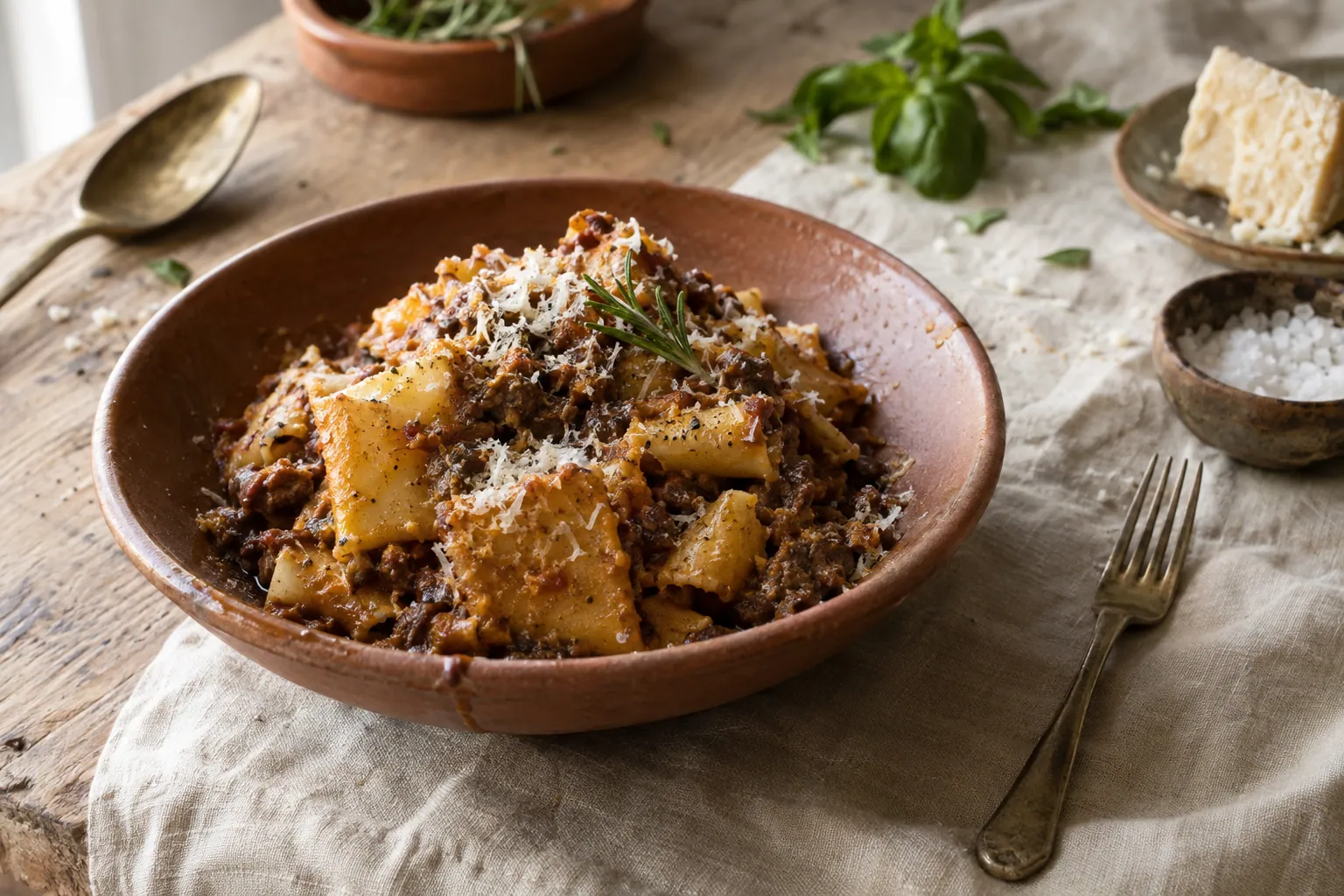
This Marche baked pasta layers beef, pork, chicken-liver ragù, béchamel, and Parmesan; a slow simmer gives the sauce depth and keeps the pasta tender.
By Lucia Moretti (pen name) · · Editorial policy
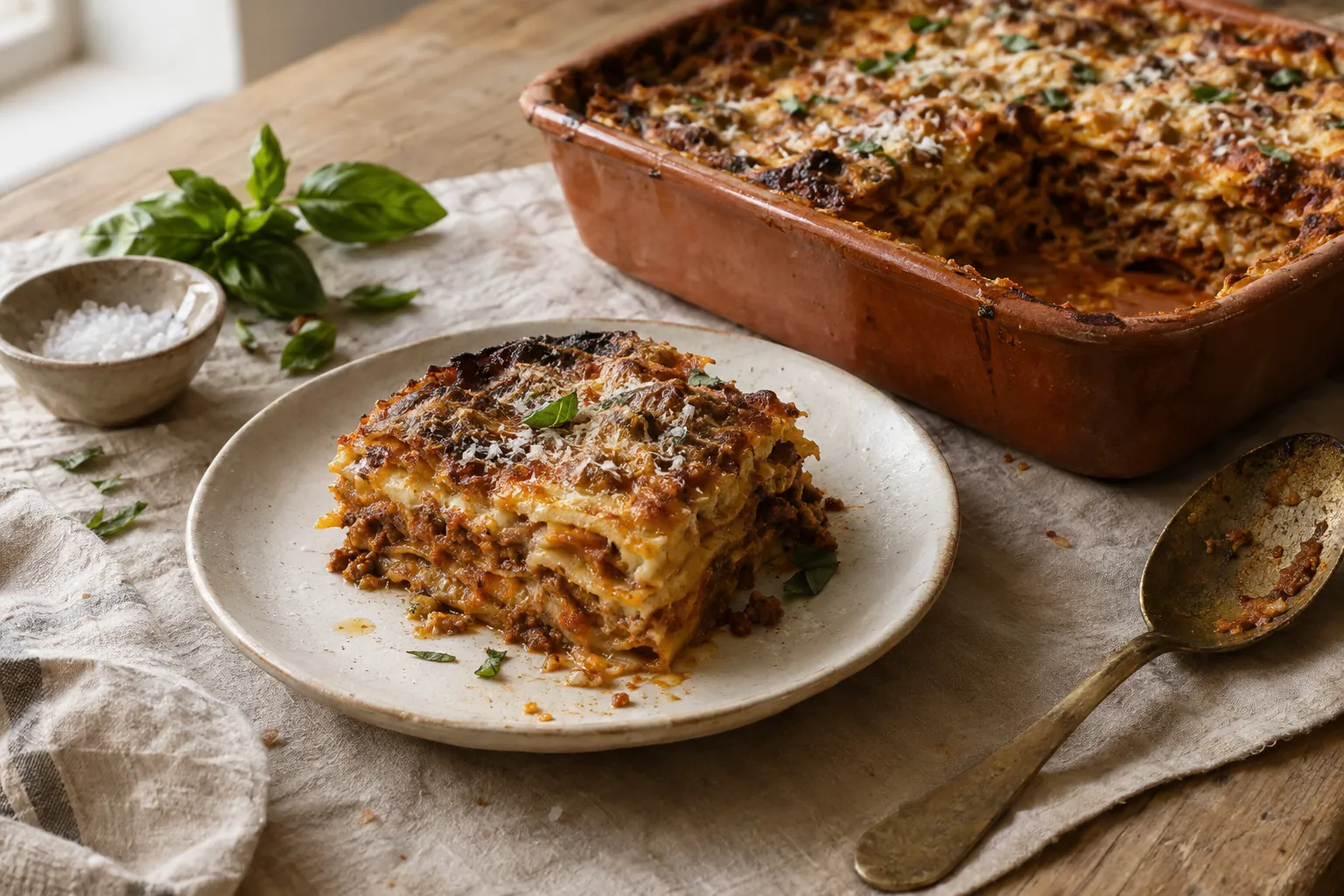
In the Macerata area of Marche, vincisgrassi is built around a substantial ragù, often enriched with chicken giblets, and a layer of béchamel. This home-kitchen version uses dried lasagna sheets and a covered stovetop simmer, with soffritto (the slow-cooked base of onion, carrot, and celery) to start the sauce. For other central Italian cooking, see Fricco all’Eugubina Chicken Stew, or put Torta al Testo Recipe (Umbrian Flatbread) on the table as bread.
Recipes stay free thanks to ads. Advertising disclosure
The recipe
Vincisgrassi
Ingredients
for 6 servingsEquipment
- large heavy pot
- saucepan
- whisk
- large pot for pasta
- 9-by-13-inch baking dish
- instant-read thermometer
- aluminum foil
Method
Chop the onion, carrot, celery, garlic, and chicken livers. Warm the milk for the béchamel and grate the Parmigiano-Reggiano. Set out the remaining ingredients.
Heat the olive oil in a large, heavy pot over medium heat. Add the onion, carrot, and celery and cook until softened, about 6 minutes. Stir in the garlic, then add the beef, pork, and chicken livers. Break up the meat and cook, stirring, until the ground beef and pork reach 160°F (71°C) and the chicken livers reach 165°F (74°C), about 6 minutes more.
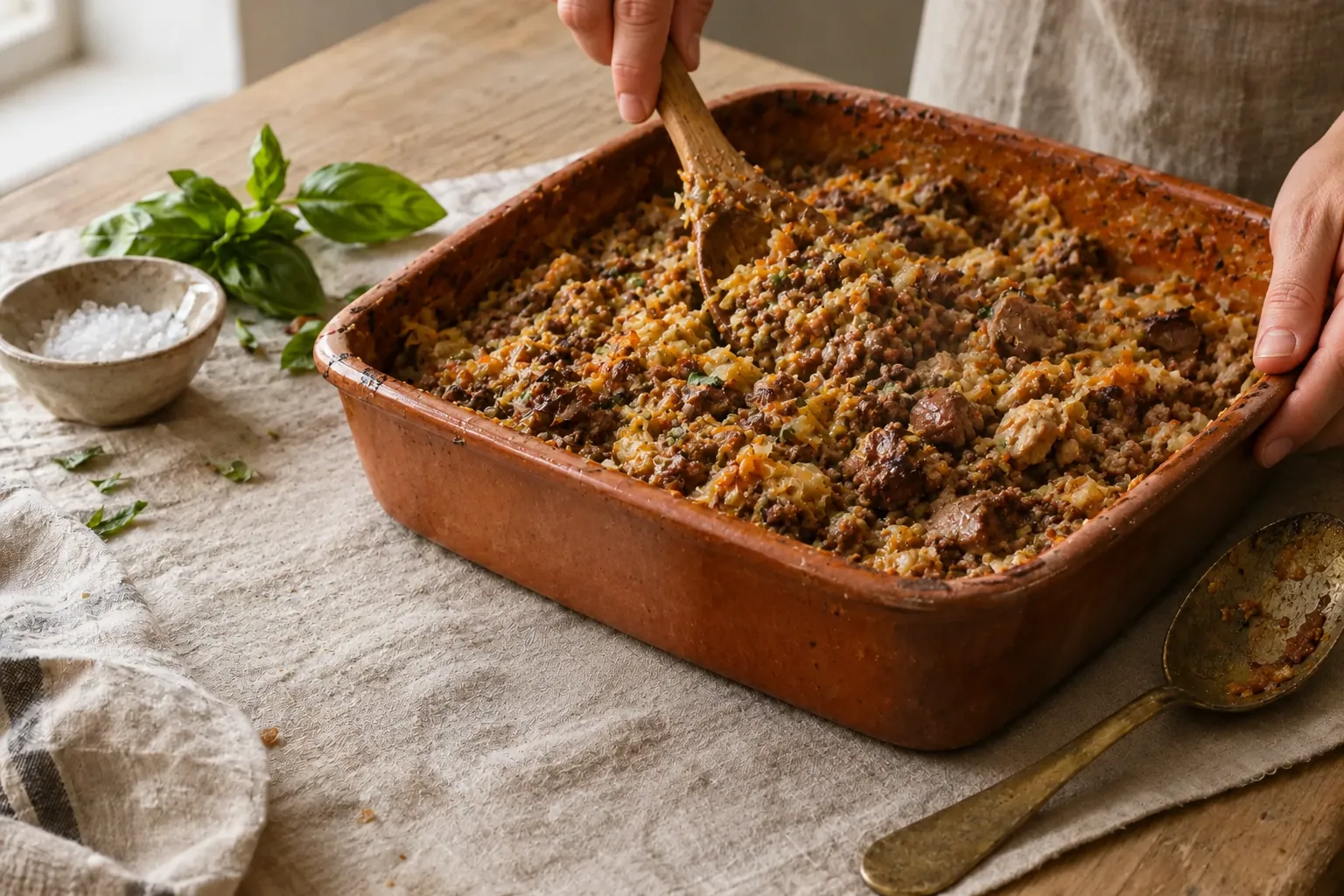
Pour in the wine and simmer until almost evaporated, about 3 minutes. Stir in the crushed tomatoes, chicken stock, bay leaf, salt, and pepper. Bring to a gentle simmer, cover with the lid slightly ajar, and cook for 75 minutes, stirring occasionally. The ragù should be thick but still moist. Remove the bay leaf.
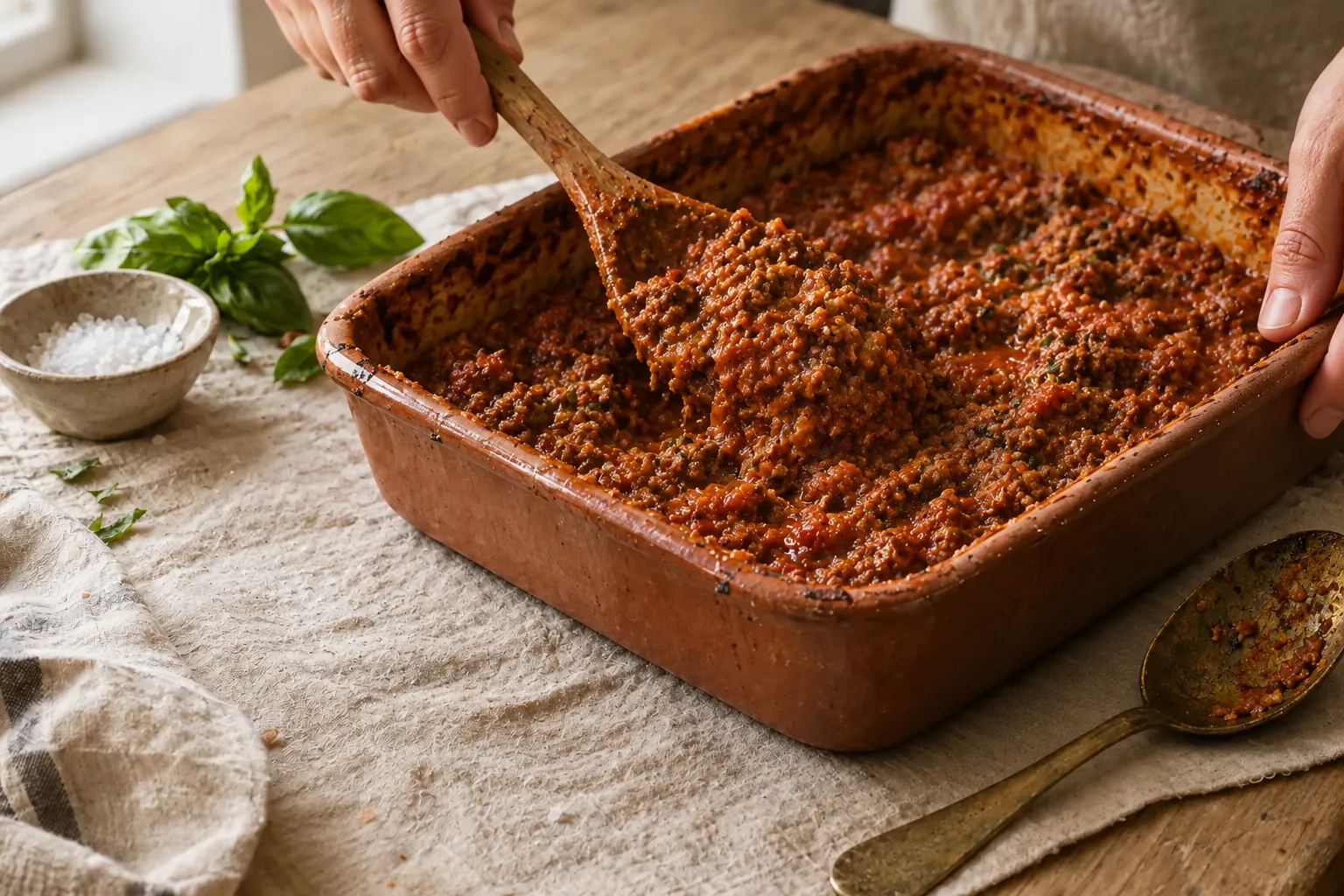
Melt the butter in a saucepan over medium heat. Whisk in the flour and cook for 2 minutes, stirring constantly. Gradually whisk in the warm milk. Add the nutmeg and cook, whisking often, until smooth and thick enough to coat a spoon, about 10 minutes. Season lightly with salt if needed.
Bring a large pot of salted water to a boil. Cook the lasagna sheets until pliable but still firm, following the package timing, usually about 8 minutes. Drain the sheets and lay them separately on a clean kitchen towel so they do not stick together.
Heat the oven to 375°F (190°C). Spread a thin layer of béchamel in a 9-by-13-inch baking dish. Add a layer of pasta, trimming sheets to fit. Spread over some ragù, a little béchamel, and a sprinkle of Parmigiano-Reggiano. Repeat to make four pasta layers, finishing with béchamel and the remaining cheese. Assemble for about 15 minutes.
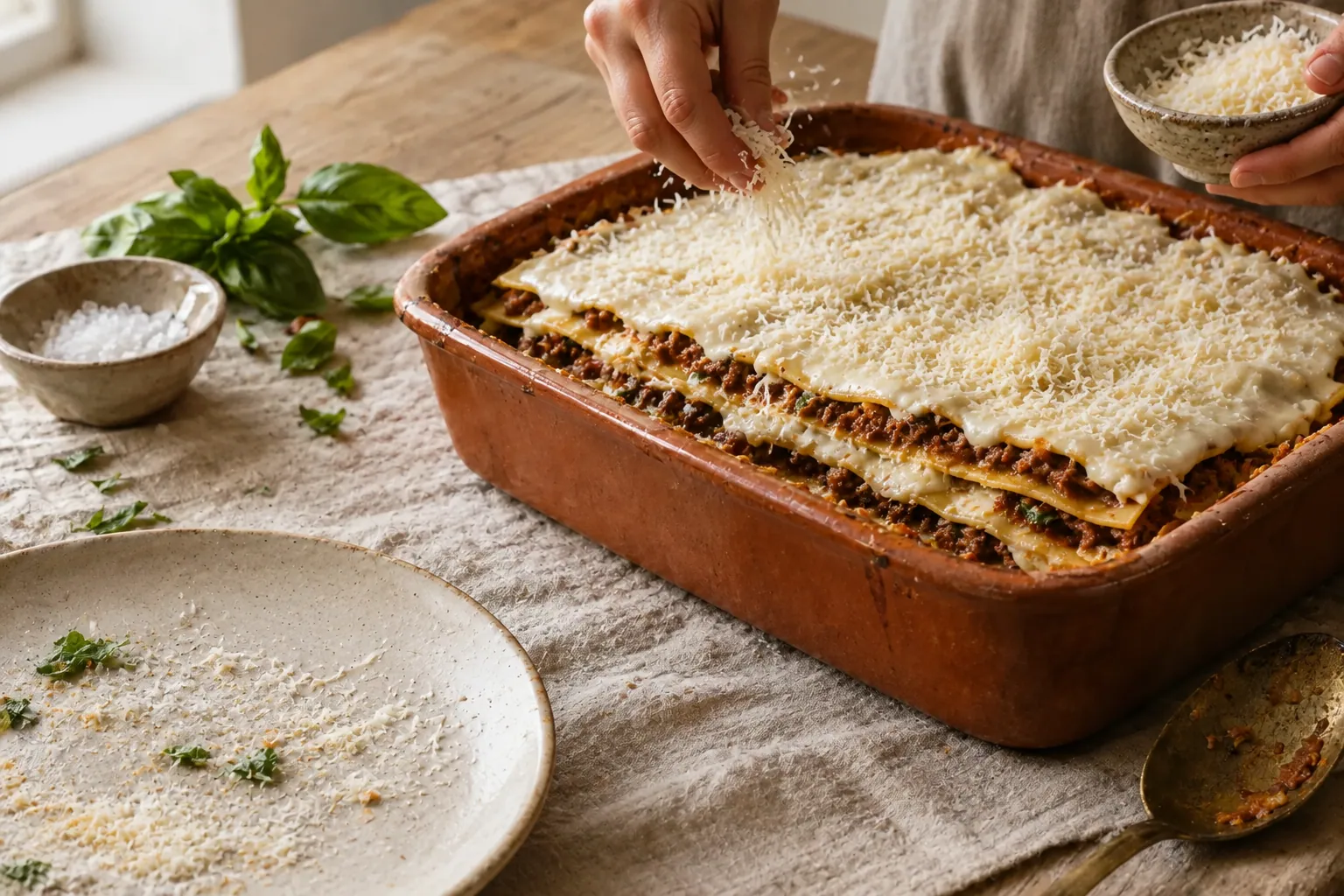
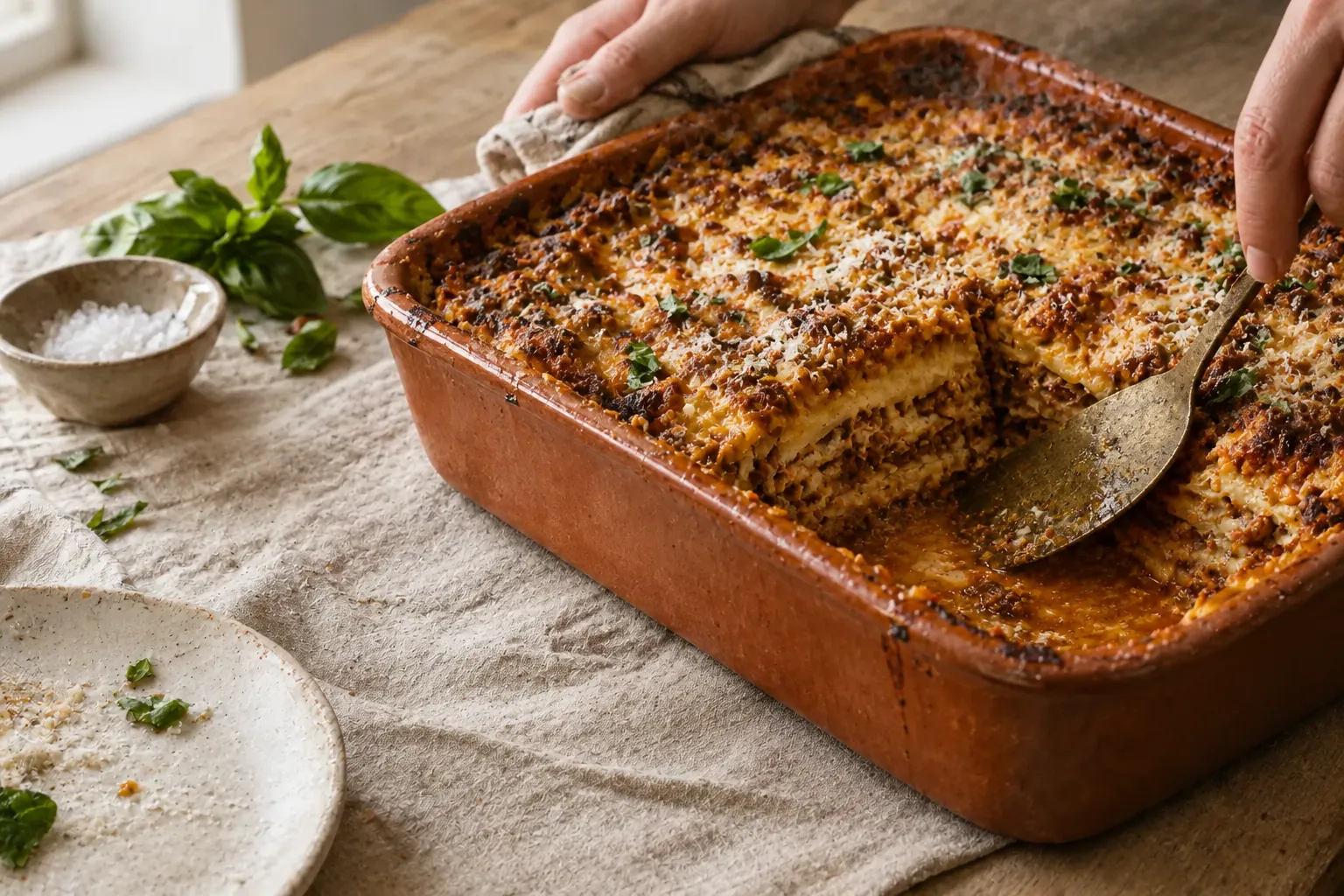
Cover the dish loosely with foil and bake for 20 minutes, then uncover and bake for 15 minutes, until bubbling and browned at the edges. Check that the center reaches 165°F (74°C). Let the pasta rest for 15 minutes before cutting so the layers settle.
Make ahead and storage
Make the ragù up to 2 days ahead. Refrigerate it within 2 hours of cooking, preferably in shallow containers to help it cool safely, and keep it covered. Assemble and bake the pasta on the day you plan to serve it.
Refrigerate leftover vincisgrassi within 2 hours, and keep it for 3 to 4 days. Reheat portions until the center reaches 165°F (74°C).
Where it goes wrong
| If you see | It’s because | Do this |
|---|---|---|
| The slices slump when served. | Why The ragù was too loose or the baked pasta was cut before it rested. | Fix Simmer the ragù until thick, then rest the baked dish for the full 15 minutes before slicing. |
| The pasta sheets tear or stick together. | Why The sheets were overcooked or left piled together after draining. | Fix Boil them only until pliable and lay them separately on a clean towel. |
Questions
Can you make vincisgrassi with no-boil lasagna sheets?
Yes, but the ragù and béchamel need to be loose enough to hydrate them. Follow the sheet package directions and add a little extra stock to the ragù if the sauce is very thick.
Cooked this?
Sign in to rate it or say how it turned out.