Pasta · Molise
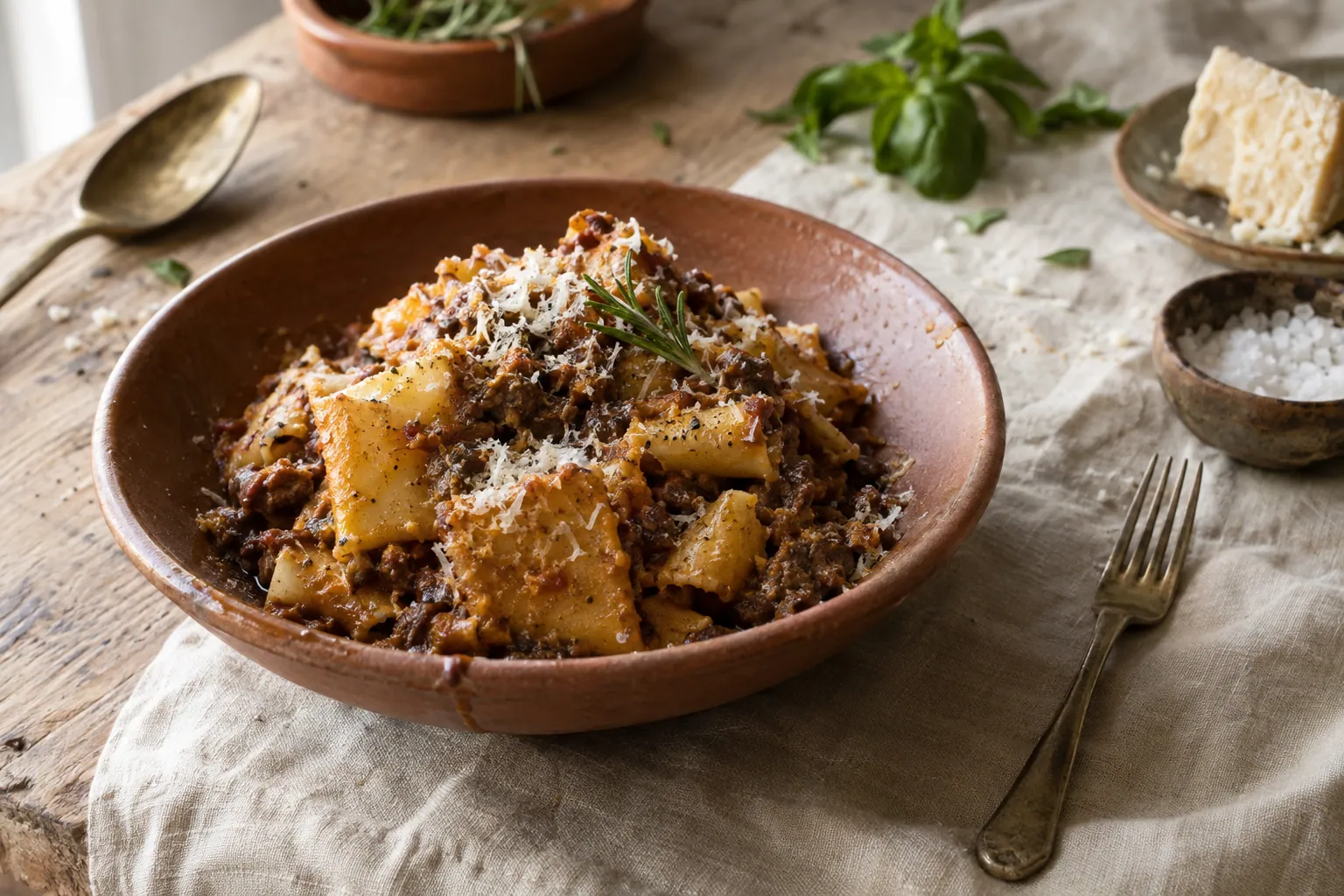
Cavatelli Molisani with Pork Ragù
Hand-rolled cavatelli from Molise meet slow-braised pork in tomato ragù; semolina dough and a gentle simmer make a sturdy, sauce-catching supper.
By Lucia Moretti (pen name) · · Editorial policy
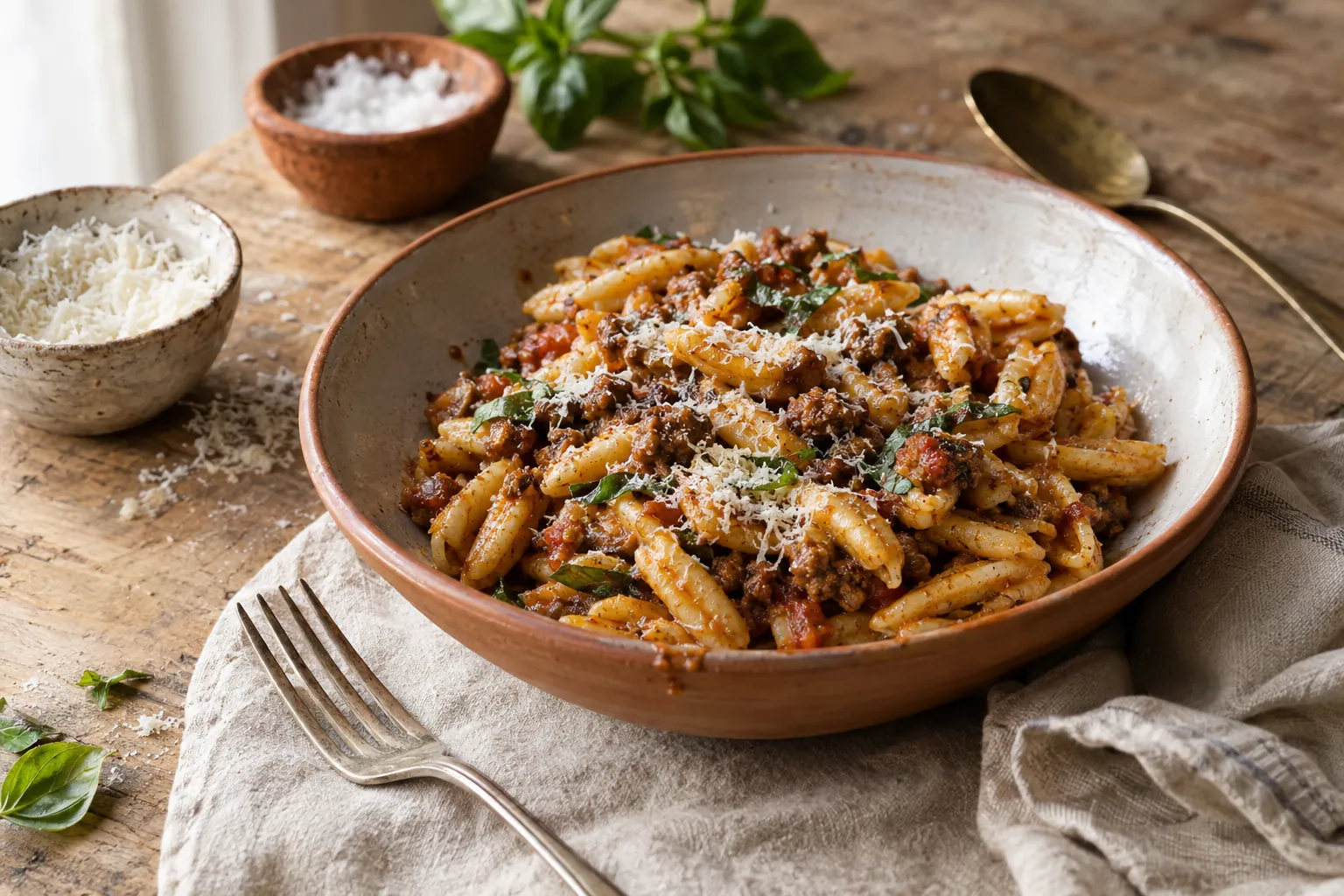
Around Campobasso in Molise, hand-shaped cavatelli are a familiar pasta for hearty sauces. Drag each piece of dough with your thumb to make a hollow that catches the slow-braised pork ragù; for another ragù pairing, see Maccheroni alla Chitarra with Lamb Ragù, or try Pallotte Cacio e Ova Recipe for a cheese-and-egg dish from the region.
Recipes stay free thanks to ads. Advertising disclosure
The recipe
Cavatelli Molisani with Pork Ragù
Ingredients
for 4 servingsEquipment
- mixing bowl
- clean work surface or large board
- heavy pot with lid
- instant-read thermometer
- large pot for boiling pasta
- slotted spoon
Method
Combine the 300 g semolina flour, all-purpose flour, and 3 g salt in a bowl. Pour in the warm water and mix until a shaggy dough forms. Knead on a clean surface for about 8 minutes, until smooth and firm. The mixing and kneading take about 15 minutes total.
Cover the dough and let it rest at room temperature for 30 minutes. This gives the semolina time to absorb the water, so the dough is easier to roll.
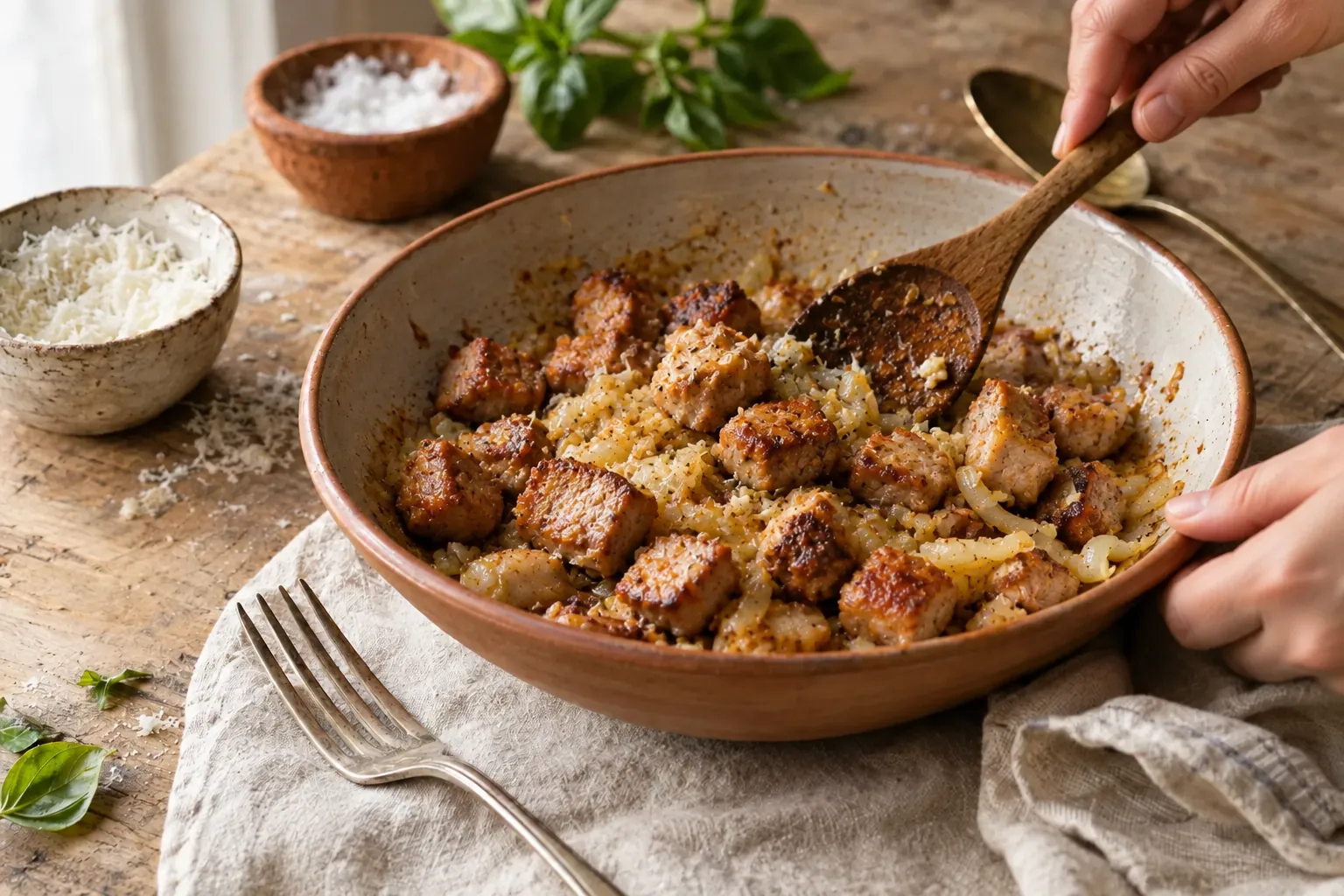
Heat the olive oil in a heavy pot over medium-high heat. Add the pork in a single layer, working in batches if needed, and brown it for about 8 minutes, turning to color several sides. Add the onion and cook until softened, then stir in the garlic. Pour in the wine and scrape up the browned bits, letting it reduce until it no longer smells sharply alcoholic. This prep and browning takes about 15 minutes.
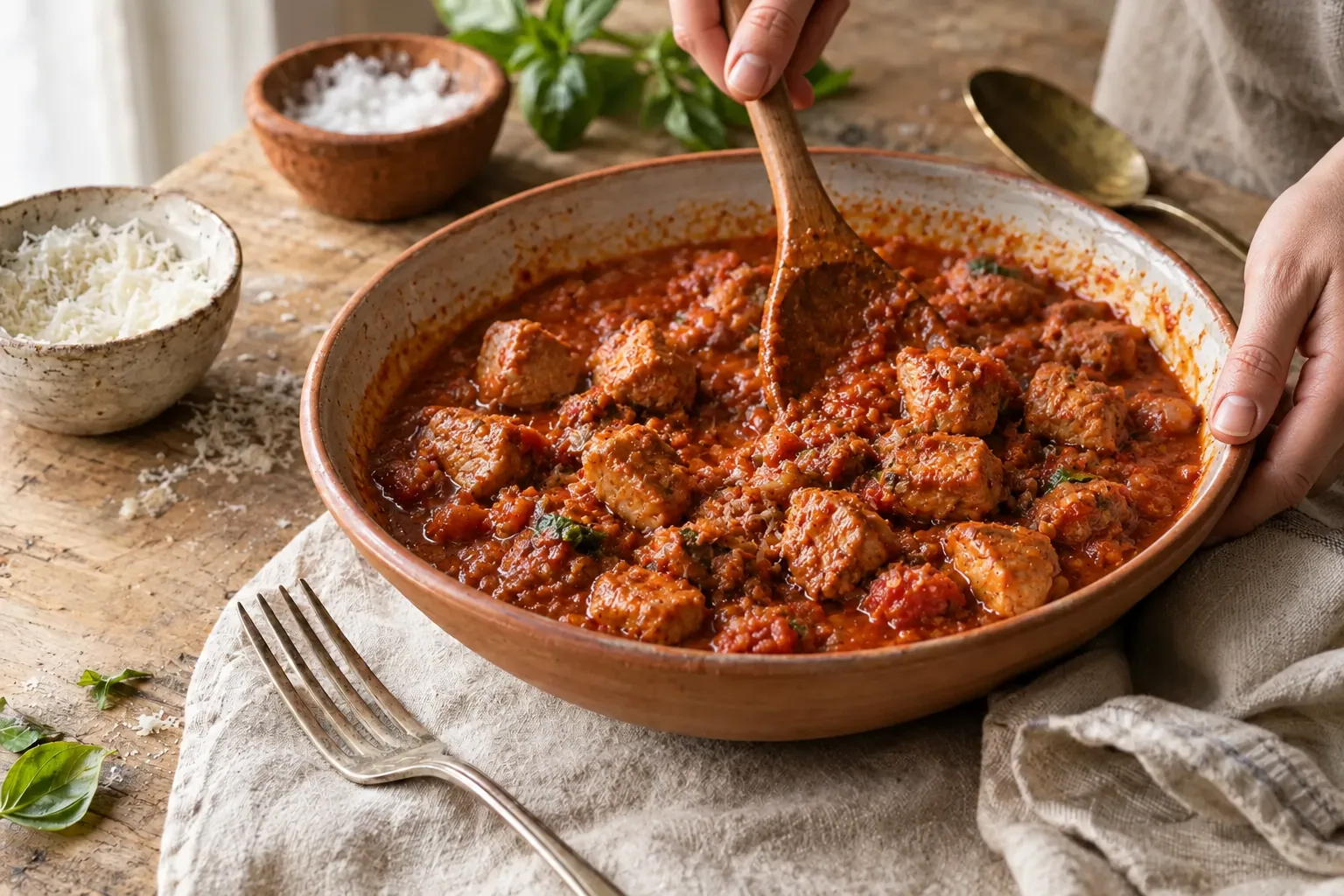
Stir in the passata, bay leaf, salt, and black pepper. Bring the sauce to a gentle simmer, then cover partly and cook for 90 minutes, stirring now and then. Shape the cavatelli during this simmer, using the next step. Keep the heat low enough that the sauce bubbles softly. Check the largest pork cube with an instant-read thermometer; it must reach at least 145°F (63°C), and the long simmer should leave it fork-tender. Remove the bay leaf and let the pork rest in the sauce for 3 minutes.
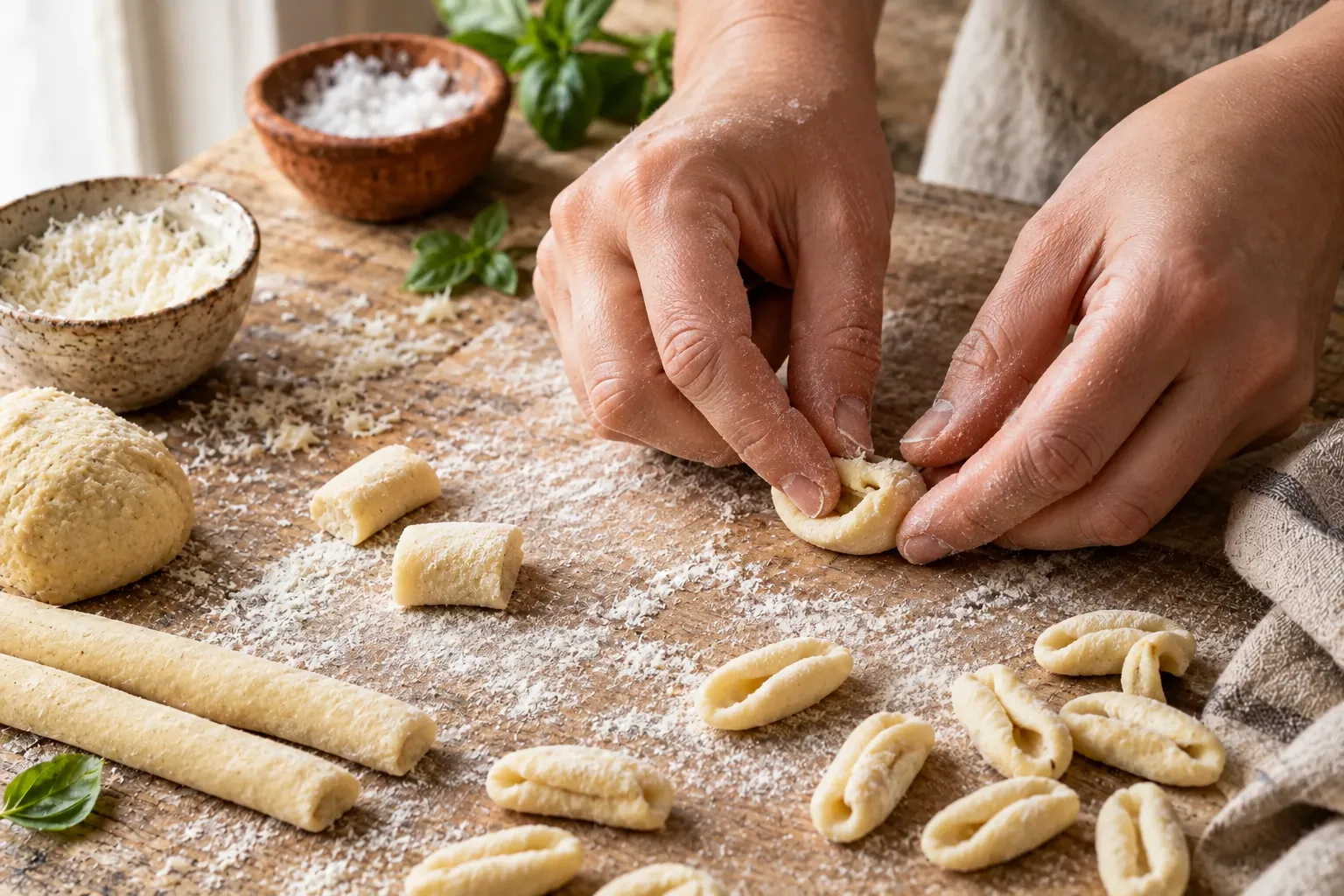
Dust a board with the reserved semolina. Cut off a piece of dough and roll it into a rope about 1/2 inch (1.25 cm) thick. Cut the rope into 3/4-inch (2 cm) pieces, then press and drag each piece with your thumb to curl it into a hollow. Repeat with the remaining dough, keeping the cavatelli lightly dusted so they do not stick. Allow about 25 minutes for shaping during the ragù simmer.
Bring a large pot of salted water to a boil. Add the fresh cavatelli and boil for 4 minutes, stirring once or twice so they do not cling to the bottom. Taste one; it should be tender but still have a little bite, or al dente (firm to the bite).
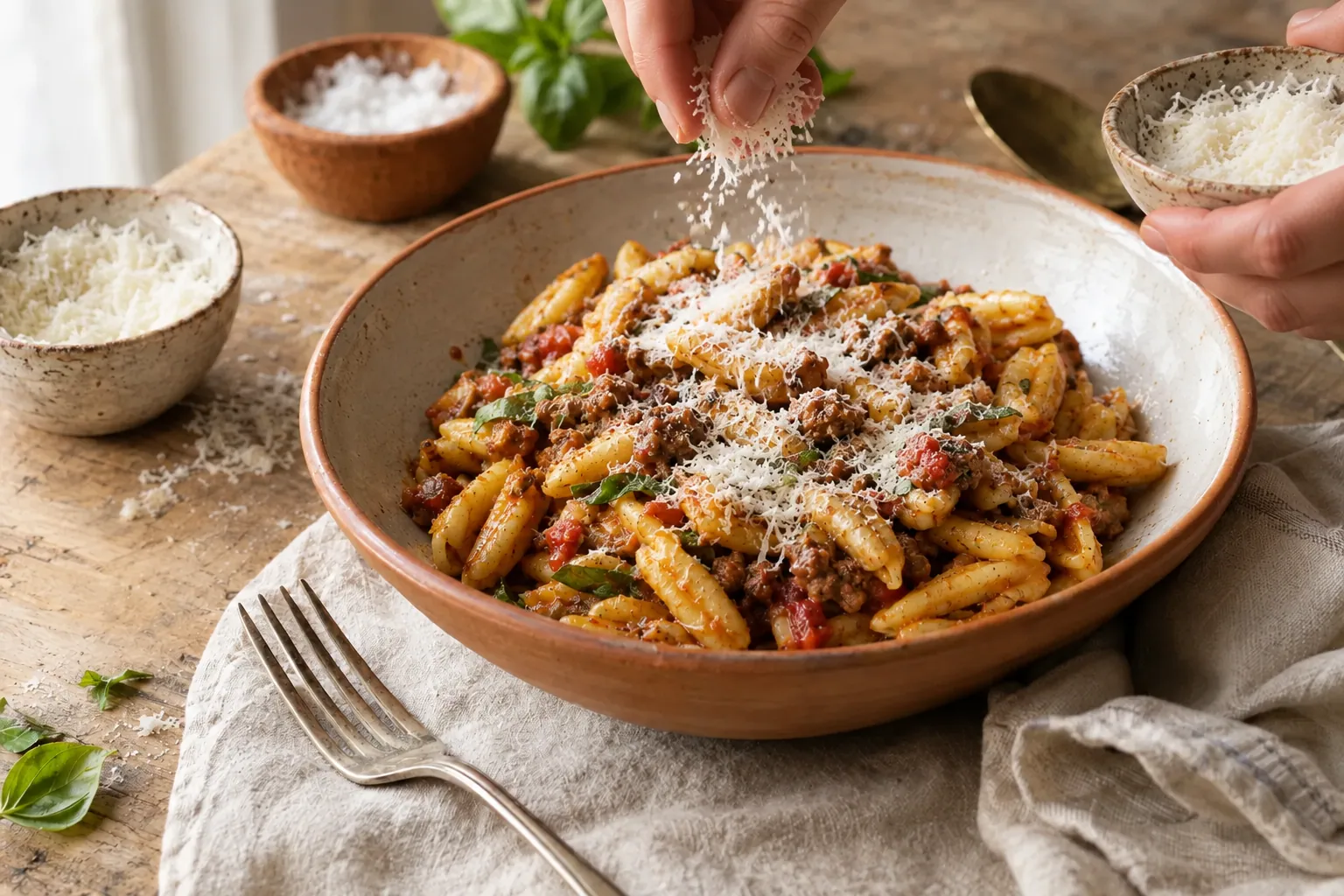
Transfer the cavatelli to the ragù with a slotted spoon, bringing a little pasta water along. Toss over low heat for 2 minutes until the hollows are coated and the sauce clings. Serve with the grated Pecorino Romano.
Make ahead and storage
Refrigerate leftover ragù and pasta within 2 hours, in separate airtight containers if possible. Keep them for 3 to 4 days in the refrigerator. Reheat leftovers to 165°F (74°C), adding a splash of water if the sauce has thickened. Freeze uncooked shaped cavatelli on a tray before packing them into a freezer bag.
Where it goes wrong
| If you see | It’s because | Do this |
|---|---|---|
| The dough cracks while you roll or shape it. | Why The dough is too dry, or it has been left uncovered. | Fix Keep the unused dough covered. If it still cracks, knead in water a teaspoon at a time until it is smooth and pliable. |
| The ragù tastes greasy. | Why The pork shoulder had a thick layer of excess fat, or too much rendered fat was left in the pot. | Fix Trim excess fat before cooking, and spoon off any visible layer of fat before tossing in the pasta. |
Questions
Can you make cavatelli ahead of time?
Yes, you can shape the cavatelli ahead and freeze them uncooked. Arrange them in one layer on a semolina-dusted tray until firm, then transfer to a freezer bag and boil from frozen, adding a few minutes to the cooking time.
Can you use store-bought cavatelli for pork ragù?
Yes, store-bought fresh or frozen cavatelli work. Cook them according to the package directions, then finish them in the ragù for 2 minutes.
Cooked this?
Sign in to rate it or say how it turned out.