Pasta · Emilia-Romagna
Lasagna Bolognese Recipe From Scratch
This lasagna Bolognese layers fresh spinach pasta, slow-cooked ragù, béchamel, and Parmesan, with make-ahead steps that keep dinner manageable.
By Lucia Moretti (pen name) · · Editorial policy
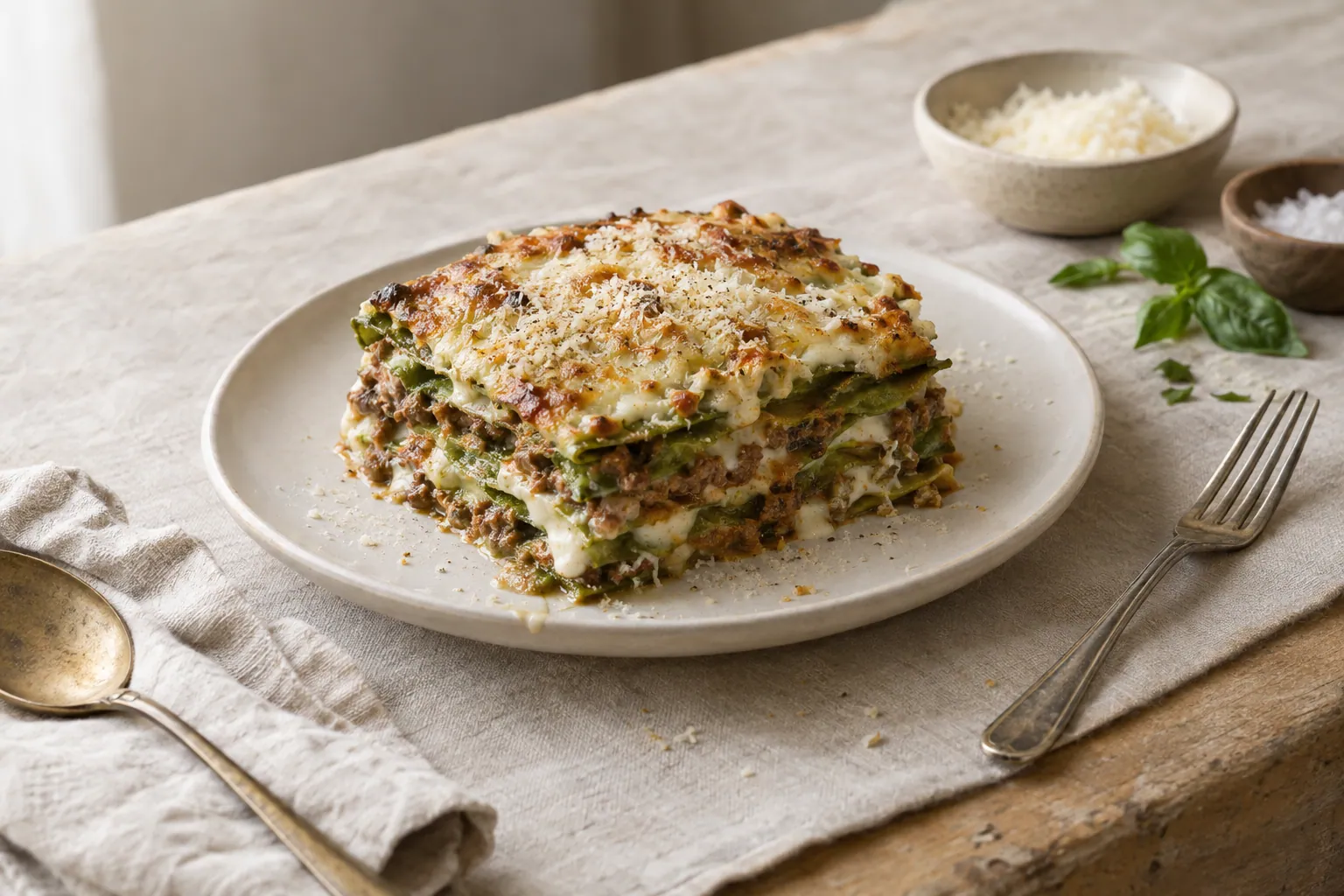
Lasagna alla Bolognese is a layered pasta bake from Emilia-Romagna, built with meat ragù, béchamel, Parmesan, and often green spinach pasta. In Bologna, the pasta is traditionally rolled into thin sheets, so the finished lasagna has tender layers rather than thick, bready ones.
I make the ragù first and let it simmer gently while I prepare the pasta and béchamel. That slow simmer gives the meat time to soften and the sauce time to concentrate; a little milk also rounds out its savory flavor. The Italian word is soffritto (the slow-cooked base of onion, carrot, and celery), and here it gives the ragù its quiet backbone. You can cook the ragù and make the pasta a day ahead, then assemble and bake when you’re ready.
For a full Italian meal, cook Traditional Sicilian Caponata Recipe beforehand and finish with Easy Tiramisu Recipe No Alcohol. This version works because thin pasta, a restrained layer of ragù, and creamy béchamel stay balanced in every slice.
Recipes stay free thanks to ads. Advertising disclosure
The recipe
Lasagna Bolognese
Ingredients
for 8 servingsEquipment
- Heavy pot or Dutch oven
- Pasta machine or rolling pin
- Large pot for blanching pasta
- Saucepan
- Whisk
- 9-by-13-inch (23-by-33-cm) baking dish
- Instant-read thermometer
Method
Start the ragù. In a heavy pot over medium-low heat, cook the pancetta with the olive oil until it renders and begins to turn golden, about 5 minutes. Add the onion, carrot, and celery and cook until softened, about 8 minutes. Add the beef and pork; break them into small pieces and cook until browned and no pink remains, about 10 minutes. The ground meat should reach 160°F (71°C).
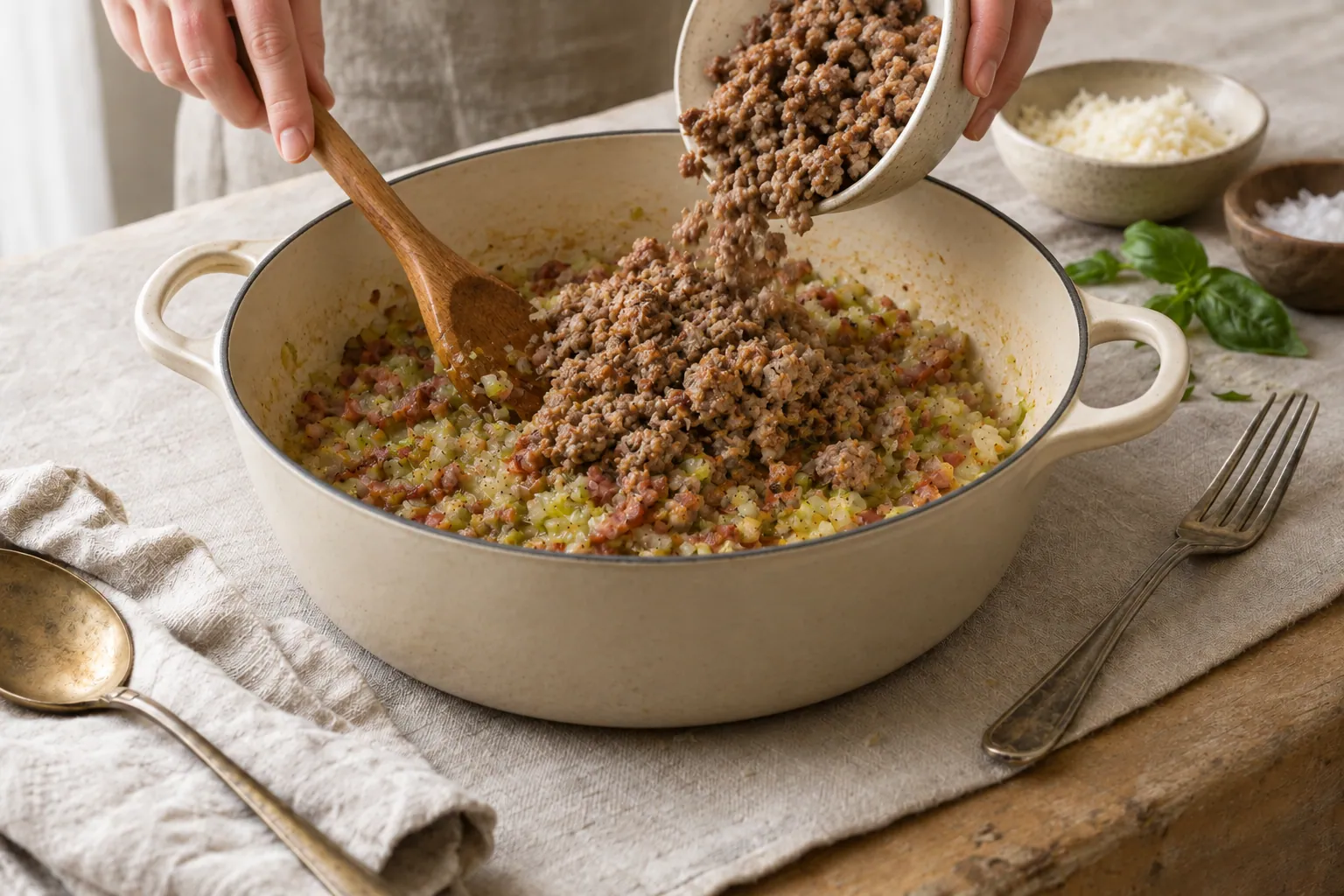
Simmer the ragù. Pour in the wine and scrape up the browned bits. Let it reduce until almost dry, about 5 minutes. Stir in the milk and simmer until mostly absorbed, about 5 minutes. Add the tomato paste, passata, broth, salt, and pepper. Bring to a gentle simmer, then cook uncovered on very low heat for 2 to 2½ hours, stirring occasionally. The sauce should be thick and glossy, not watery; add a splash of broth if it starts sticking.
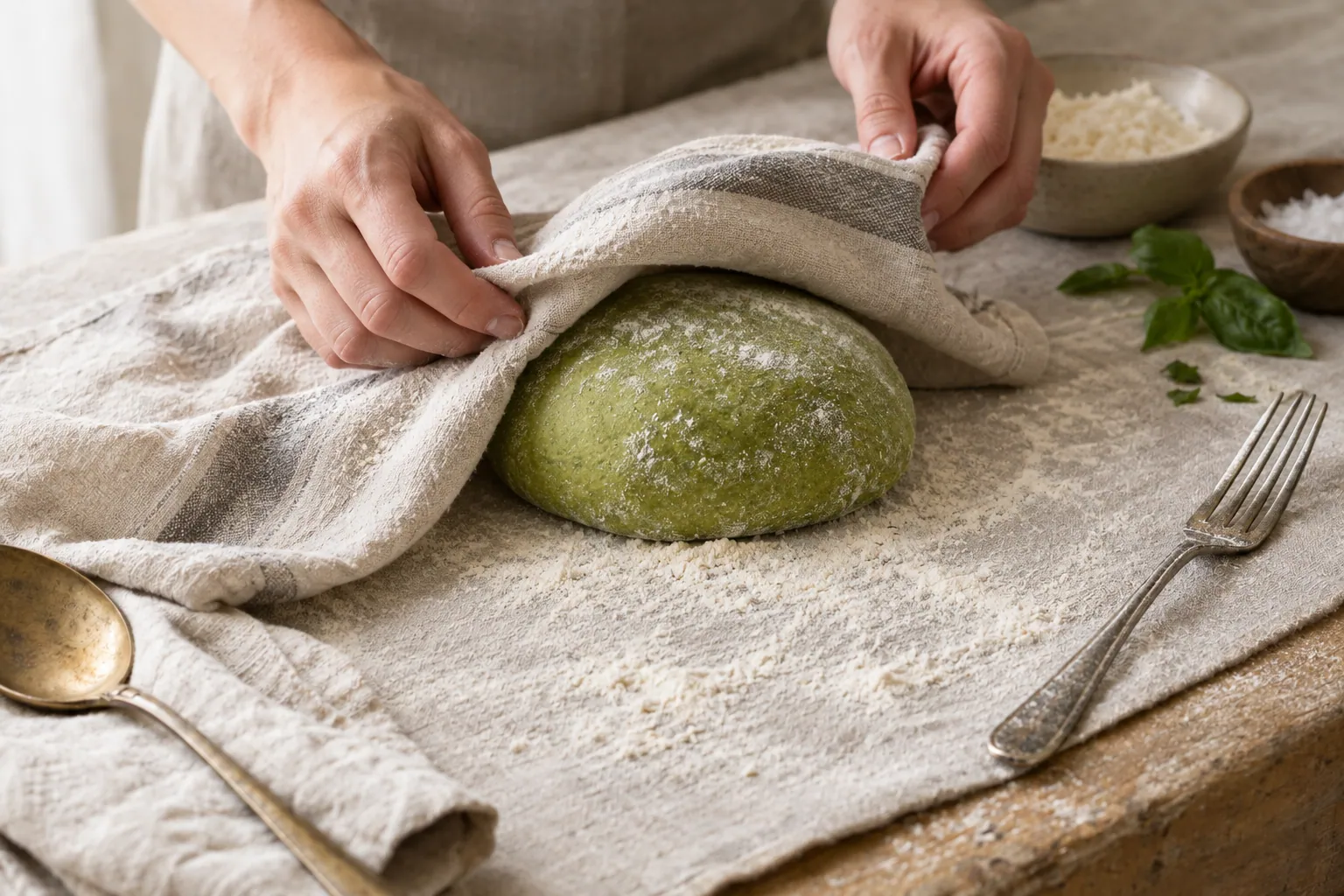
Make the pasta dough while the ragù simmers. Wilt the spinach in a covered pan with the water clinging to its leaves, about 3 minutes. Cool it, squeeze it very dry, then finely chop or blend it. Mound the flour on a clean work surface, make a well, and add the eggs, yolks, and spinach. Mix from the center outward, then knead for 8 to 10 minutes until smooth and elastic. Cover and rest for 30 minutes.
Make the béchamel. Melt the butter in a saucepan over medium heat. Whisk in the flour and cook for 1 minute without browning. Gradually whisk in the warm milk, then add the salt and nutmeg. Cook, whisking often, until smooth and thick enough to coat a spoon, about 8 to 10 minutes. Take it off the heat and press parchment or plastic wrap directly onto the surface if holding it.
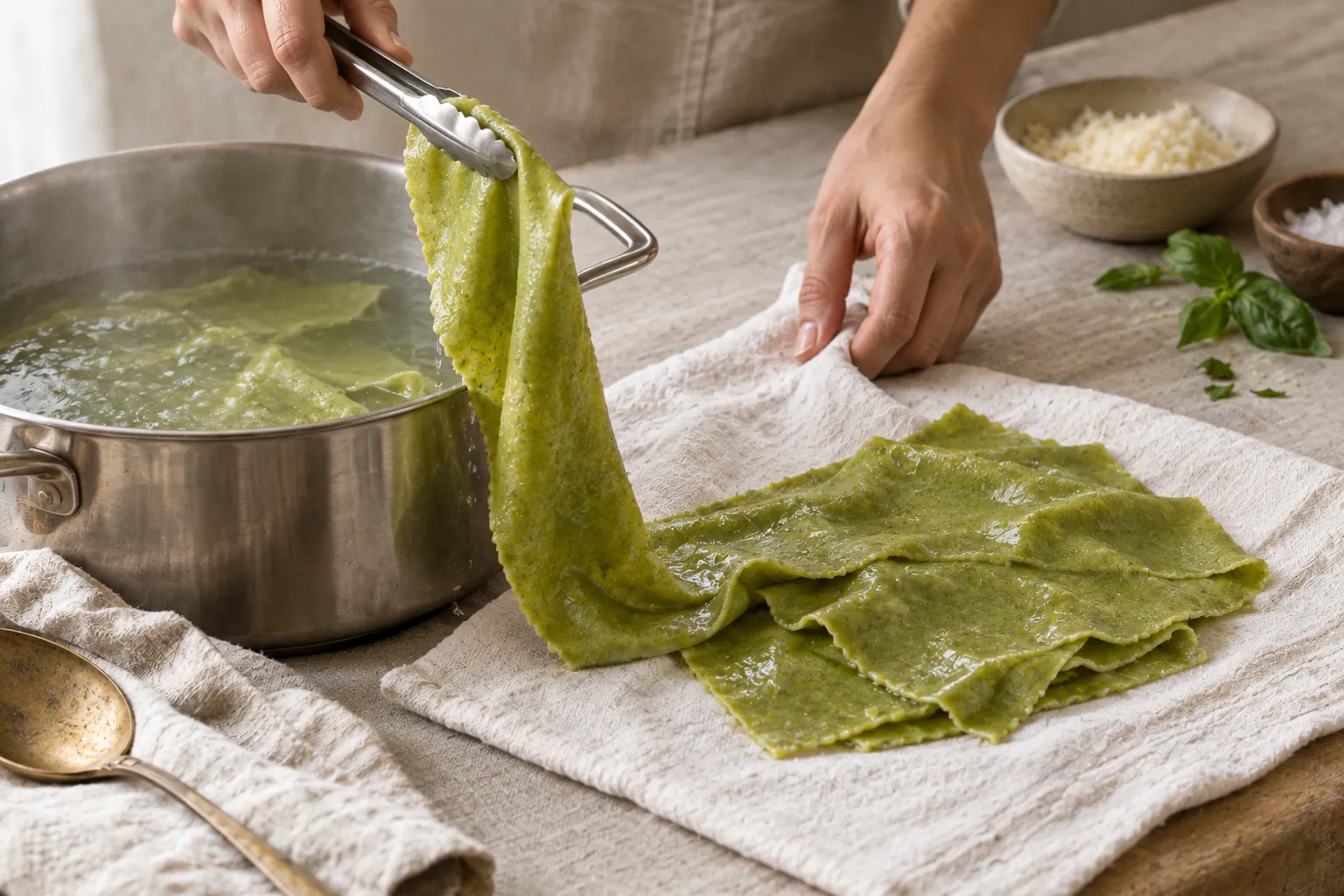
Roll and blanch the pasta. Divide the dough into 4 pieces and keep the pieces you are not using covered. Roll each piece through a pasta machine, narrowing the setting a little at a time, until the sheets are thin enough to see the outline of your hand through them. Cut sheets to fit a 9-by-13-inch (23-by-33-cm) baking dish. Boil them in batches in salted water for 20 to 30 seconds, then transfer to a clean towel and pat dry.
Assemble the lasagna. Heat the oven to 375°F (190°C). Spread a thin layer of béchamel in the baking dish. Add a layer of pasta, then a thin spread of ragù, béchamel, and a light shower of Parmesan. Repeat to make 5 or 6 layers, finishing with béchamel and Parmesan. Keep the layers even and use the ragù sparingly; you should have enough for each layer without burying the pasta.
Bake until bubbling at the edges and golden in spots on top, 35 to 40 minutes. If the top browns too quickly, cover it loosely with foil for the rest of the bake. Let the lasagna rest for at least 20 minutes before cutting so the layers settle and slices hold together.
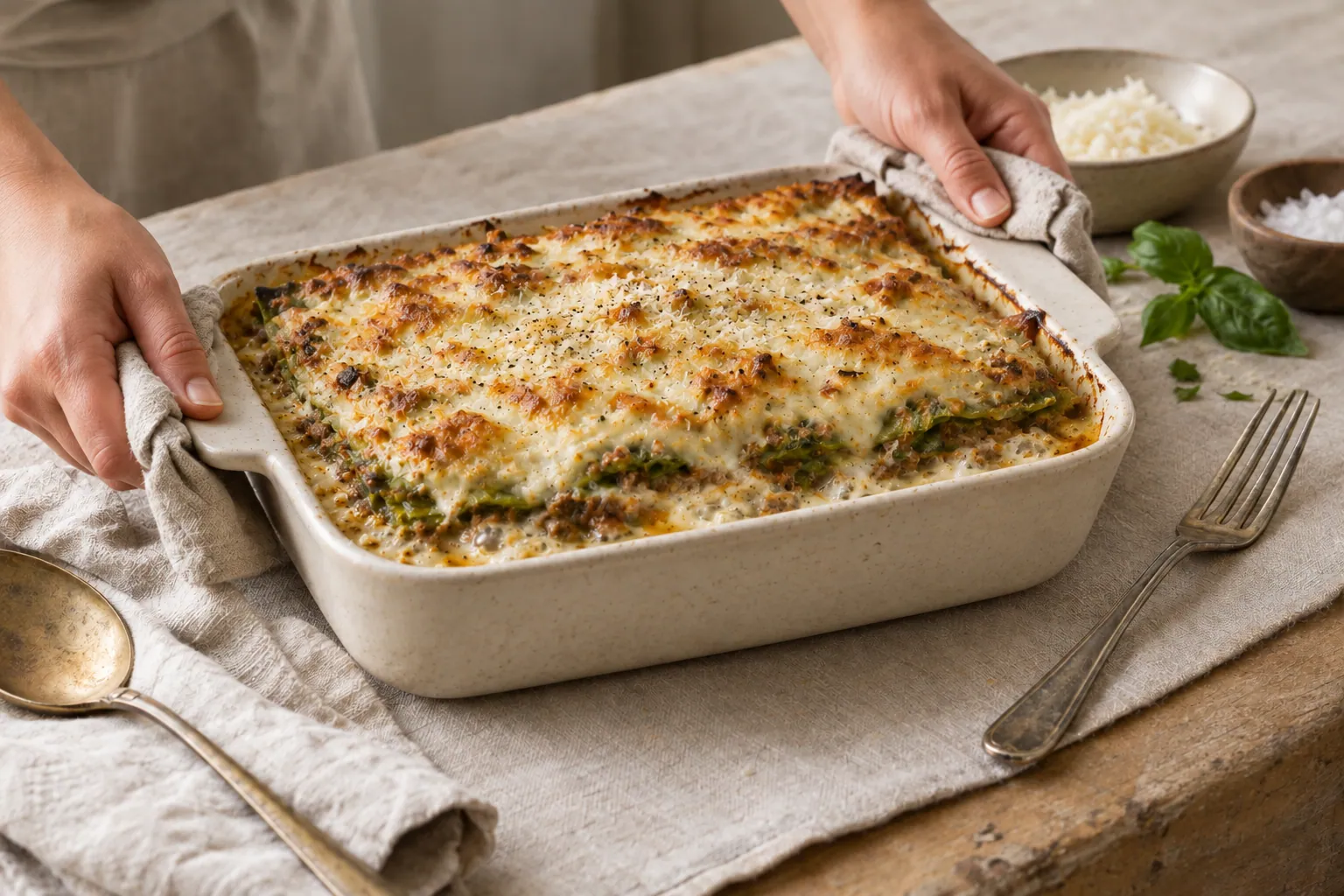
Cut into portions with a sharp knife and serve warm. For make-ahead cooking, refrigerate the ragù and béchamel separately for up to 2 days; rewarm the ragù gently and whisk the béchamel smooth before assembling. You can also assemble the lasagna, cover, and refrigerate it for up to 1 day; bake straight from the refrigerator, adding about 10 minutes and checking that the center is hot.
Food safety
This recipe uses raw eggs in fresh pasta dough and cured pancetta. Keep the dough and utensils separate from ready-to-eat foods, wash hands and surfaces after handling raw eggs, and cook the pancetta and ground meats thoroughly. Ground beef and pork should reach 160°F (71°C). Refrigerate make-ahead components and assembled lasagna promptly.
Where it goes wrong
| If you see | It’s because | Do this |
|---|---|---|
| The ragù tastes thin or bland. | Why It simmered too briefly, or the vegetables and meat did not brown before the liquids went in. | Fix Brown the meat well, then simmer uncovered until the sauce is thick and concentrated. Taste and adjust the salt before layering. |
| The pasta dough feels sticky and smears on the roller. | Why The spinach retained too much water. | Fix Squeeze the cooked spinach very dry before mixing. Knead in flour a tablespoon at a time if the dough still sticks. |
| The lasagna is watery when sliced. | Why The ragù or béchamel was too loose, or the pasta sheets were not drained well. | Fix Thicken the sauces before assembly, pat blanched pasta dry, and let the baked lasagna rest for 20 minutes. |
| The top is brown but the middle is not hot. | Why The oven is too hot, or the lasagna went into the oven very cold. | Fix Bake at 375°F (190°C), tent with foil if needed, and add about 10 minutes when baking it straight from the refrigerator. |
| The layers slide apart when served. | Why The lasagna was cut before it had time to settle. | Fix Rest it for at least 20 minutes after baking, then cut with a sharp knife. |
Questions
Can I make lasagna Bolognese ahead of time?
Yes. Make the ragù and béchamel up to 2 days ahead and refrigerate them separately, or assemble the lasagna up to 1 day ahead. Bake a chilled assembled lasagna for about 10 minutes longer.
Do I have to boil fresh pasta sheets before layering?
Yes, for this recipe, blanch the fresh sheets for 20 to 30 seconds and pat them dry before assembling. This helps the pasta cook evenly without drawing too much moisture from the sauces.
Can I freeze lasagna Bolognese?
Yes. Freeze it baked or unbaked, tightly wrapped, for up to 3 months for best quality. Thaw overnight in the refrigerator before baking or reheating, and heat leftovers until steaming hot.
What should I serve with lasagna Bolognese?
Serve it with a simple green salad or a lightly dressed vegetable side. The lasagna is rich, so a crisp, fresh side keeps the meal balanced.
Cooked this?
Sign in to rate it or say how it turned out.