Mains · Veneto
Sarde in Saor Recipe: Venetian Sardines
Sarde in saor is a Venetian sweet-and-sour dish of fried sardines, soft onions, vinegar, raisins, and pine nuts; chilling overnight deepens its flavor.
By Lucia Moretti (pen name) · · Editorial policy
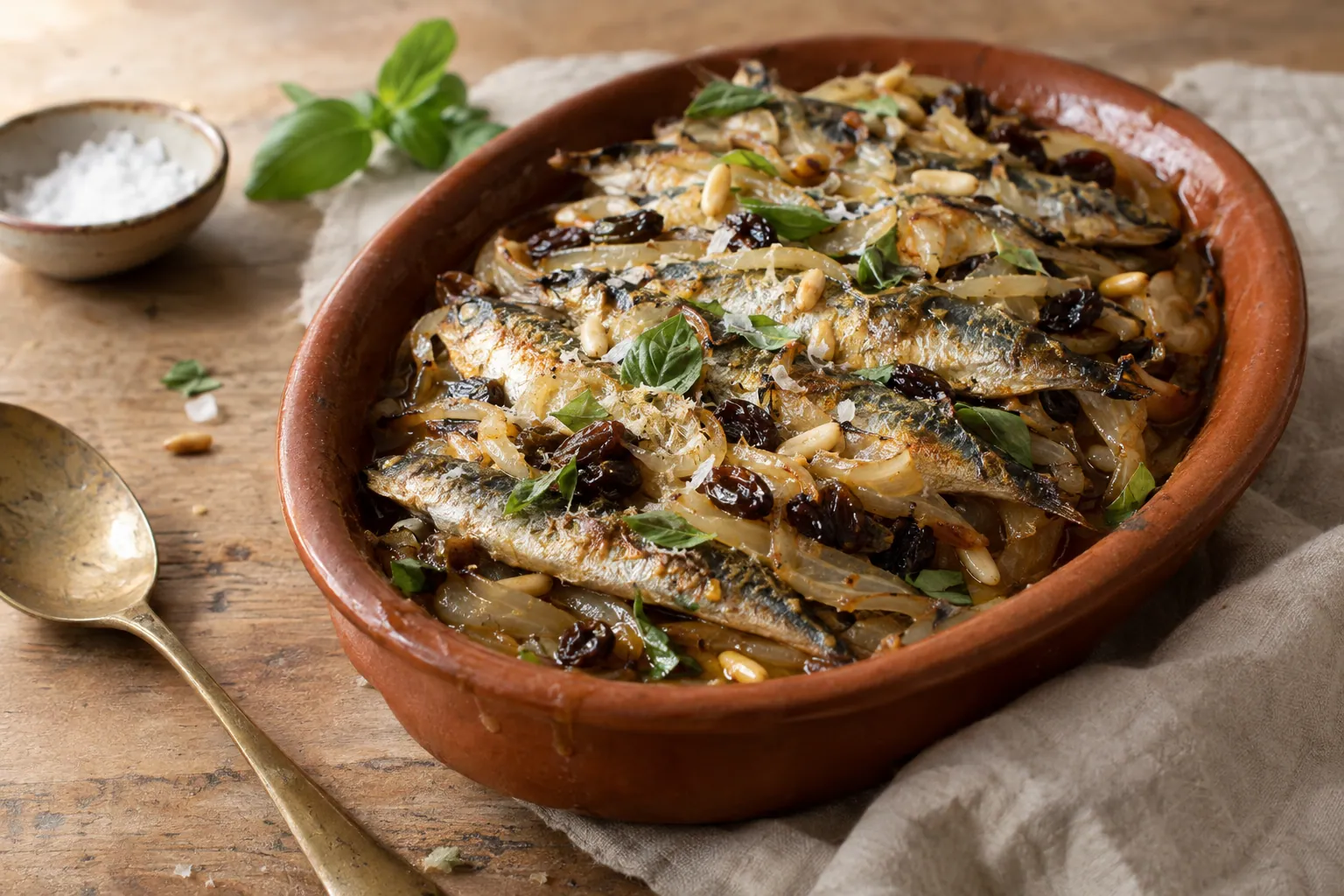
Sarde in saor is a Venetian sweet-and-sour dish of fried sardines layered with soft onions, vinegar, raisins, and pine nuts. In Venice, saor is the onion-and-vinegar preparation that helped preserve fried fish before refrigeration; today, its mellow tang is reason enough to make it. I like this as a generous main with a simple salad, though it is also served as a small plate.
The technique is straightforward: fry the sardines until crisp at the edges, soften the onions slowly, then let the vinegar mixture soak into everything in the refrigerator. Give it at least 12 hours, and ideally overnight, so the sharpness settles and the flavors meet. That makes it a useful make-ahead dish, not a last-minute fish supper. For another Venetian seafood dish, see Baccalà Mantecato Recipe (Venetian Salt Cod Spread); for another way to serve fish, try Sicilian Swordfish Rolls Recipe. This version works because slowly cooked onions and an overnight rest balance the vinegar without hiding the sardines.
Recipes stay free thanks to ads. Advertising disclosure
The recipe
Sarde in Saor
Ingredients
for 4 servingsEquipment
- cutting board and knife
- wide skillet
- small saucepan
- instant-read thermometer
- shallow glass or ceramic dish
- paper towels
Method
Soak the raisins in the warm water for 10 minutes. While they soak, toast the pine nuts in a dry skillet over medium-low heat for about 3 minutes, shaking the pan often, until fragrant and lightly golden. Drain the raisins.
Slice the onions thinly. Pat the sardines dry, then season them with the sardine portion of salt and the black pepper. Spread the flour on a plate and dredge the sardines, shaking off excess. This prep takes about 15 minutes.
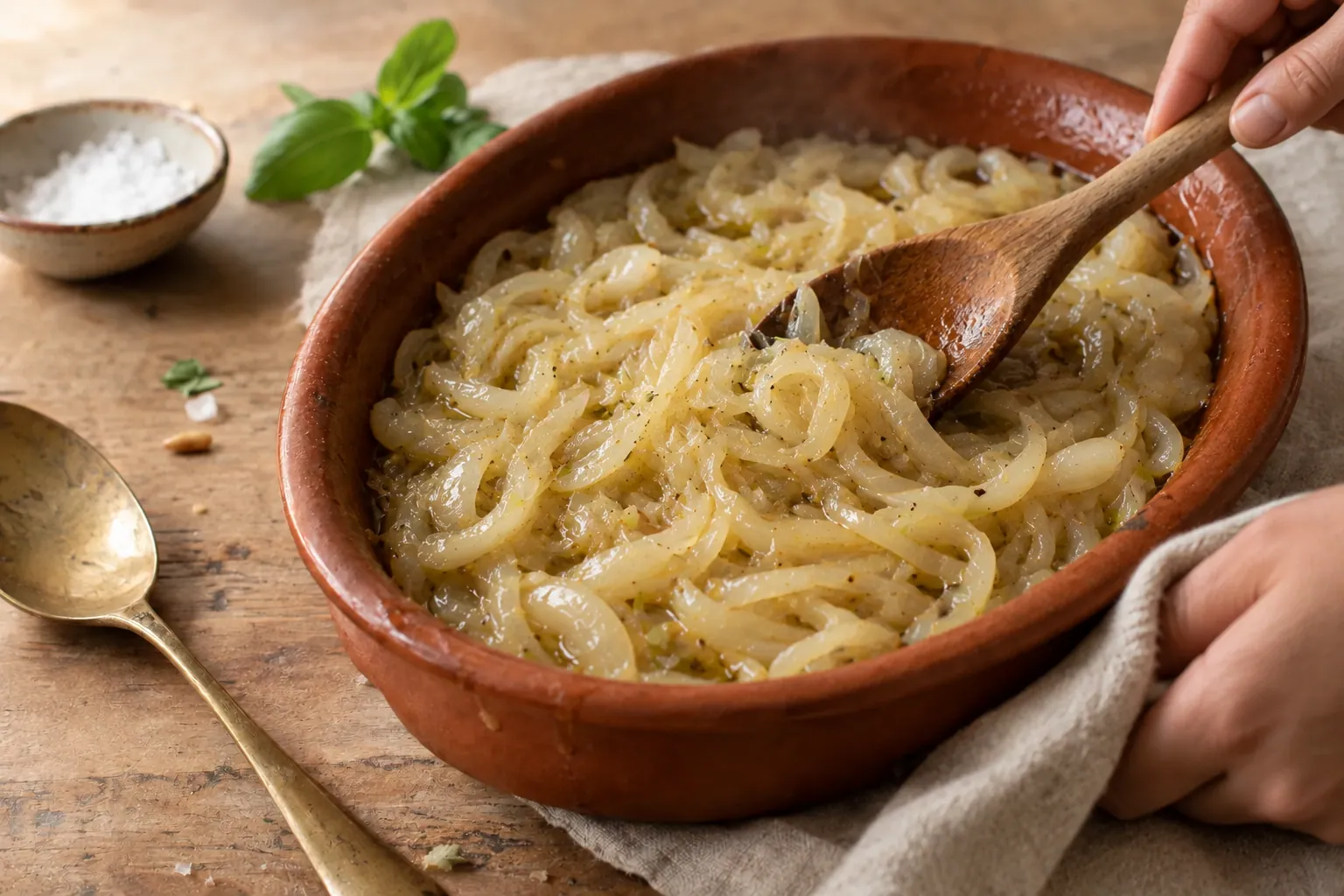
Cook the onions in the olive oil with the remaining salt in a wide skillet over low to medium-low heat for 25 minutes, stirring often. They should be very soft and translucent, not browned; lower the heat if the edges start to color.
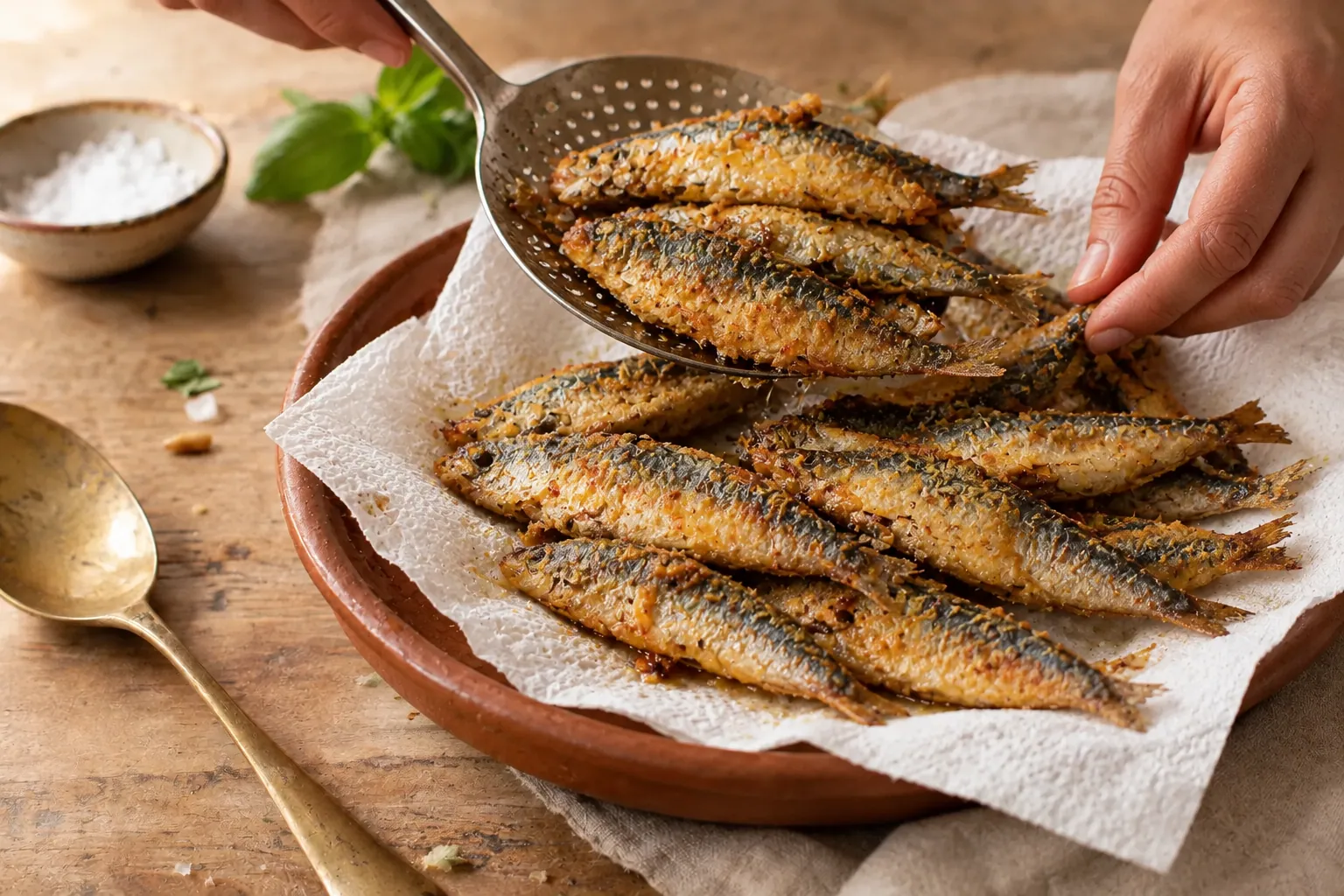
Heat the neutral oil in a heavy skillet to 350°F (175°C), using enough to cover the base by about 1/4 inch. Fry the sardines in batches for about 2 minutes per side, until golden and opaque, about 12 minutes total. Check the thickest sardine with an instant-read thermometer; it must reach 145°F (63°C). Transfer the sardines to a paper-towel-lined plate.
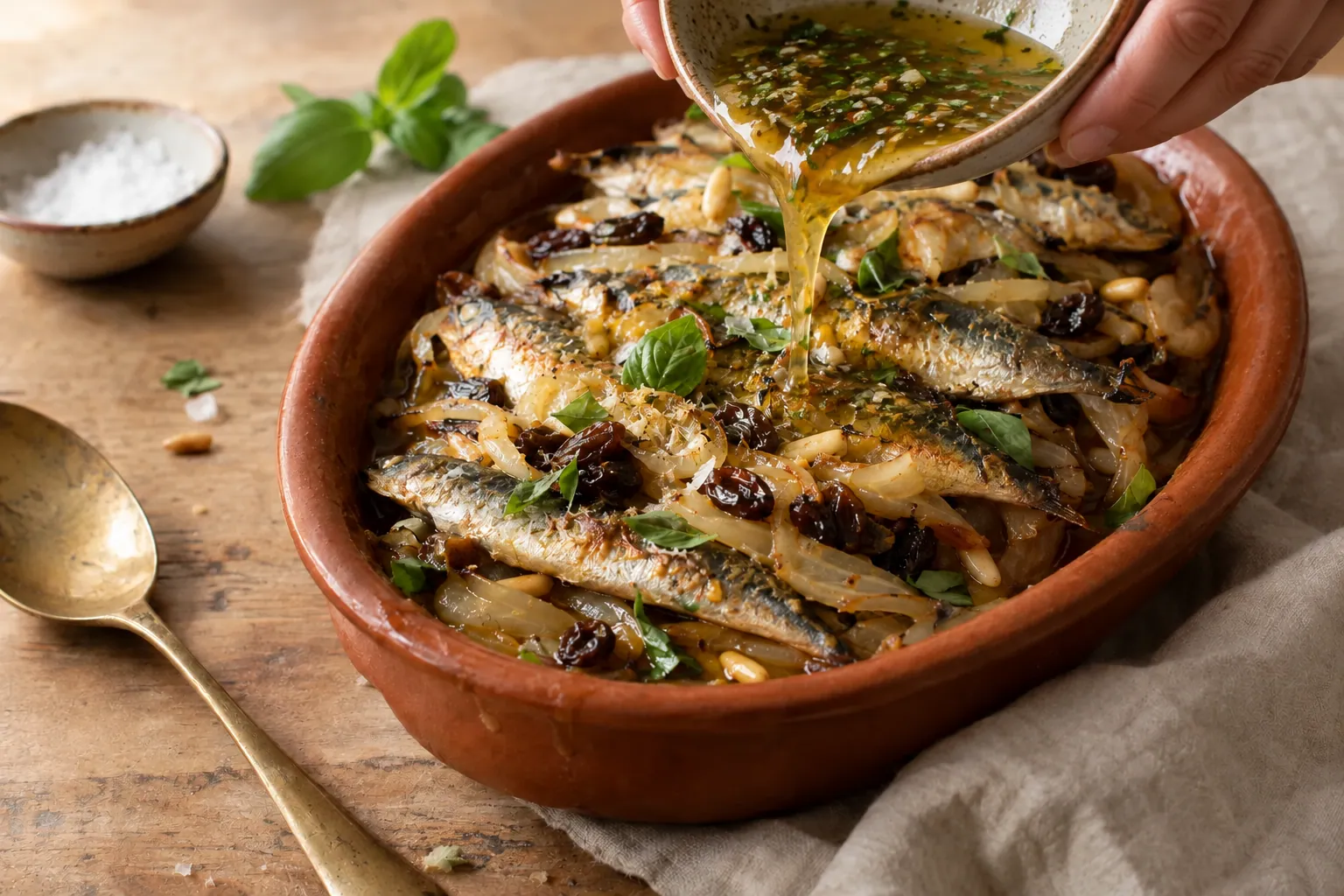
Simmer the vinegar, sauce water, and sugar in a small saucepan for 3 minutes, stirring until the sugar dissolves and the sharp vinegar smell softens. Remove from the heat.
Layer the sardines and onions in a shallow glass or ceramic dish. Scatter the drained raisins and toasted pine nuts between the layers. Pour the warm vinegar mixture evenly over the top; this takes about 5 minutes.
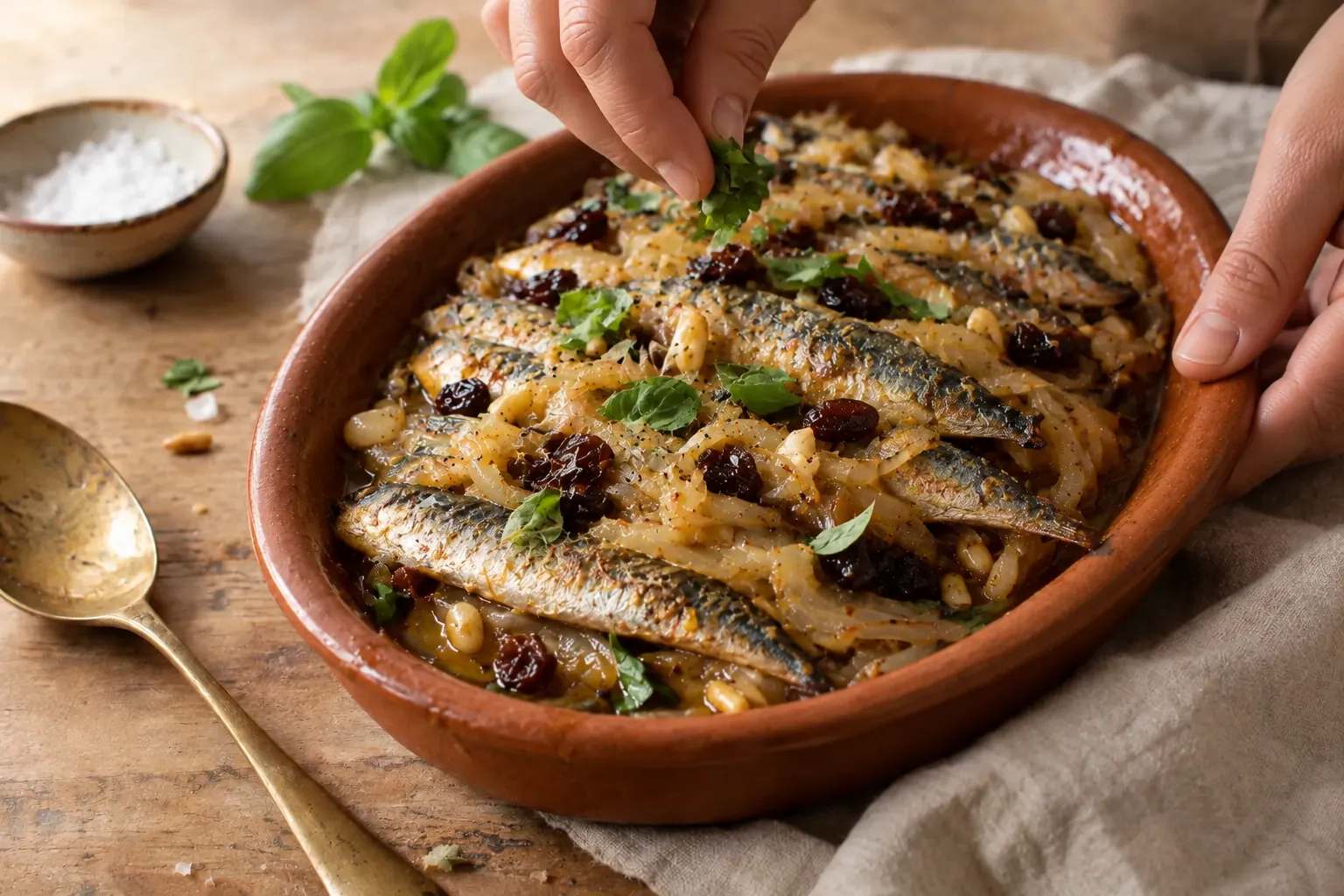
Cover and refrigerate for at least 12 hours, or up to 24 hours for deeper flavor. The resting time is what rounds out the vinegar and lets it season the sardines.
Bring the dish out of the refrigerator 20 minutes before serving. Serve slightly cool or at room temperature, and do not leave it out longer than 2 hours in total.
Food safety
Cook sardines to an internal temperature of 145°F (63°C). Refrigerate leftovers within 2 hours; do not leave the dish at room temperature for more than 2 hours total.
Where it goes wrong
| If you see | It’s because | Do this |
|---|---|---|
| The onions taste browned or bitter. | Why The heat was too high or they were left unattended. | Fix Cook them slowly over low heat, stirring often; add a splash of water if they begin to stick. |
| The sardines turn soggy before serving. | Why They were not patted dry or the frying oil cooled too much between batches. | Fix Dry the fish well, fry in small batches, and let each batch drain before layering. |
| The dish tastes harshly sour. | Why The vinegar mixture was not simmered, or the dish did not rest long enough. | Fix Simmer the vinegar mixture for the full 3 minutes and chill the assembled dish overnight. |
| The flour coating falls off. | Why The sardines were damp or carried too much flour into the pan. | Fix Pat the fish dry and shake off the excess flour just before frying. |
| The sardines are greasy. | Why The oil was too cool or the skillet was crowded. | Fix Bring the oil back to 350°F (175°C) between batches and leave space around each fish. |
Questions
How far ahead can I make sarde in saor?
Make it 12 to 24 hours ahead for the best flavor. Keep it covered in the refrigerator and bring it out about 20 minutes before serving.
Can I use frozen sardines?
Yes, thaw frozen sardines completely in the refrigerator first. Pat them very dry before dredging so the flour coating sticks and the oil does not splatter.
How long does sarde in saor keep?
Keep it covered in the refrigerator and eat it within 3 days. Return it to the refrigerator promptly after serving.
Should sarde in saor be served hot or cold?
Serve it slightly cool or at room temperature. A short rest outside the refrigerator takes the chill off without warming the fish.
Cooked this?
Sign in to rate it or say how it turned out.