Mains · Basilicata
Lucanian Lamb Pignata Stew Recipe
This Lucanian lamb stew braises shoulder with potatoes, tomatoes, and herbs in a Dutch oven until tender, bringing pignata-style slow cooking indoors.
By Lucia Moretti (pen name) · · Editorial policy
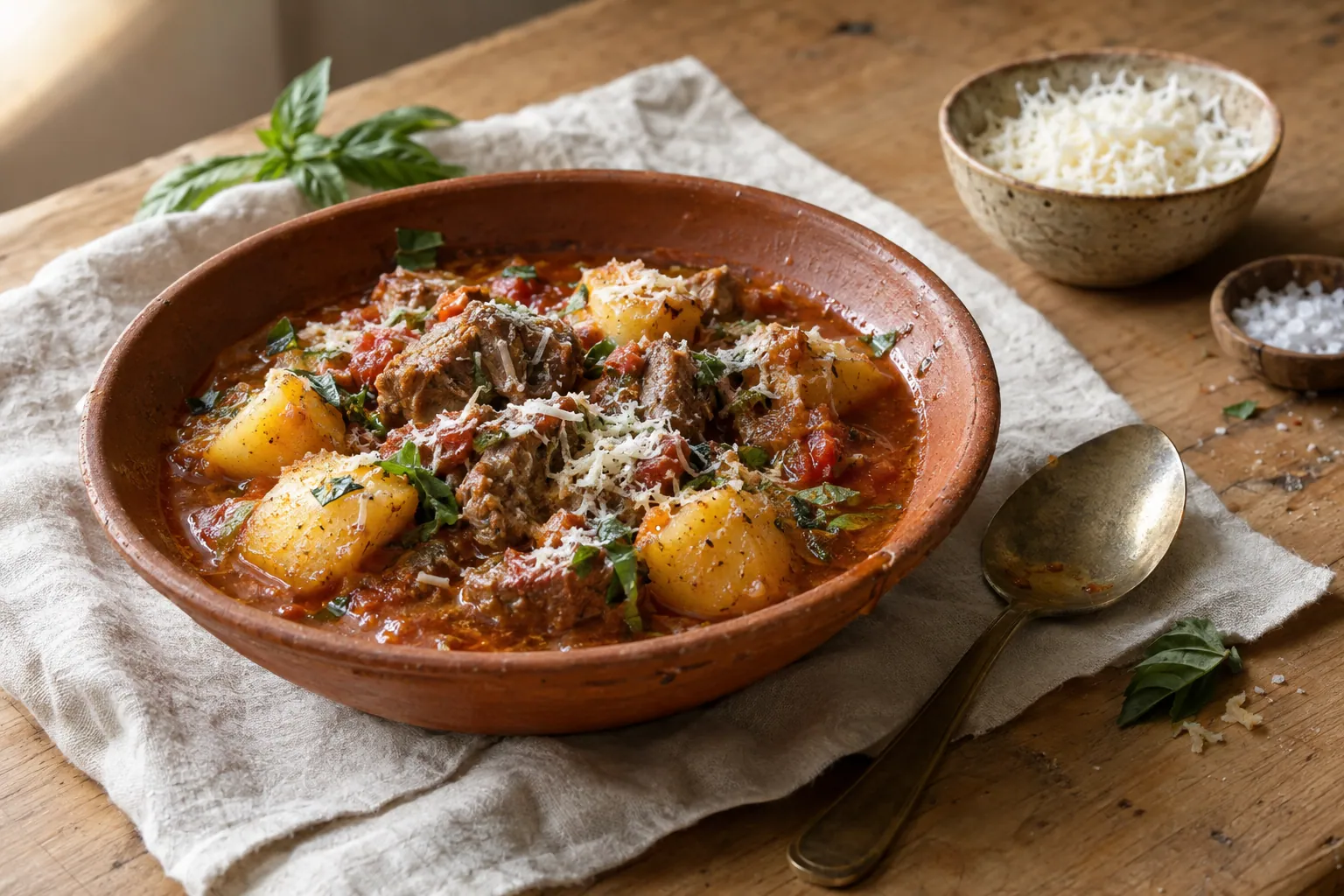
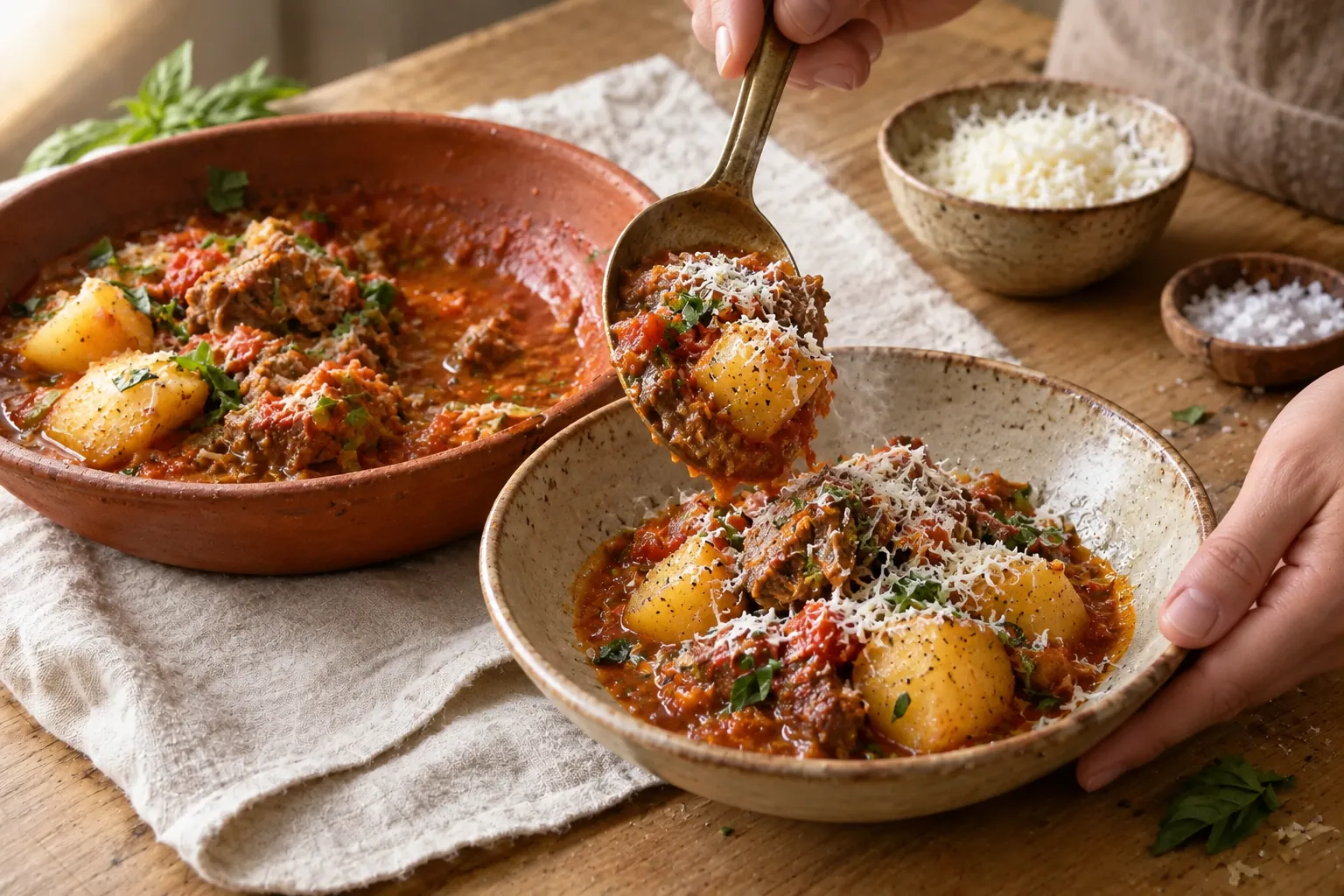
In Basilicata, pignata refers to the earthenware pot used for slow cooking lamb with vegetables. This home-kitchen version uses a Dutch oven in place of an outdoor ember setup, with potatoes added partway through so they hold their shape; serve it alongside Lucanian Rafanata Horseradish Omelet or Peperoni Cruschi Recipe (Crispy Dried Peppers).
Recipes stay free thanks to ads. Advertising disclosure
The recipe
Lucanian Lamb Pignata Stew
Ingredients
for 4 servingsEquipment
- Dutch oven with lid
- cutting board
- chef's knife
- measuring cups and spoons
- instant-read thermometer
Method
Trim excess fat from the lamb and cut it into 1½-inch cubes, if needed. Set the oven to 300°F (150°C) while you prepare the other ingredients.
Chop the onion, mince the garlic, and peel and cut the potatoes into 1½-inch chunks. Keep the potatoes aside for later.
Heat the olive oil in a Dutch oven over medium-high heat. Season the lamb with 1 teaspoon (6 g) of the salt and the pepper, then brown it in batches for about 15 minutes total, turning the pieces so several sides develop a deep brown crust. Transfer the lamb to a plate.
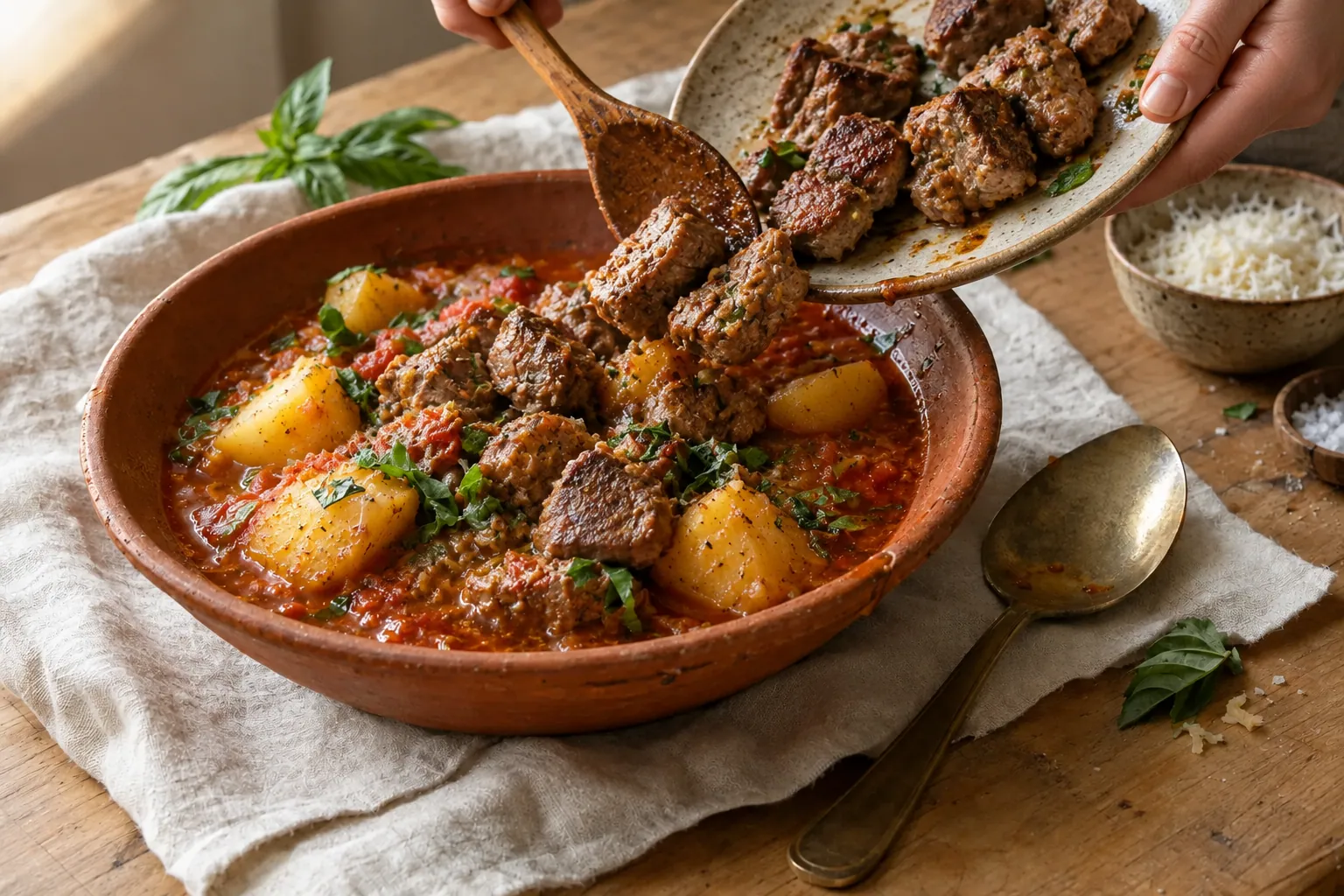
Add the onion to the pot and cook for 5 minutes, stirring until softened. Add the garlic and cook for 30 seconds, then pour in the wine and scrape up the browned bits. Simmer for about 2 minutes, until the sharp alcohol smell fades.
Return the lamb and any juices to the pot. Stir in the crushed tomatoes, stock, rosemary, bay leaf, and the remaining ½ teaspoon (3 g) of salt. Bring the liquid to a simmer, cover the pot, and bake for 75 minutes. Check that the largest lamb piece has reached at least 145°F (63°C); it will become more tender as it braises.
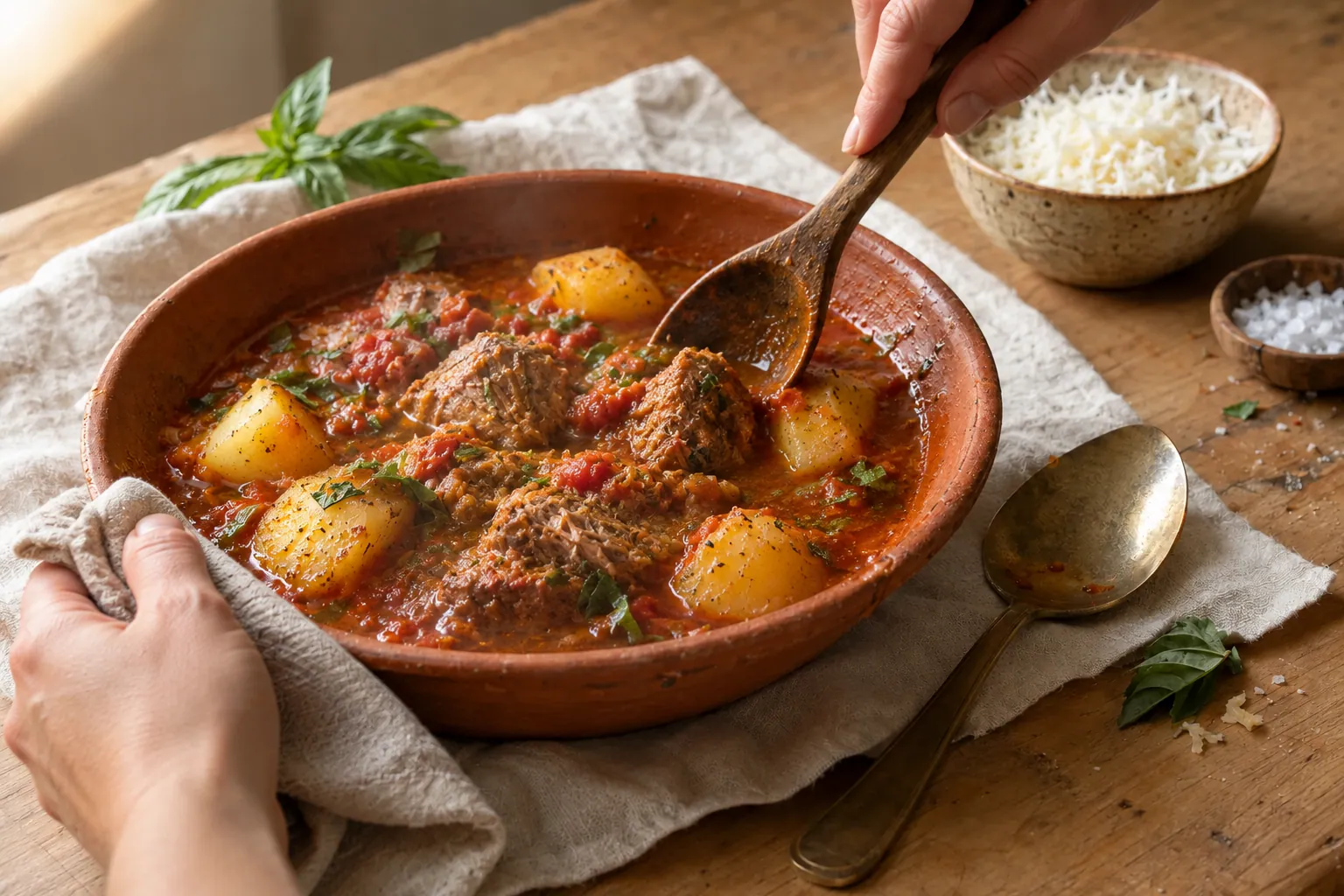
Stir in the potatoes, cover the pot again, and bake for another 75 minutes, until the lamb is fork-tender and the potatoes are soft but still hold their shape.
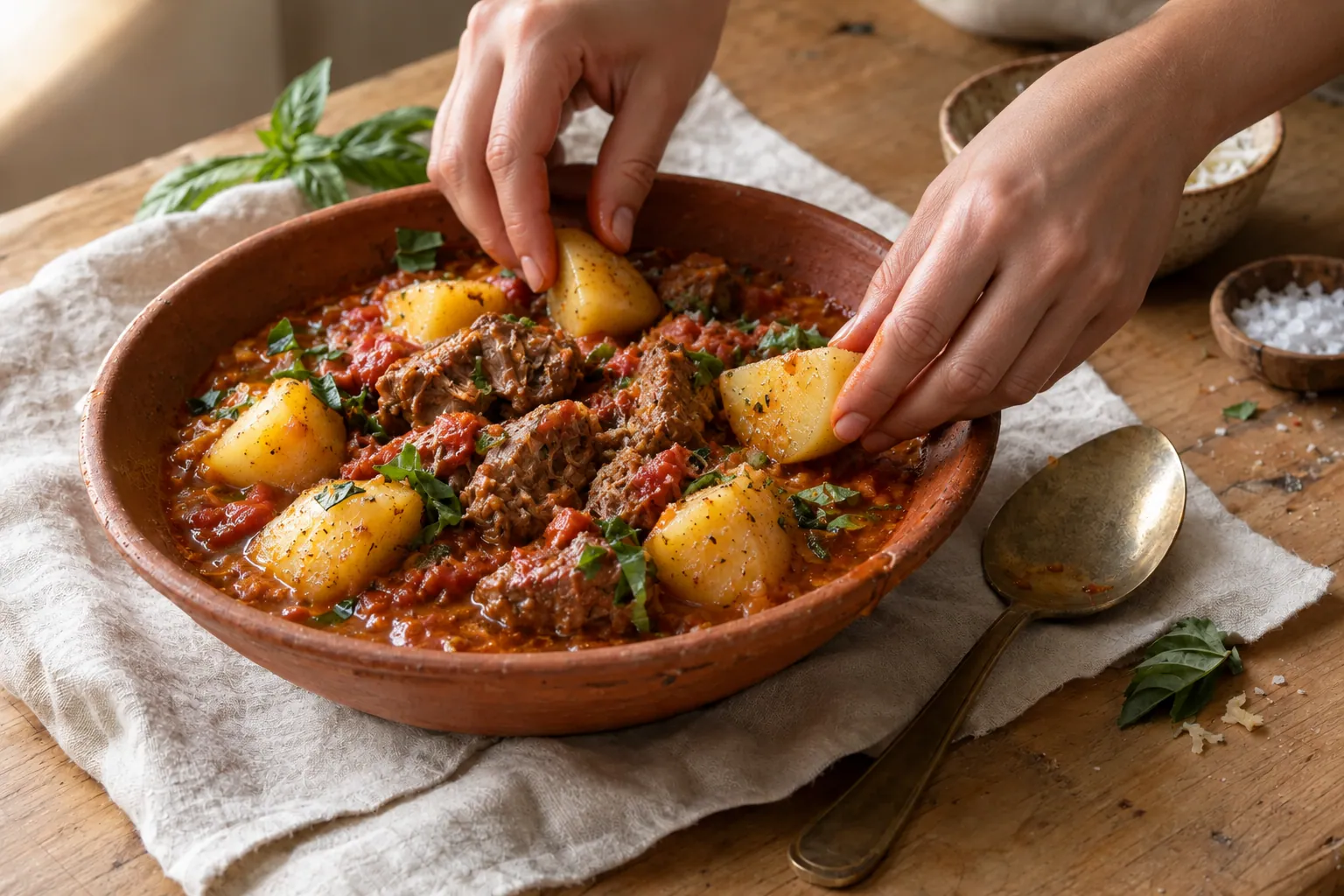
Remove the rosemary sprig and bay leaf. Rest the stew for 10 minutes, then taste the broth and adjust the salt if needed. Serve with the grated Pecorino.
Make ahead and storage
Refrigerate leftovers within 2 hours in a covered container and use them within 3 to 4 days. Reheat on the stovetop over medium-low heat, stirring carefully, until the stew reaches 165°F (74°C). Add a splash of stock or water if the broth has thickened. Freeze cooled portions for up to 3 months; thaw in the refrigerator before reheating.
Where it goes wrong
| If you see | It’s because | Do this |
|---|---|---|
| The stew is thin and watery. | Why Too much liquid was added, or the pot was left uncovered for much of the braise. | Fix Measure the stock and keep the pot covered while baking. If the stew is still thin, simmer it uncovered on the stovetop until the broth reduces. |
| The potatoes break apart before the lamb is tender. | Why They were added at the start or cut smaller than the lamb pieces. | Fix Cut them into 1½-inch chunks and add them halfway through the braise, as directed. |
Questions
What cut of lamb is best for pignata stew?
Lamb shoulder is a good choice for this slow braise. Its connective tissue softens over the long cooking time and helps the broth taste rich.
Can I make Lucanian lamb pignata stew ahead?
Yes. Cool and refrigerate it promptly, then reheat it gently until the leftovers reach 165°F (74°C). The potatoes may soften a little more during reheating.
Cooked this?
Sign in to rate it or say how it turned out.